Protests, violence, curfews: From France to Albania, why Europe'...
/ 2026-10-20 23:47:20Focus


The US has authorized the evacuation of non-essential government employees and their families from Israel as the risk of a US attack on Iran grows.
American citizens should “consider departing Israel while commercial flights are available ,” the State Department advised. It also urged people to avoid travel to Israel.
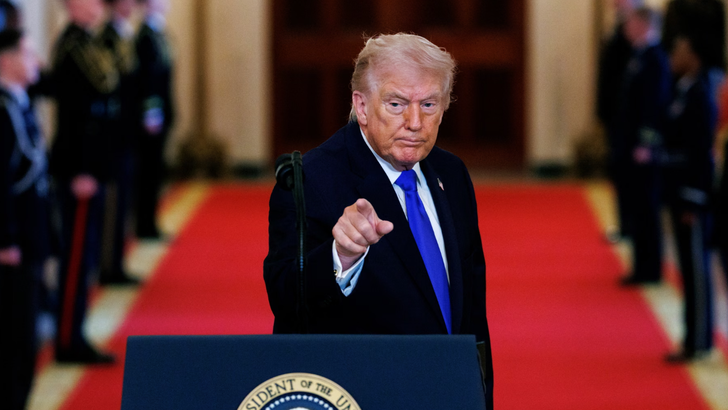
The warning came after talks between the US and Iran over the future of Tehran's nuclear program ended in failure, with the suggestion that discussions would continue next week. US President Donald Trump has placed two aircraft carrier groups ready to attack Iran if he believes Tehran is not serious about ending its nuclear activities.
The State Department's warning was accompanied by a message to US embassy staff from the ambassador to Israel, Mike Huckabee, who urged those who wanted to leave to "do it TODAY."
He contacted embassy staff with an email sent at 00:04 local time, urging them to book flights wherever they could.
The move “ will likely result in high demand for seats on the plane today ,” he wrote. “ Focus on securing a seat to any destination from which you can continue your journey to DC, but the first priority is to get out of the country as quickly as possible.”
The call to leave Israel came as Omani Foreign Minister Badr Albusaidi, the lead mediator in the US-Iran talks, flew to Washington in a last-ditch effort to persuade the Trump administration to back down. He is expected to brief Vice President JD Vance and argue that enough progress has been made to justify caution.
The urgency of his visit, just hours after the end of talks in Geneva on Thursday evening, suggests he believes he must act quickly to counter those who support military intervention.
In a sign of the widening gap between the parties, the Iranian leadership urged the US to drop its toughest demands. US negotiators, Steve Witkoff and Jared Kushner, made no statement after the talks.
Vance, known as the most opposed to military intervention member in the administration, is tasked with convincing that an immediate attack will not change Iran's basic position in the negotiations.
In an interview with the Washington Post, Vance said: “ The idea that we’re going to get into a war in the Middle East for years and years without end, there’s no way that’s going to happen.” He added that he didn’t know whether Trump would support a military strike.
The UK Government has also decided to withdraw its personnel from Iran, describing this as a temporary preventive measure due to the fragile security situation in the country.
The British Foreign Office issued an update to its travel warnings, signaling that the risk of regional escalation remains high. “ Due to the ongoing security situation, we have taken precautionary steps to temporarily withdraw British staff from Iran,” the Ministry said, adding that the embassy would continue to operate remotely.

Iran has rejected Washington’s demand to export its stockpile of enriched uranium and says it is not ready to give up its right to enrich uranium domestically altogether. The Iranian parliament passed a law last July that banned cooperation with the International Atomic Energy Agency (IAEA) and demanded recognition of the “right to enrichment” before inspectors could return. But Iran has said it would commit to limited enrichment as needed and for now would only seek purity levels of 20 percent or lower at its research reactor in Tehran. The fuel for that reactor comes from Russia.
The facility mainly produces medical isotopes used to diagnose diseases such as heart problems. Its three main nuclear facilities were destroyed by US bombing last June.
Iran also has a facility built largely by Russia at Bushehr, on the Persian coast. The Middle East's first civilian nuclear power plant is also supplied with Russian fuel. The two sides are expected to meet next week at a technical level in Vienna, at the headquarters of the IAEA, the UN body that would verify Iran's compliance.
The agency is due to hold its quarterly meeting next week, and Director General Rafael Grossi is expected to give an update on access to Iran's nuclear facilities. Grossi is aiming to succeed António Guterres as UN secretary-general, so an agreement on Tehran's nuclear program would be a major success for him.