Protests, violence, curfews: From France to Albania, why Europe'...
/ 2026-10-20 23:47:20Focus


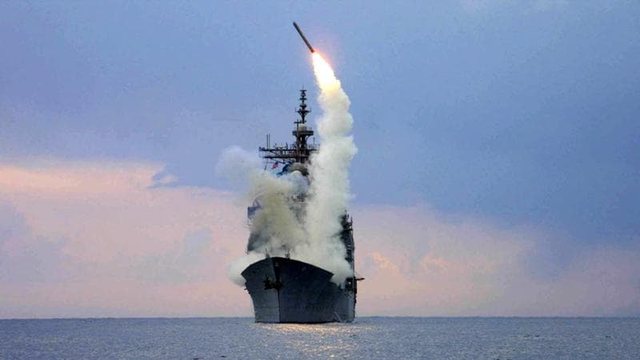
The White House expresses its readiness to provide Ukraine with powerful weapons. But their use requires the involvement of American soldiers. Putin: "Escalation in our relations with the US." Like European missiles forty years ago, will cruise missiles ignite a new Cold War?
By Gianluca Di Feo - La Repubblica
The White House's is an "ultimatum", but it clearly conveys the Kremlin's willingness to give Ukraine unprecedented support, putting an extremely powerful tool in its hands: Tomahawk cruise missiles, capable of devastatingly hitting all Russian factories and bases, even in distant Siberia.
"Yes, I've made a decision," Donald Trump said yesterday in response to a question about handing over the weapons, "but I want to understand what they want to do with them, where they're going to send them."
Joe Biden had given Kiev weapons with a range of less than 300 kilometers, prohibiting their use against Russian territory until August 2024. Now Trump says he is ready to supply missiles that can reach over two thousand kilometers with 450 kilograms of explosives. The American president seems to be only asking for guarantees about the nature of the targets, to exclude the possibility of terrorist attacks against civilians.
This is not a problem for Ukrainian leaders: they want Tomahawks to destroy the “sanctuary” of Putin’s military machine, such as the mega-factory in Yalabuga, where thousands of Shahed-Geran drones are produced and launched against Ukraine every day. The plant is located out of range of Kiev’s flying bombs, which continue to hit Russian refineries even 1,300 kilometers from the border.
But these drones can only carry about half a quintal of explosives, while the Tomahawk warhead contains ten times more: two or three cruise missiles are enough to level an entire assembly line. Exactly what the ballistic missiles launched every day by Moscow's generals against the industries of Lviv and Dnipro do.
Of course, Trump will not give anything away: he foresees that this supply will also be included in the new NATO mechanism, with the United States producing and the Europeans paying. However, the funds do not seem to be an obstacle, but rather the timing of the operation. So far, Washington has sold Tomahawks to very few of its closest allies: Great Britain and Australia, and soon the Netherlands will join them. They are almost always in the naval version, intended for ships and submarines, while Kiev is aiming for the land version: trucks that can escape the Russian response.
Today, the Pentagon intends to dismantle the remaining examples of the Block III variant, produced in the 1990s and updated several times, which can be transferred quite quickly. They are equipped with warheads to penetrate underground bunkers or to deliver cluster bombs, fly at over nine hundred kilometers per hour while maintaining an altitude of 50 meters to avoid radar, are resistant to electronic countermeasures: in short, they would represent a major qualitative step in Ukraine's offensive capabilities.
It seems that we are facing a story repeating itself. These weapons are in fact the latest version of the famous Euromissiles, which 40 years ago raised the tension between NATO and the Warsaw Pact to the peak: in Italy they were to be deployed in Comiso, Sicily, and caused the largest peaceful mobilization in our country. Will cruise missiles once again be the ones to ignite the new Cold War?
Vladimir Putin is convinced of this. From the podium of the Valdai Forum in St. Petersburg, one of the rituals of his autarky, on October 3 he gave an answer that many observers found ambiguous in tone but clear in content: “The Tomahawks are not that modern, but they are powerful: yes, they pose a threat, although they do not change the balance on the battlefield. Can cruise missiles cause damage? Yes. But, as we did with ATACMS (a longer-range missile, a gift from the Biden administration to the Ukrainians), we will improve our defenses and knock them down.”
Then he moved from the military aspects to the more important ones: “Will it damage our relations, where a ray of light was finally starting to be seen at the end of the tunnel? Of course! The Tomahawks cannot be used without the direct involvement of American personnel. This means a completely new level of escalation in our relations with the US.”
Putin touches on the most delicate point of the issue: the cruise missile navigation system must be programmed by entering a series of classified data, to which only the Pentagon has access. Without the contribution of the American military, the Tomahawks do not work. The White House seems to have accepted this form of interference: in recent days, news has leaked that there will be a direct transmission of intelligence information to the Ukrainians, which had been secretly carried out during the Biden years and was then interrupted in the first months after his successor took office. It is precisely this information, in particular satellite images of targets in Russia and of certain areas of the route to reach them, that must be loaded onto the missiles.
Is it possible that Trump, having pulled America out of the conflict by shifting the full weight of Kiev’s support to European allies, is now ready to risk a clash with Moscow? Many analysts believe that even the opening of long-range weapons is intended only to increase diplomatic pressure, forcing Putin to start real negotiations. The time that the Tsar had requested during the mid-August summit in Anchorage to end the “special military operation” has expired, and Trump does not want to feel mocked.
Russian diplomacy has tried to offer an alternative and has proposed the renewal of the START treaty on nuclear disarmament, which will expire next February, with the possibility of including China in the discussion: a path that could certainly become a springboard for the US president to nominate himself for the Nobel Peace Prize, thus crediting him as the leader who stopped the race towards the Apocalypse. On Sunday, Trump was content to say that "it's a good idea". But 24 hours later he returned to concretize the specter of a rain of cruise missiles over deep Russia: a prospect that Putin must avoid at all costs. And he will have to choose whether to do this with peace initiatives or with threats of war.