Berisha: Altin "Troplini" Dumani amnestied electoral crimes, SKA...
/ 2026-10-19 11:44:20Focus


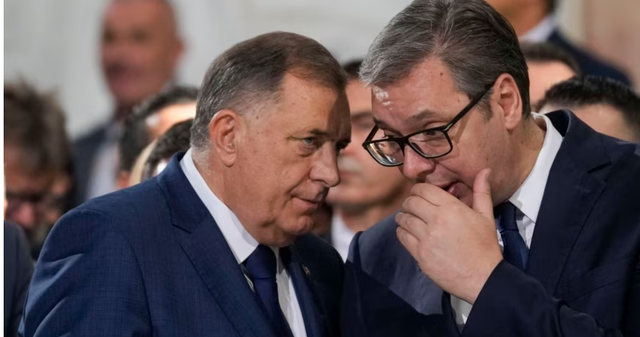
Despite Western sanctions and political isolation, the leaders of Bosnia and Herzegovina's Serb entity, Republika Srpska, and Serbia, Milorad Dodik and Aleksandar Vučić, continue to maintain close contacts with Russian President Vladimir Putin.
Although these meetings are frequent, analysts believe that they serve more as a message to the West than as concrete support from Moscow.
"I think what they're looking for is symbolic support from Putin to scare the Europeans and let them know that it's in their interest not to put more pressure on either Vucic or Dodik," Toby Vogel, of the Berlin-based Council for Democratization Policy, told Radio Free Europe.
Dodik, who recently ceased to exercise the function of president of Republika Srpska after his mandate was revoked by a final court decision, announced in an interview with the Russian media outlet Sputnik that he will travel to Russia "soon" and that he is expected to meet with Putin in October.
According to him, he will ask Russia to veto the extension of the mandate of the European Union peacekeeping mission in Bosnia, EUFOR Althea, which is voted on every November in the United Nations Security Council.
Serbian President Aleksandar Vučić will travel to Beijing this week, where he will meet with Chinese leader Xi Jinping and Russian President Vladimir Putin, his press office announced.
The visit to China comes at a time when protests have been taking place in Serbia for ten months, demanding responsibility from the authorities for the deaths of 16 people after the collapse of the concrete shelter of the Novi Sad Railway Station.
"Vučić and Dodik want a reaction from Brussels and London, not from Moscow"
Analyst Toby Vogel assessed that Vučić and Dodik's meetings with Putin are not aimed at Moscow itself, but rather aim to provoke a reaction from Brussels and London.
"For years we have been hearing that we cannot put too much pressure on Vučić or Dodik, because if we do that, we risk losing them. They will supposedly turn to the East, and we don't want that. But this narrative has never been convincing, and the West must end this approach," Vogel told Radio Free Europe.
He added that even without Russia's influence, the European Union has so far been "very weak in criticizing Vučić" for suppressing protests in Serbia and that there have been no consequences for the authorities in Belgrade.
"Vucic will find it very difficult to emerge from this political crisis untouched, and no trip to China or Russia will change that," Vogel stressed.
Sa i përket Dodikut, Vogel tha se situata ligjore është krejtësisht e qartë, por jo edhe në terren, veçanërisht kur të mbahen zgjedhjet e parakohshme për president të entitetit të Republikës Sërpska.
“Ju nevojiten autoritetet lokale, entiteti dhe komunat në Republikën Sërpska për të organizuar fizikisht këto zgjedhje. E nëse ato vendosin të qëndrojnë pranë Dodikut, atëherë kjo do të jetë shumë e vështirë”, paralajmëroi ai.
Çfarë nënkupton mbështetja ruse në Ballkanin Perëndimor?
Politologu nga Sarajeva, Adnan Huskiç, në një prononcim për Radion Evropa e Lirë, u përgjigj me kundërpyetje: çfarë do të thotë për këdo në Ballkanin Perëndimor të ketë mbështetje nga Rusia?
“Unë me të vërtetë nuk shoh se si, në një situatë kur ende kemi një polarizim të thellë mes Perëndimit dhe Rusisë, juve ju ndihmon konkretisht ndihma ruse. Jeni të rrethuar nga shtetet anëtare të NATO-s, e në aspektin e inteligjencës, SHBA-ja është ende këtu, pavarësisht çfarëdo që mendojmë për të”, tha Huskiç.
Sa i përket Millorad Dodikut, ai vlerësoi se Dodik po shfrytëzon gjithçka që ka në dispozicion, por ka pak gjasa që kjo do të ketë ndonjë efekt real. Ai shtoi se është “analizë joserioze dhe sipërfaqësore” të mendohet se dikush në planin ndërkombëtar do t’i kushtojë më shumë vëmendje çështjes së Dodikut.
“Të presësh që në një botë, ku ndodhin zhvillime të tilla globale, të vendoset fokusi edhe te ngjarjet në Bosnje e Hercegovinë, është pritshmëri e çuditshme”, theksoi Huskiç.
Nga ana tjetër, analistja politike nga Banja Lluka, Tanja Topiç, vlerësoi për Radion Evropa e Lirë se me udhëtimin në Rusi, Dodik po dërgon mesazh se është “zhgënjyer” pritjet që ai kishte nga administrata e presidentit amerikan, Donald Trump.
“Në kontekstin e vendimit gjyqësor, ai për një kohë të gjatë besoi se gjërat do të ndryshonin dhe se do të ndodhnin ‘mrekulli’ të caktuara. Tani ai e ka zhvendosur fokusin e betejës së tij për mbijetesë politike nga Perëndimi te Rusia”, u shpreh Topiç.
Ajo theksoi se deklaratat e Dodikut për të biseduar rreth mbështetjes së mundshme për pavarësinë e entitetit serb nuk do të sjellin rezultate konkrete, por se kjo narrativ do të shfrytëzohet për konsum të brendshëm politik.
Sa shpesh takohen Vuçiçi dhe Dodiku me Putinin?
Më 9 maj, Millorad Dodik dhe Aleksandar Vuçiç morën pjesë në paradën ushtarake në Moskë, të organizuar për 80-vjetorin e përfundimit të Luftës së Dytë Botërore, ku u takuan edhe me presidentin rus, Vladimir Putin.
Shtetet perëndimore e vlerësuan këtë paradë si “propagandë të Putinit” me të cilën ai u përpoq të justifikonte agresionin ndaj Ukrainës.
Që nga fillimi i pushtimit rus të Ukrainës, në shkurt 2022, Dodik është takuar tetë herë me Putinin. Ai vizitoi Moskën edhe në prill, një muaj para paradës ushtarake, kur tha se Putini i kishte premtuar se Rusia do të angazhohej për mbylljen e institucioneve ndërkombëtare në Bosnje e Hercegovinë, përfshirë edhe zyrën e përfaqësuesit të Lartë, Christian Schmidt.
Serbian President Aleksandar Vučić has only been to Moscow once since the start of the Russian aggression. The bilateral meeting with Putin in May, during ceremonies marking the anniversary of World War II, was the first official one in more than three years since the start of the Russian invasion of Ukraine.
At the time, Putin said that Russia "values Serbia's independent and sovereign course in international affairs."
Although it is a candidate for membership in the European Union, Serbia has not joined the sanctions against Russia, which Brussels has imposed in an attempt to end the war in Ukraine.
Before the meeting in Moscow, Vučić had held several telephone conversations with Putin. In October 2024, on the occasion of the 80th anniversary of the liberation of Belgrade, Vučić said that he had thanked Putin for the supply of Russian gas to Serbia during the winter. He added that they had not had any communication for almost two and a half years, although in October 2023 they had met in Beijing, at the international forum of the Chinese "Belt and Road" initiative. /REL