"The fate of the homeland is in our hands" - An appeal by Ismail...
/ 2026-10-18 16:09:54Focus


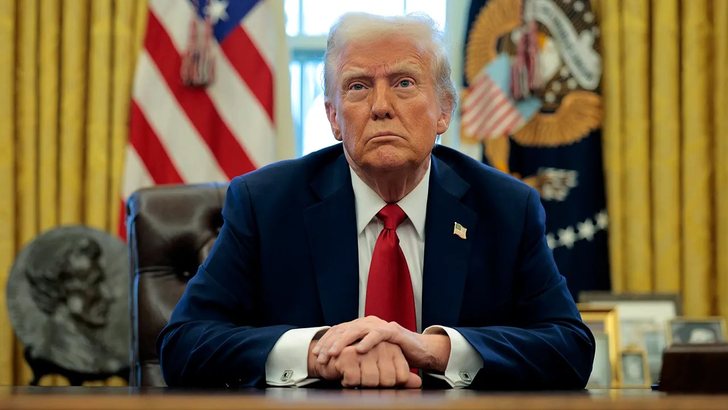
US President Donald Trump has declared that US forces have struck the Islamic State (IS) terrorist group in Nigeria, accusing the organisation of "barbarically targeting and killing, mostly innocent Christians".
The statement comes weeks after Trump threatened military action, following continued pressure from politicians and activists in the US, who claim that Islamist militants in Nigeria are waging a systematic campaign of violence against Christians.
However, a BBC analysis raises serious questions about the accuracy of the figures and data on which these claims are based.
Alarming but controversial figures
In recent months, public figures in the US, including senators and well-known commentators, have spoken of tens of thousands of Christians killed and thousands of churches destroyed in Nigeria since 2009. These figures have also been widely circulated on social media, even being described as "genocide."
The Nigerian government has rejected these claims, calling them a “gross misinterpretation of reality.” Authorities in Abuja acknowledge that the country faces bloody violence, but emphasize that terrorist groups attack both Muslims and Christians, regardless of religion.
Security analysts in Nigeria also point out that, although Christians have been affected by the violence, there is not enough evidence to support the thesis that they are the only or main target.
Source of figures
Many of the figures cited by American politicians are based on reports by a Nigerian NGO, the International Society for Civil Liberties and Rule of Law (InterSociety). This organization claims that over 100,000 Christians have been killed in Nigeria since 2009.
But InterSociety's reports do not provide detailed lists of sources and clear verification methods, making it difficult to confirm these figures. In some cases, the organization attributes religious affiliation to victims even when the original media reports do not mention this element.
The BBC has found that, by compiling data from media reports cited by InterSociety itself, the real number of victims is significantly lower than what is publicly claimed.
Who are the perpetrators of violence?
The violence in Nigeria is largely linked to the jihadist groups Boko Haram and the Islamic State in West Africa, which operate mainly in the country's northeast, a Muslim-majority area. Many of the victims of these groups are themselves Muslims.
Conflicts between Fulani herders and local communities are also part of the debate. While some describe these attacks as religious, experts emphasize that in many cases they are ethnic and economic conflicts related to land and natural resources, not religious jihad.
What does the alternative data say?
International organizations that monitor political violence, such as ACLED, report much lower figures for Christian victims. According to them, around 53,000 civilians have been killed in Nigeria in political violence since 2009, including Muslims and Christians.
From 2020 to September 2025, only a small portion of these victims appear to have been specifically targeted because of their Christian faith.
A complex reality
Analysts agree that Nigeria is facing a deep security crisis, with terrorist groups, bandits and criminal networks operating in parallel. But they warn that simplifying this violence as a “religious war against Christians” risks distorting reality and politically influencing international decision-making.
In this context, the US intervention and Trump's strong statements have sparked widespread debate, both in Nigeria and on the international stage, over the real facts behind a narrative that is increasingly being used in American politics./ BBC