"Condemned" protesters?! Who trapped Rama inside the Prime Minis...
/ 2026-10-23 16:02:00Focus


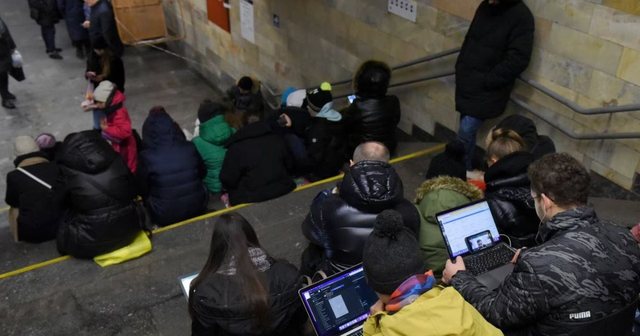
Whenever Russia fires missiles and drones at Ukrainian cities, cellphones vibrate and then the unpleasant alarm goes off warning of airstrikes.
During such airstrike warnings, many Ukrainians tune into Telegram channels that collect official and unofficial data on the attacks - to decide whether to seek shelter or not.
“I never shelter, anyway. But I feel calmer as soon as I understand what's going on ," said psychology student Ilya Yeremenko to Radio Free Europe (REL).
"The feeling of controlling yourself, even if it is an illusion, is better than the feeling of being powerless", he emphasized.
Fast access to unlimited data has pushed the messaging app Telegram to become the main source of news in wartime Ukraine.
This Dubai-based platform, which boasts over 900 million users worldwide, was founded by Russian entrepreneur Pavel Durov in 2013.
In his first major interview in seven years, which he gave to US commentator Tucker Carlson on April 17, Durov vowed that Telegram aims to be a "neutral platform" and not "a player in geopolitics".
In Ukraine, however, critics worry that Telegram spreads disinformation and facilitates illegal activity.
Some accuse Telegram of ties to the Russian state and of contributing to Moscow's war in Ukraine.
The Parliament of Ukraine has registered a draft law which aims to correct the work of this platform. But it seems unlikely that lawmakers will attempt to completely shut down this popular app.
Russia's invasion of Ukraine, which began in February 2022, gave a huge boost to Telegram's popularity in Ukraine.
When Russian missiles began to fall on Ukrainian cities and Russian troops approached Ukrainian borders, Ihor Lachenkov, the creator and author of the most popular Ukrainian Telegram channel Lachen Pyshe, was in his native Dnipro covering the events and posting daily news. night.
Within 24 hours, his audience nearly tripled, from 70,000 to 200,000.
"People flooded my channel, because it was one of the first to announce that the war had started, and it sent timely notifications about missile attacks, even before air raid alarms started working properly ," Lachenkov told REL- in.
At the time, Ukraine's main television channels began broadcasting a unified state-controlled news program known as the "Telemarathon" to combat the spread of enemy propaganda and disinformation.
But, people looking for faster and more detailed information, or unofficial information, chose Telegram channels.
Users can easily create Telegram channels and post content to an unlimited number of followers, in a top-down fashion with no algorithmic interference and almost no ads.
"There is no other platform that can beat Telegram when it comes to reaching the audience ," said Lachenkov, adding that Facebook and Instagram are not only less convenient, but also limit popular war-related content, calling them as heavy on the audience, or as the intentional promotion of violence or hate speech.
Telegram's popularity in Ukraine has grown significantly since the occupation began, with no less than 72 percent of Ukrainians using it to get news in 2023, compared to 20 percent in 2021, according to a 2023 study by Internews .
Telegram has eclipsed news portals (41 percent), TV (30 percent), radio (10 percent), and print newspapers (3 percent), as well as other social media and apps. Its strongest competitors are Facebook with 19 percent and YouTube with 16 percent.
Ukrainian institutions and officials – including President Volodymyr Zelensky, the SBU intelligence service and the popular governor of the Mykolaiv region, Vitaliy Kim – have their own very popular channels on this platform.
Lachen Pyshe, the channel that now has over 1.5 million followers, made Lachenkov one of the most popular influencers in the country. He has raised millions of dollars for the Ukrainian military and was among those who represented Ukraine when the European Parliament awarded the Sakharov Prize to the Ukrainian people in December 2022.
However, unlike Lachen Pyshe, almost all major channels on Telegram in Ukraine are run in secret, and their role in wartime is much more unclear.
Many popular channels mix their information about the airstrikes with horrific content. Although they have millions of followers, they often disregard accepted standards of journalism. Unlike the official media in Ukraine, many Telegram channels are in Russian and are considered by many to be pro-Russian.
In March 2022, the SBU published a list of channels it said "conduct special psychological and informational operations in the interest of the Russian Federation", and later expanded it. Ukraine's Main Intelligence Directorate said Russia spent $250 million to promote its narrative on the platform in Ukraine.
Për më tepër, disa kanale ukrainase me ndikim – si “Vertical”, “Joker” dhe “House of Cards” – ka mundësi të jetë të lidhura fshehurazi me administratën presidenciale të Ukrainës, sipas monitoruesit ukrainas të mediave, Detector Media. Ato publikojnë informata të brendshme të paverifikuara dhe diskredituese që kanë për cak kritikët, përfshirë gazetarët e pavarur dhe kundërshtarët politikë.
“Postimet në Telegram nuk janë të kufizuara për përhapjen e propagandës së armikut. Telegrami është de fakto një rrjet i errët i legalizuar, ku jo vetëm që mund të blesh drogë apo të kesh qasje në pornografi të fëmijëve, por mund edhe të përfshihesh në krime kibernetike, sic bëjnë shumë grupe ruse të hakerëve”, tha për REL-in Yehor Aushev, ekspert në Institutin për Hulumtimin e Luftës Kibernetike.
Qasja në të dhënat dhe mjetet e përdoruesve, përfshirë në kamera dhe në gjeolokacionet e tyre, si dhe në të dhënat e rrjeteve të përdoruesve, e bëjnë Telegramin “spiun në xhepin e çdo ukrainasi”, sipas Aushevit.
Durov, themeluesi i Telegramit, i ka mohuar këto akuza. Ai u largua nga Moska më 2014.
Derisa shqetësimet po rriten, autoritetet ukrainase janë duke kërkuar ta gjejnë një zgjidhje për ta ulur mundësinë e rrezikut për dëmtimit nga Telegrami.
Më 25 mars, një grup i deputetëve e regjistruan një projektligj që ka për qëllim rregullimin e kësaj platforme.
Në dokumentin e tij theksohet se Telegrami “mund të jetë i lidhur me shtetin agresor”, si dhe propozon masa për ta detyruar kompaninë të bashkëpunojë me shtetin ukrainas, përndryshe përballet me kufizime.
“Ne e dimë tashmë se Telegrami ka marrëdhënie të mira me biznesin rus, [Shërbimin rus të Sigurisë] dhe me ushtrinë ruse. Dhe, ne nuk kemi fare kontroll mbi këtë”, tha Mykola Knyazhytskiy, ligjvënës nga partia opozitare, Solidariteti Evropian, i cili është edhe nismëtar i projektligjit.
Projektligji bën thirrje që Telegrami, si dhe disa platforma të tjera, të detyrohen ta themelojnë një zyre përfaqësimi në Ukrainë apo në një vend të BE-së për adresimin e ankesave rreth përhapjes së përmbajtjes së ndaluar.
Një provizion kyç i projektligjit e detyron Telegramin ta bëjë të ditur strukturën e pronësisë dhe burimet e financimit me kërkesë të Këshillit Kombëtar të Ukrainës.
Por, kjo ka pak mundësi të ndodhë, duke parë se cfarë ndihet tashmë publikisht për financimin e tij.
Për kohë të gjatë Telegrami ka qenë jofitimprurës dhe nuk ka treguar të hyra zyrtare për tetë vjet, derisa e mundësoi reklamimin e kufizuar më 2021 dhe abonimet premium më 2022.
Më 2018, vëllezërit Durov tentuan të mblidhnin të holla duke e lansuar platformën blockchain, të quajtur Rrjeti i Hapur i Telegramit.
Megjithëse i siguruan 1.7 miliard dollarë për këtë projekt përmes shitjes së kriptovalutës Gram, kompania u urdhërua t’ua kthejë shumicën e të hollave investitorëve para se të lansohej, pas një beteje ligjore me Komisionin amerikan të Shkëmbimit dhe Letrave me Vlerë (SEC).
Among the many investors from several countries were also Russian businessmen, such as Roman Abramovich, Sergei Solonin and David Yakobashvilli.
All of them have ties to the Kremlin, while Yakobashvili is also sanctioned by Ukraine.
Under the proposed legislation, Telegram would likely be declared "non-transparent" and its use by state and local authorities, as well as financial institutions that process personal data, would be banned.
But not even for the defense and security forces, which would be allowed to use Telegram with the permission of the Government.
"Not only our people, but also state institutions and big businesses use a platform that is closely connected to Russia. It must be stopped" , said Knyazhytskiy.
In March, Ukrainian authorities sent Telegram a list of more than 300 "potentially problematic" channels compiled by special services, according to Forbes Ukraine.
The representative of Telegram, Remi Vaughn, said that the company will check whether they comply with the rules of this application.
On April 24, Durov said that due to a request from Apple, Telegram will limit access to some channels related to the war for users in Ukraine, so that the application will continue to be in the Apple store.
A short time later, several chatbots used by Ukrainian security agencies to gather information about Russia's war, including about the positions of Russian forces, were temporarily blocked, prompting strong reactions in Ukraine.
Legislator Yaroslav Yurchyshyn, chairman of the Commission for Freedom of Expression, blamed the "Russian oppression" for this./ REL