


Is this police force professional and capable of handling violen...
/ 2026-10-16 18:54:07Focus


Liberal laws on money laundering, easy acquisition of citizenship, or insufficient investigations have turned Turkey into an attractive country for international criminality, among them criminal groups from Albania and the Balkans.
"My dear nation, we have arrested three wanted high-ranking gangsters in Alanya and Istanbul today," Turkish Interior Minister Ali Yerlikaya declared on social media this week. "No matter how powerful these gangs are, no matter what arrest warrants they ask for, we will take their souls," said the Turkish Interior Minister with a fighting spirit.
Since he took office in June, not a day goes by without the arrest of a dangerous criminal. Among those arrested are those who deal with the drug trade, who give money with huge interest, traffickers of human beings, fraudsters and thieves, but also important heads of international gangs that have taken root in Turkey in recent years.
That's what happened in the last few days. Interior Minister Yerlikaya wrote on X, ex-twitter, that they have arrested Thomas Josef K., the boss of a large Polish drug network, Daniel Alexander M., who is wanted in Germany after being linked to a several-ton load of cocaine captured and P. Jin-king, the head of a Chinese fraud ring. Only last week the minister announced the arrest of the heads of three Belgian-British, Vietnamese and Arab gangs.
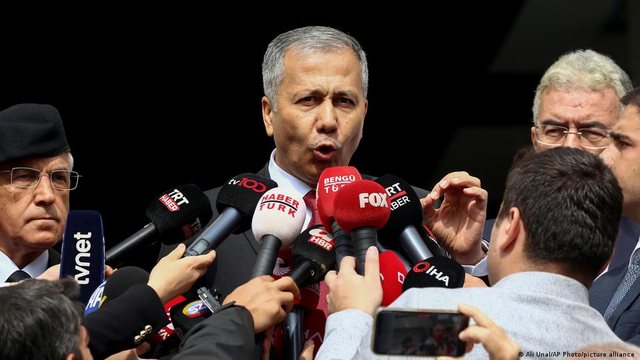
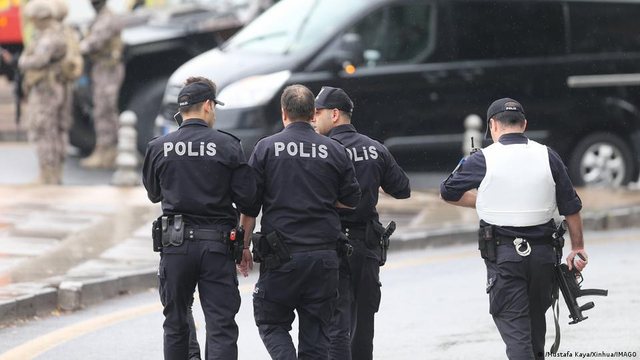
A month ago, it was said that the Turkish police managed to arrest all the leaders of the "Comanchero" gang, a gang active all over the world. Among those arrested are several criminals from Australia and New Zealand, who are wanted by international arrest warrant from Interpol. Yerlikaya also posted videos shot during the arrests.
Why in Turkey?
Signals indicating that international gangs have established themselves in Turkey have been frequent for a long time. Assassinations and shootings have not been few, but there have also been many reports by investigative journalists. But before Yerlikaya took office, there were almost no serious investigations and arrest warrants issued against these groups. Because the previous Minister of the Interior, Süleyman Soylu, had ties to the mafia himself.
At the time when Soylu was minister, mafia leaders of the Turkish underworld were released from prison. Thus, Turkey became a favorite place for international criminals, especially those from Serbia, Albania, Azerbaijan, Russia and Montenegro. They have also brought their conflicts with them, which is shown by the case of Jovan Vukotic, a drug lord from the Skaljari clan of the Balkans. On September 8, 2022, Vukotic was assassinated in Istanbul. As the investigations have revealed, he is thought to have been killed by a local mafia group, to receive the 1.5 million euros reward that was put for his murder. The assassination order was given by the rival clan, the Kavac clan.
Kavac and Skaljari, two drug clans from the Montenegrin port city of Kotor, have been waging a real war across Europe for about ten years. From their bloody conflict, 50 people have been killed in several different countries. Asked by Deutsche Welle in 2022, the German Federal Office of Criminal Investigation, BKA, announced that for some time Turkey has become a favorite place for criminal groups from the Western Balkans.
Controls by the Turkish authorities have shown how these groups carry out their activities from Spain to Turkey. Confiscated photographs and documents show kidnappings, torture and murder.
Liberal laws and golden passports
For experts, there are sufficient reasons why Turkey has become a second homeland for many criminals in recent years. First, anti-money laundering laws are liberal. Second, the government grants amnesty to economic criminals every year. Third, visa-free travel is available for many countries. And fourthly, the rich can get Turkish citizenship without wasting time.
Whoever invests $500,000 in Turkey, or blocks this money for three years in a bank account, or who buys real estate worth $400,000, can request Turkish citizenship. According to Kristin Surak, from the London School of Economics and Political Science, who has written a new book about the so-called "Golden Passports", around 50,000 people around the world obtain the citizenship of another country in this way every year. himself. And almost half of these "golden passports" are issued by Turkey.
Even leaders of international gangs can obtain Turkish citizenship, if they meet the usual conditions and if no arrest warrant has been issued against them by Interpol, until the moment of obtaining citizenship.
Furkan Sezer, former head of the economic crime sector in the Istanbul police, has been observing this scene for years. According to him, many criminals get citizenship once, settle in the country and then bring their wealth with them. Thanks to the annual amnesty, this is greatly simplified. This creates the possibility for people or legal entities, to declare to the financial authorities, the unregistered wealth that they bring from abroad or within the country, and to do so partly without paying taxes.
In this way, a lot of money, the origin of which is unknown, is put into circulation in the legal financial network. Ozan Bingöl, tax expert, criticizes this practice. "Usually criminals pay 15 to 20 percent of the value to launder money," he says. And the Turkish government offers them tax-free legalization. This opens doors and windows for criminals, he thinks. Bingöl complains that the authorities do not have the power to fight money laundering. "If someone suddenly comes today with a million dollars, the authorities are not allowed to ask where this money comes from," he says. One of the first things the current AKP government did when it took power in 2002 was to implement this law, says Bingöl.
Even for investments in digital crypto-currencies there is a great lack of laws, which according to Bingöl entices international gangs to settle in Turkey. In his opinion, these investments should be adjusted as soon as possible.
Turkey part of the gray list
The International Institute for the Fight against Money Laundering and the Financing of Terrorism, FAFT (Financial Action Task Force), has concluded that Ankara should fight money laundering more severely. Two years ago, FAFT put Turkey on the so-called gray list. Since then, Turkey has been under careful observation. When the next inspection deadline comes, next June, Ankara hopes to get off the gray list because its economy is already so tired.
Through the unconventional policy of interest rates, Turkish President Recep Tayyip Erdogan has plunged the country into a deep crisis. The Turkish lira has been losing value for years and inflation is increasing daily. Recently, the inflation rate was 61 percent. Erdogan's mix with money politics and justice has also scared foreign investors.
But the country needs them. The new finance minister, Mehmet Simsek, who took over finance after the May elections, is trying to lure international donors to Turkey. He is often present on international platforms and tries to promote the introduction of fresh money to Turkey and the increase of confidence in Turkey. But to ensure this, they must do all their homework. Not only the Minister of Finance, but also the Minister of the Interior, fighting organized crime./ DW


