Is this police force professional and capable of handling violen...
/ 2026-10-16 18:54:07Focus


The Special Appeal Panel will meet in the consultation room on February 19 to discuss for the first time the possibility of reversing a decision given in the vetting process of judges and prosecutors.
The meeting was announced after a decision of the European Court for Human Rights in Strasbourg, which said that in the case of former prosecutor Antoneta Sevdari, the measure of her dismissal by the KPA was not justified by the violations found against the former prosecutor .
With this Strasbourg decision in her favor, former prosecutor Sevdari asks the Special Panel to return to office. But can a decision of the European Court of Human Rights be enough to undo a vetting decision?
The court itself clarifies in the decision given in the case of Sevdar that this case cannot overturn the entire process of verifying the integrity, wealth and professionalism of judges and prosecutors that started in Albania after the adoption of the justice reform in 2016.
The reason why Strasbourg emphasizes this in the given decision is related to the perspective of this court on the issues it examines. Strasbourg does not deal with the basis of the case, but as an example, in the case of former prosecutor Sevdari, it has verified whether her human rights provided by the European Convention, which Albania has ratified, have been respected or not.
This means that the Strasbourg Court did not deal with the wealth declarations, nor with the integrity, nor with the professionalism of the former prosecutor Antoneta Sevdari. In relation to her professionalism, at least one sensational file that passed through her hands while she was a prosecutor raises some questions.
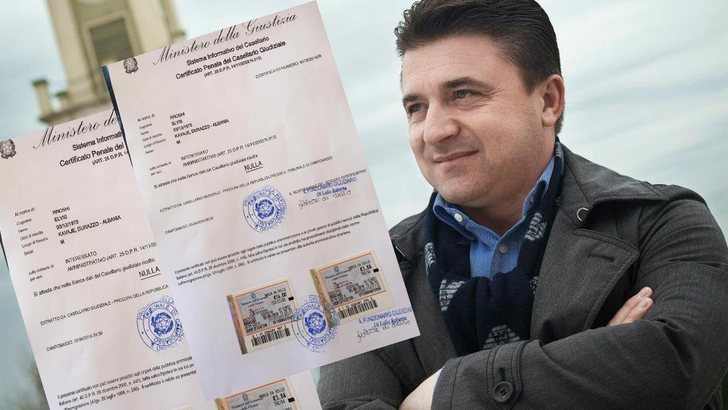
It is about the file investigated by her with the accusations of falsification of documents, money laundering and fiscal evasion brought against Francesco Becchetti. It was Sevdar's investigation that was used by the Italian businessman as an argument and evidence in the International Court of Arbitration of the World Bank in Washington to punish Albania with over 110 million euros in fines.
The arbitration says in the final decision where it fines Albania that the Albanian prosecution failed to convince Interpol with evidence to justify the charges brought against Becchetti and the request for an international arrest warrant.
The ruling also says that after immediately issuing a series of seizure orders, the Prosecutor's Office also sent a series of subpoena letters to foreign governments requesting assistance in the criminal investigation. The Italian authorities responded by requesting that the requests of the Prosecutor's Office be more specific, in terms of time, persons, documents and a list of banking institutions in which these documents will be requested, a request that was not met by the Albanian side.
Both of these cases suggest that there was a weak investigation and that the evidence collected during the investigation by the prosecutor Antoneta Sevdari failed to convince the international partners of the legitimacy of the charges brought against Becchetti.
But, apart from the shortcomings in the investigation, the arbitration court's file also notes procedural violations, among which the prosecution's refusal to interrogate Francesco Becchetti and his close associates who were under accusation, or even the refusal to hand over a copy of the arrest warrant, which in international investigative practice constitute a violation of the fundamental rights of the accused and his right to a fair and impartial process.
©CopyrightVoxNews
This article is exclusive to VoxNews, it is copyrighted according to Law No. 35/2016, "On copyright and related rights". The article can be republished by other media only by citing VoxNews and placing the source link at the end, otherwise any violator will be held responsible according to Article 178 of Law No. 35/2016.