Is this police force professional and capable of handling violen...
/ 2026-10-16 18:54:07Focus


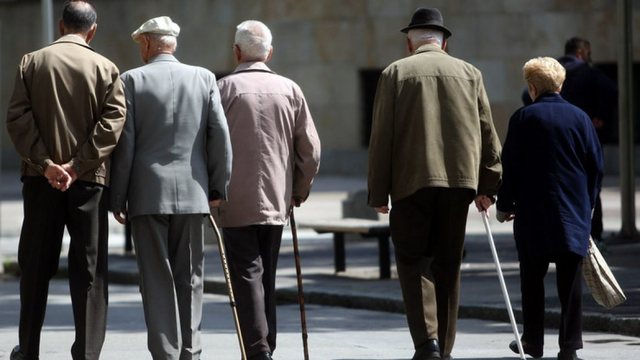
Retiring in our country means not even being able to provide the medicine to maintain your health that is left over from your years of work. The pension scheme has been overhauled by all governments since the 1990s, but it has proven to be a failure, creating a gap in the state budget and failing to create any kind of welfare for the retiree.
Why does such a problem arise?
The variant proposed by the World Bank, the introduction of the multi-pillar system, applied in many European countries that have managed to avoid the problem of population aging, seems suitable for many more decades in our country.
First , the Albanian pension scheme is not considered sustainable due to the contribution rate for employees, which is not enough to cover the needs for pension payments.
According to studies by economic experts, the social and financial stability of the pension system remains vulnerable. It suffers from a high deficit that makes it financially prohibitive. As a result, every government that has run the country in these times of transition has found itself in difficulty and has been forced to accept the financing of the scheme from the state budget.
Second, the scheme offers lower benefits for some categories. Pension support is not enough to live a full life with specific conditions and dignity. The pension amount for most beneficiaries is below the level needed to meet the basic needs of life.
Thirdly, the scheme is characterized by emphasizing elements of injustice because some groups benefit from very high contributions and contribute less than others. Furthermore, although all the elderly are covered by the scheme thanks to full employment in the communist period, a large part of the working-age population today is not insured due to high unemployment and informality at the same time. Unemployment is a factor that affects the pension system because an unemployed person is unable to cover his contributions.
Informality is an aspect that affects the proper functioning of the pension scheme, because someone who works illegally does not create sufficient contribution funds to support the retirement years. This has worsened the relationship between contributors and beneficiaries, creating a negative trend for the future, where many older people will not be able to get a pension.
In this way, the Albanian pension system is no longer able to balance the adequacy of benefits to cover expenses, even more so when we consider the factor of population aging.
But what does the current government envisage?
The reform of the pension scheme is under revision in order to establish an approach which will square the differences of the annual indexation of pensions. The news was given by the Minister of Economy and Finance, Ervin Mete in the Parliamentary Committee on Economy during the discussion of the 2024 draft budget.
Mete said that the changes are in the consultation phase with the World Bank and the Monetary Fund and they are taking into consideration the demographic changes and the effects they will create in the progress of the number of contributors and beneficiaries in the future. The minister said that they are working on an approach that amortizes the differences.
Consultations have stopped at two points:
- First, a formula is being worked on to enable the increase of low pensions with a greater value than the higher ones. Currently, indexation is applied as a percentage of pensioners' inflation. This year, 8.6% was applied, but translated into value, the benefit is much smaller for low pensions than for high ones. For example, a pensioner in the village who is paid 10,000 allek per month, received an increase in October 2023 of only 860 allek, while a pensioner paid 30,000 allek per month benefited from an additional 2,560 allek or three times higher.
-The second concerns the intervention in the setting of limits for benefits in supplementary schemes, since their growth at the current rates is expected to burden the scheme more in the long term. For example, in the future, the retirement of employees of the justice system may cost the public pension scheme.
What are the challenges of the current scheme?
Retirement age for women and men
As for women, the age increase started on January 1, 2015 and will continue until 2056. This increase is expected to be 2 months every year. With the gradual increase, it is predicted that in 2056, a woman will retire at the age of 67. For men who currently retire at age 65, another plan is contemplated to gradually increase their retirement age.
Until 2032, the age pension benefit for men will not change for a single month. In 2033, a man will start retiring at the age of 65 years and 1 month.
This scheme will continue until 2056, when a man must be 67 to receive the retirement pension. So in 2056, the retirement age will be equalized for both men and women.
Years of Contributions
With the existing scheme, 35 years of social insurance are needed as contributions for the full benefit of the pension, while the minimum period to secure the pension is 15 years.
In order to benefit from the full pension, a person, in addition to the age criterion, must have 35 years of work with paid insurance. If the working years are not completed, then the persons do not complete a full pension.
Official data show that from year to year, new retirees fail to meet the criterion of working years.
Population aging and the shrinking of the working-age population
The number of elderly people in Albania is expected to more than double, to 25% in 2050. Eight years ago, in 2014, one in eight Albanians was over 65 years old, while in 2050 it is expected that two in eight Albanians will are over this age.
Albania, along with several Eastern European countries, is exposed to the phenomenon of population aging, which in itself leads to a decrease in the number of employees and contributions to pension schemes, but also by the high informality of work, which also worsens the deficit.
The working-age population, which funds the benefits for the elderly, is shrinking by the day. Albania is expected to experience a 14% decline in the working-age population in the period 2010-2050.
In 2018, the average pension was 31 percent of the average gross salary, while in the first 6 months of 2023 this ratio reached 25%.
The percentage of people who do not meet the criteria for full payment is increasing rapidly from year to year. In June 2023 part-paid pensioners accounted for 50% of total old-age pensions, up from 45% in 2021. While the new pensions associated with 2023 were 11% lower than the average pension. Old-age pensions are 50% lower than the regional average.