


"We are drowning..." - From Lisbon, Milan to Tirana, "The Guardi...
/ 2026-10-18 23:13:32Focus


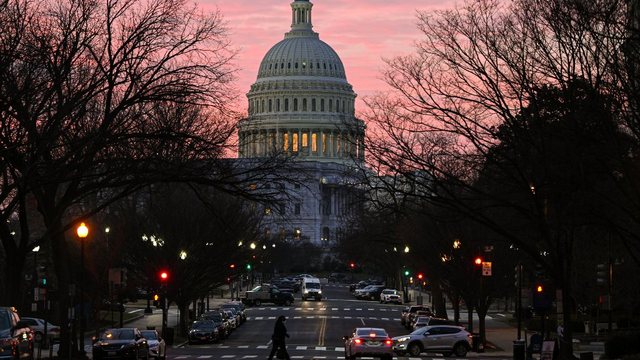
If the debt crisis rocking Washington were to force the United States into recession, America's economy would not be the only one to suffer the consequences.
A default on the federal debt, which would happen for the first time in history, would affect the entire world. Orders to Chinese factories that sell electronics in the United States may be halted. Swiss investors who bought US Treasuries would suffer losses. Sri Lankan companies will no longer be able to use the dollar as an alternative to their currency.
"No part of the global economy would be spared" if the US government defaults on its obligations and the crisis is not resolved quickly, said Mark Zandi, chief economist at Moody's Analytics.
Mr. Zandi and two colleagues at Moody's have concluded that even if the debt were to go beyond the current limit for no more than a week, the US economy would weaken so much, so quickly, that they would be eliminated approximately 1.5 million jobs.
If a government default were to last much longer, say until the summer, the consequences would be much more dire, Mr. Zandi and his colleagues wrote in their analysis.
According to this analysis, US economic growth would sink, 7.8 million US jobs would disappear, borrowing rates would rise, the unemployment rate would rise from its current 3.4% to 8%, and a decline in stock market would eliminate $10 trillion from American household wealth.
Of course, it may not get to that point. The White House and House Republicans, seeking a deal, wrapped up a round of debt ceiling negotiations on Sunday, with plans to resume talks on Monday. Republicans have threatened to let the government's debt repayment deadline expire, or raise their debt ceiling, refusing to raise the law's borrowing limit unless President Joe Biden and Democrats agree to sharp spending cuts. and other releases.
HOW SAFE IS US DEBT?
What deepens the uncertainty is the fact that there is so much financial activity that depends on the belief that America will always pay its financial obligations. Its debt, long considered too safe, is a cornerstone of global trade, built on decades of trust in the United States. A default could severely damage the $24 trillion market for Treasury debt, freeze financial markets and trigger an international crisis.
The threat has emerged at a time when the world economy is facing a host of threats, from rising inflation and interest rates, the ongoing consequences of Russia's attack on Ukraine to tightening controls by authoritarian regimes. In addition to all these concerns, many countries have become skeptical of America's important role in global finance.
In the past, American political leaders have generally managed to avoid the deadline to pay off the debt or have raised its limit before it was too late. Congress has raised, revised or extended the borrowing limit 78 times since 1960, most recently in 2021.
"SHOCK WAVES TO THE SYSTEM"
"If the Treasury's credibility were to suffer for any reason, it would send shockwaves through the system ... and have tremendous consequences for global growth," said Maurice Obstfeld, senior fellow at the Peterson Institute for International Economics and former - chief economist at the International Monetary Fund.
Treasuries are widely used as collateral for loans, as a hedge against bank losses, as a hedge in times of high uncertainty, and as a place for central banks to leave foreign reserves.
Foreign governments and private investors hold about $7.6 trillion of debt - roughly 31% of Treasuries in financial markets.
Since the dominance of the dollar has made it the de-facto global currency since World War II, it is relatively easy for the United States to borrow and finance an ever-increasing array of government debts.
But high demand for the dollar also makes them more exposed than other currencies, and that imposes a cost: A strong dollar makes U.S. goods more expensive relative to their foreign rivals, leaving U.S. exporters in a competitive disadvantage. This is one reason why the United States has run trade deficits every year since 1975.
CENTRAL BANKS' DOLLAR STOCKS
US dollars account for 58% of all foreign reserves held by the world's central banks. Number 2 is the euro or 20% of reserves at the world's central banks, and China's yuan accounts for less than 3%, according to the IMF.
Federal Reserve researchers have calculated that from 1999 to 2019, 96% of trade in America was billed in US dollars while in Asia it was 74% of trade. Elsewhere outside of Europe, where the euro dominates, dollars accounted for 79% of trade.
The dollar, while remaining dominant globally, has lost ground in recent years as more banks, businesses and investors have turned to the euro and, to a lesser extent, China's yuan. Other countries don't like fluctuations in the value of the dollar and how it can hurt their currencies and economies.
A rising dollar can cause crises abroad by attracting investment from other countries and increasing their cost of repaying dollar loans. The United States' willingness to use the dollar's influence to impose financial sanctions against rivals and adversaries is also viewed with concern by some other countries.
However, so far, no clear alternatives have emerged. The euro lags far behind the dollar. China's yuan is even more hampered by Beijing's refusal to allow its currency to trade freely on global markets.
But the debt ceiling drama is sure to raise questions about the financial prowess of the United States and the dollar.
"The global economy is in a very fragile position right now," Mr. Obstfeld said.
"So to introduce into this combination of factors a crisis over the credibility of US obligations is incredibly irresponsible."


