Berisha: Altin "Troplini" Dumani amnestied electoral crimes, SKA...
/ 2026-10-19 11:44:20Focus


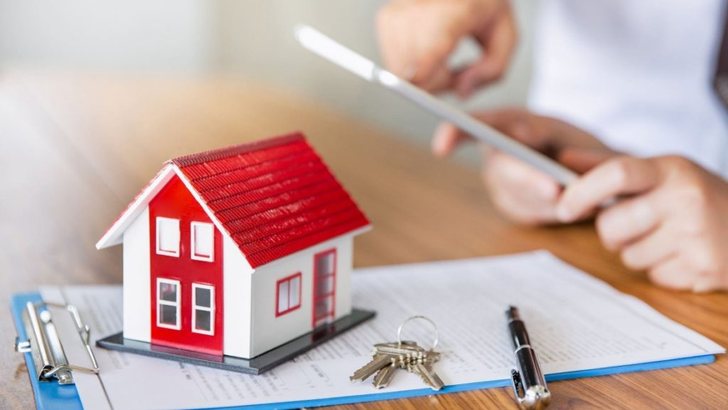
Real estate brokers in Albania have noticed for years that the tax on the income from the sale of properties in the country is an obstacle to the development of the market and a major driver of the declaration of fictitious transaction prices.
In the last decade, governments have tried to remedy this problem by creating periodic periods of property revaluation.
This allows owners to bring the recorded value of real estate up to market value, paying a reduced tax on the additional value of the property. These revaluation periods have been accompanied by significant increases in income from this tax, while according to agents, they also give a higher dynamism to the real estate market.
Last week, Prime Minister Edi Rama said that the next revaluation, which is expected to be approved in September, will foresee a tax rate of 5%, from the 3% that was foreseen in the draft law proposed by the deputy Blerina Gjylameti.
With this measure, the government intends to collect more money from the revaluation process, while the prime minister presented this initiative as a cost to the budget and an opportunity for citizens.
But the truth is that most of the countries of the OECD, Europe and the Region do not apply tax on the income from the sale of the first house.
Earlier this month, the National Association of Real Estate Agents of Albania (NAREA) officially asked the Albanian government to consider removing the income tax from the sale of the first house, as well as applying a reduced rate 3 % for other transactions.
Comparison
The comparative data collected by "Monitor", based on the relevant fiscal legislation, show that most of the countries of the European Union apply a zero or reduced tax rate on the income from the sale of the first house.
Even developed countries exempt the sale of the first house from tax
The comparative data collected by "Monitor", based on the relevant fiscal legislation, show that most of the countries of the European Union apply a zero or reduced tax rate on the income from the sale of the first house.
Another important element is that the legislation, in most EU countries, recognizes as deductible expenses from the taxable income certain expenses that the owner of a real estate has made for his property until the moment of sale. This may include the investments made for the improvement of the apartment, periodic maintenance expenses, expenses for interest on the loan with which the apartment was purchased, mediation expenses for its sale, etc.
Austria has a fairly high basic tax rate for income from the sale of real estate, at 30%. But the sale of real estate is exempt from tax if it has served as the seller's first home for at least two years from the time of first purchase.
Meanwhile, a lower tax rate is applied to older houses, to make it easier for the buyer to invest in the restoration of the property. Specifically, for houses built before 1988, a fixed tax of 4.2% of the sales price is paid.
Germany taxes income from the sale of real estate at the standard capital gains tax rate of 25%.
But even in Germany, income from the sale of real estate is exempt from tax if the owner has used it as a residence (first home) for at least two years. Meanwhile, proceeds from the sale of a property that the seller has owned for at least 10 years are exempt from tax, regardless of whether or not it served as a residence for the seller.
France applies even more liberal policies for exemption from tax on income from the sale of real estate. Income from the sale of a property that is used for residential purposes is exempt from tax, regardless of how long this property has served as the seller's residence.
For income from the sale of other properties, French fiscal legislation provides for tax exemption anyway, if the seller has not been the owner of the apartment where he has lived for the last four years. Also, the sale of other properties is exempt from tax, if the insured income is used for the purchase or construction of a first home, within two years from the time of sale.
In the case of Italy, the profit from the sale of an immovable property can be taxed under the progressive income tax scheme or under the special fixed tax regime for income from the sale of properties.
The fixed tax rate is 26%. However, Italy also applies exemptions from sales tax, subject to certain criteria.
If the property, whether a first or second home, has been owned for at least five years, the seller is exempt from paying tax. In some cases, however, the seller may be exempt from the tax even if he sells within the first five years of ownership, in cases where he has benefited from the house through inheritance or through donation.
Staying close to Albania: even Greece, which in the years after the financial crisis undertook a drastic tightening course of fiscal policies, does not require tax on the income from the sale of a real estate, if it has been owned for at least five years.
Spain does not apply a separate tax rate to income from the sale of property, but includes this income in the general progressive income tax system. The tax rate is in the range of 19-23%, depending on the realized income.
But Spain also applies tax exemptions in some cases. Thus, the sale of the first house is exempt from tax, if the individual uses the proceeds from the sale to buy another house, provided that the other house purchased also serves as the main residence.
Meanwhile, for people over the age of 65, the sale of the first home is not taxed, regardless of whether the proceeds are used to buy another home or not. In this case, the only condition is that the individual has lived in the first house for at least three years.
The practice of exempting the first home from tax is similar in countries outside the EU.
The UK has a 24% tax rate on income from residential real estate. But even in the case of Britain, the sale of the first home is completely exempt from tax, provided that the seller has lived in it while owning it.
Even the United States of America applies an exemption rate to the proceeds from the sale of the first home. A flat amount of $250,000 for single owners or $500,000 for married couples is deducted from the gain on the sale of the first home, in addition to known expenses.
The condition is that the seller has lived in the first house for at least two years in the last five years before the sale. For this reason, in most cases even in the USA, sales of first homes are practically exempt from tax, or result in a fairly small tax liability.
Even in the Region, the sale of the first house is not taxed
Examples of exemptions or significant reductions from the basic tax level on the sale of real estate can also be found in the countries of the Region.
North Macedonia has a basic income tax rate of 10%. However, capital gains from the sale of immovable property are exempt from taxation in cases where the immovable property
is sold after three years from the date of purchase, in case the taxpayer lived in it for at least one year before the sale, or in case the property is sold after five years from the date of purchase, regardless of whether it served as a first residence.
Serbia has a basic income tax rate of 15%, the same as Albania. But, in case the seller has owned the real estate for at least 10 years, he is exempt from the tax.
However, exceptions exist even if the property has been owned for less than 10 years. Fiscal legislation in Serbia provides that, in case the income from the sale of the property is reinvested within 90 days in another real estate for a family member of the seller (spouse or child), the said income is exempt from tax.
Meanwhile, if the income from the sale of the previous property is reinvested for another first home, the subject enjoys the right to benefit from the refund of the tax paid on the income from the sale of the previous property (up to one year after its sale) .
If the amount reinvested in a new home is less than the income from the sale of the first home, then the entity in question is taxed only on the uninvested difference.
Montenegro has a capital income tax rate of 15%, the same as Albania. But, even in Montenegro, the fiscal legislation exempts from taxation the income from the sale of the house that has served for residential purposes of the seller (first house).
Bosnia and Herzegovina has a capital gains tax rate of 10%. However, even in Bosnia, the sale of real estate is not taxed, in case the property has been used for residence by the seller or his family members for at least three years from the moment of its purchase.
In the Western Balkans Region, Albania and Kosovo are the only countries that do not apply tax exemptions for the sale of first homes. However, even in this case, Kosovo has a lower tax rate than Albania, at the level of 10%.

NAREA proposes a relief package
The National Association of Real Estate Brokers of Albania (NAREA) proposes some changes to the tax scheme on income from the sale of real estate.
According to NAREA, in an effort to help the continuation of the positive contribution that this sector makes to the Albanian economy, the tax should be determined in value and in different categories, for commercial entities and individuals, as the moment of payment changes.
At the time of transfer of title, if the property in the transaction has served as the first residence, for at least 5 years from the moment of ownership, or if it is proven that it has served as the first residence for at least 50% of the time ownership, then the transaction with this asset is exempt from Realized Capital Gains Tax.
According to NAREA, such a practice is followed in 2/3 of OECD countries.
NAREA proposes that, at the time of transfer of ownership title, if there is a taxable capital gain, the taxable base (sale price - purchase/acquisition price) be corrected with the annual inflation rate, for each year from the moment of buying to selling, like
and with the financial costs generated at the time of taking ownership or during ownership (costs of financing the purchase, interest on bank mortgage loans, those of restorations, etc.).
If there is a realized capital gain, after the taxable base has been corrected as above, NAREA proposes that the capital income be taxed at no more than 3%.
Also, NAREA suggests that, if the income earned from the sale of real estate is reinvested in the purchase of another property, within 12 months from the moment of sale, then the tax received through the realized capital be refunded.
According to NAREA, examples from other countries show that the reinvestment within 12 months of the proceeds earned from the sale of a property is not only tax-free, but also encouraged to be used as oxygen for the real estate sectors and construction, which today provide 25-35% of GDP growth in the country.
This incentive also serves very well as a tool for tracking cash flows, for highlighting the healthy portion that is injected into the real estate and construction sectors, as well as mitigating the risks associated with money laundering.
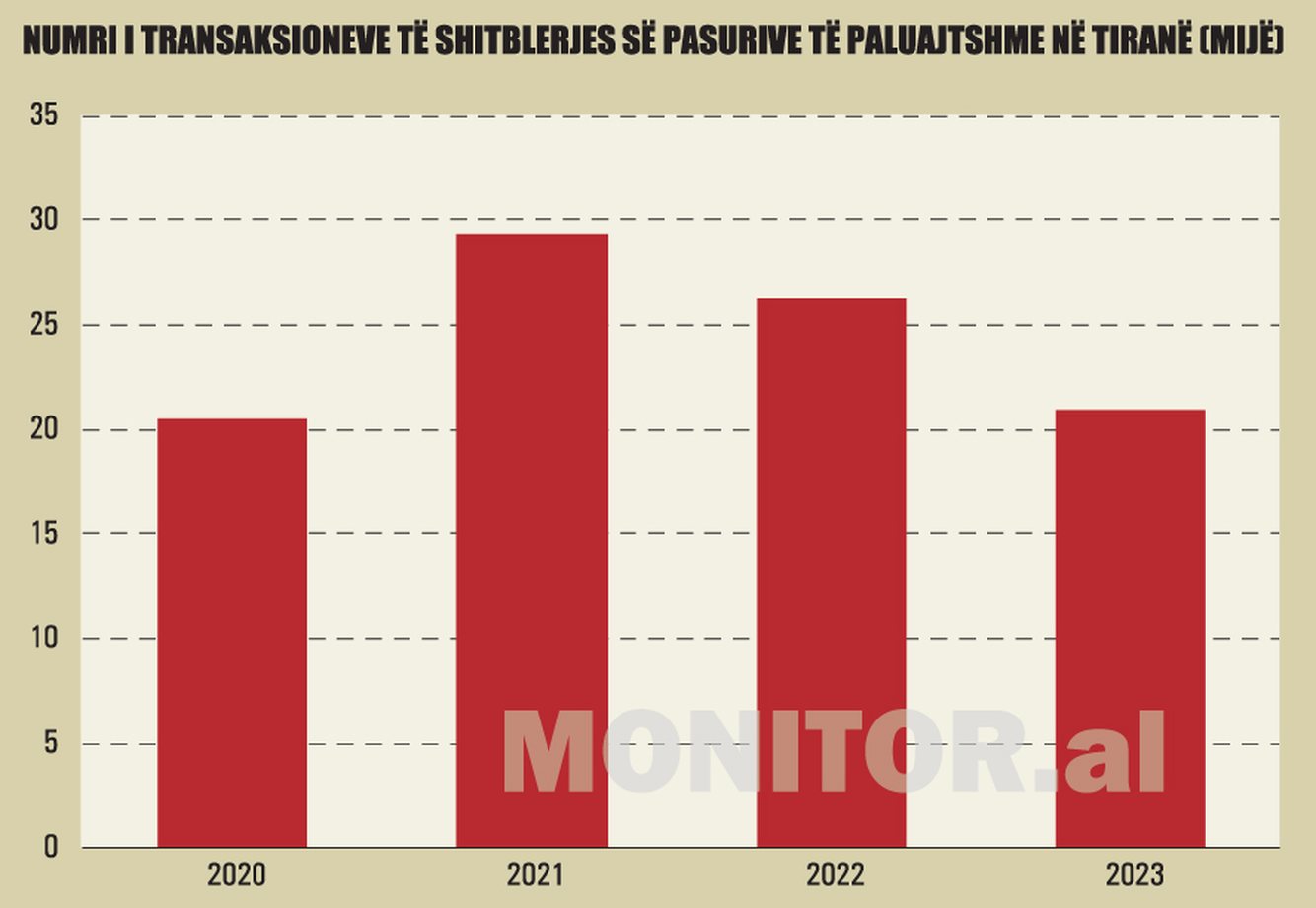
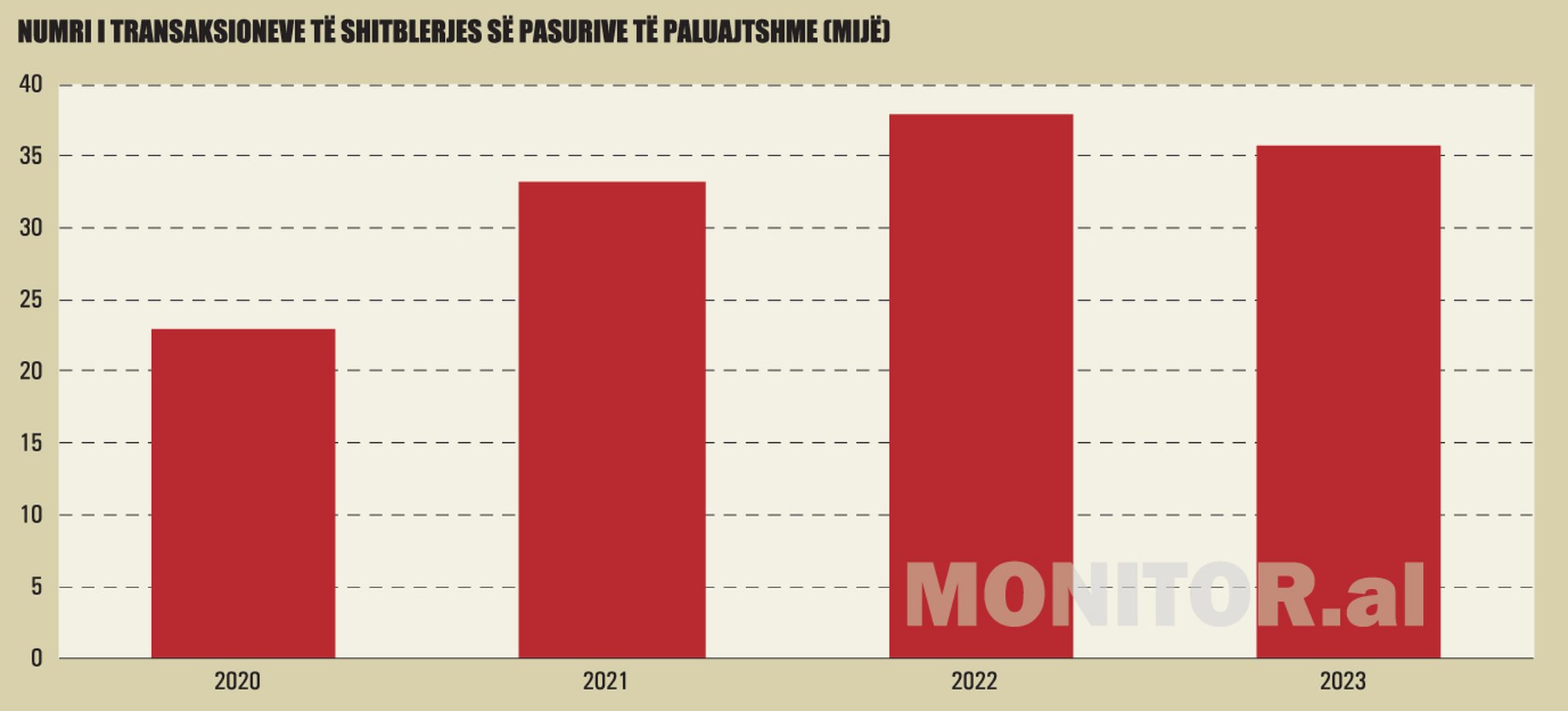
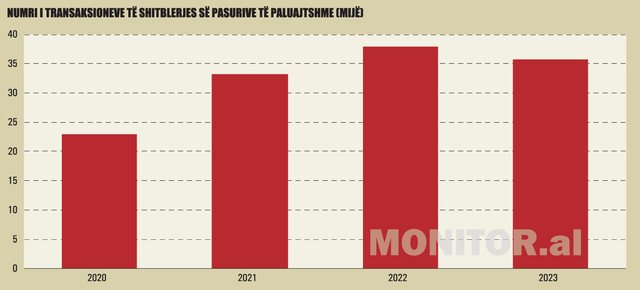
Although the construction sector and real estate activity increased again in 2023, Personal Income Tax revenues on real estate transactions declined in 2023.
Based on the national data of this sector, NAREA notes that compared to the years when this tax was kept at the level of 15%, during periods of fiscal relief where the tax rate
no more than 3% is applied, the sector not only knows growth and expansion, but also the budget collects more income, at the levels of 35-40 million euros.
The comparison of the last five years shows that in the years 2020-21-22, where the tax was at the level of 3%, for the state budget, an average of 44 million euros of income was realized each year through this tax, i.e. about 60% more compared to 2019 where the tax was 15%.
"In this context, as NAREA we share the position that such a high fiscal burden,
of 15%, slows down transactions, stiffening investments, consumption of stock and brings contraction in this sector, leading to its decline by 250-300 million euros; negatively affects the realized budget revenues, with at least 35-40 million euros; it fosters informality, producing more sophisticated ways to avoid the burden; neutralizes the positive effect of any initiative for corrections of the taxable base", says the statement of NAREA.
The stalled revaluation has paralyzed the market
In the month of May, a new draft law "On the revaluation of real estate" was filed in the Parliament of Albania, proposed by the deputy of the Socialist Party, Blerina Gjylameti.
The draft law proposed that individuals and entities will have the right to revalue their properties at the market price, paying a revaluation fee of 3% of the difference between the revalued price and the last price recorded in the property register.
Initially, the interested parties were informed that the draft law would be approved within the month of June, but such a thing has not happened and the process of examining it seems to have stalled.
This draft law is not included in the calendar of acts that will pass in the plenary session until July 26, and it seems likely that its review will be left for the autumn session, after the Assembly's vacation.
The delay in the parliamentary treatment of the legal proposal for the revaluation of real estate and the uncertainty about the future has brought negative effects to the market. By delaying the treatment of this proposal, according to NAREA, the gap of properties for sale deepens, withdrawing from the market until its final clarification.
The presentation of the draft law and the expectations created for its approval have caused many subjects to postpone the sale pending reevaluation, even according to real estate agents, many agreed transactions have already been suspended pending reevaluation.
Sources from the banking sector reveal that there are many cases where approved loans for property purchases are not being disbursed, because sellers are reluctant to sign the sales contract, waiting for the revaluation.
However, last week, the "stalling" of the revaluation process was explained by several statements of Prime Minister Edi Rama, in a meeting with the Mayors.
The Prime Minister said that the revaluation will be done, but not with a fee of 3%, as proposed in the bill submitted to the Assembly, but with a fee of 5%. According to the Prime Minister, the revaluation is expected to be approved within the month of September.
According to ASHK, in the three revaluation processes approved from 2011 to 2022, a total of about 250,000 real estates were revalued.
The most recent data of the 2023 Population and Housing Census showed that Albania has approximately 1.08 million dwellings, of which 726 thousand are inhabited.
The revaluation brings a significant increase in budget revenues
Statistics show that revaluation periods have a strong impact on increasing budget revenues from the tax on income secured from the sale of real estate.
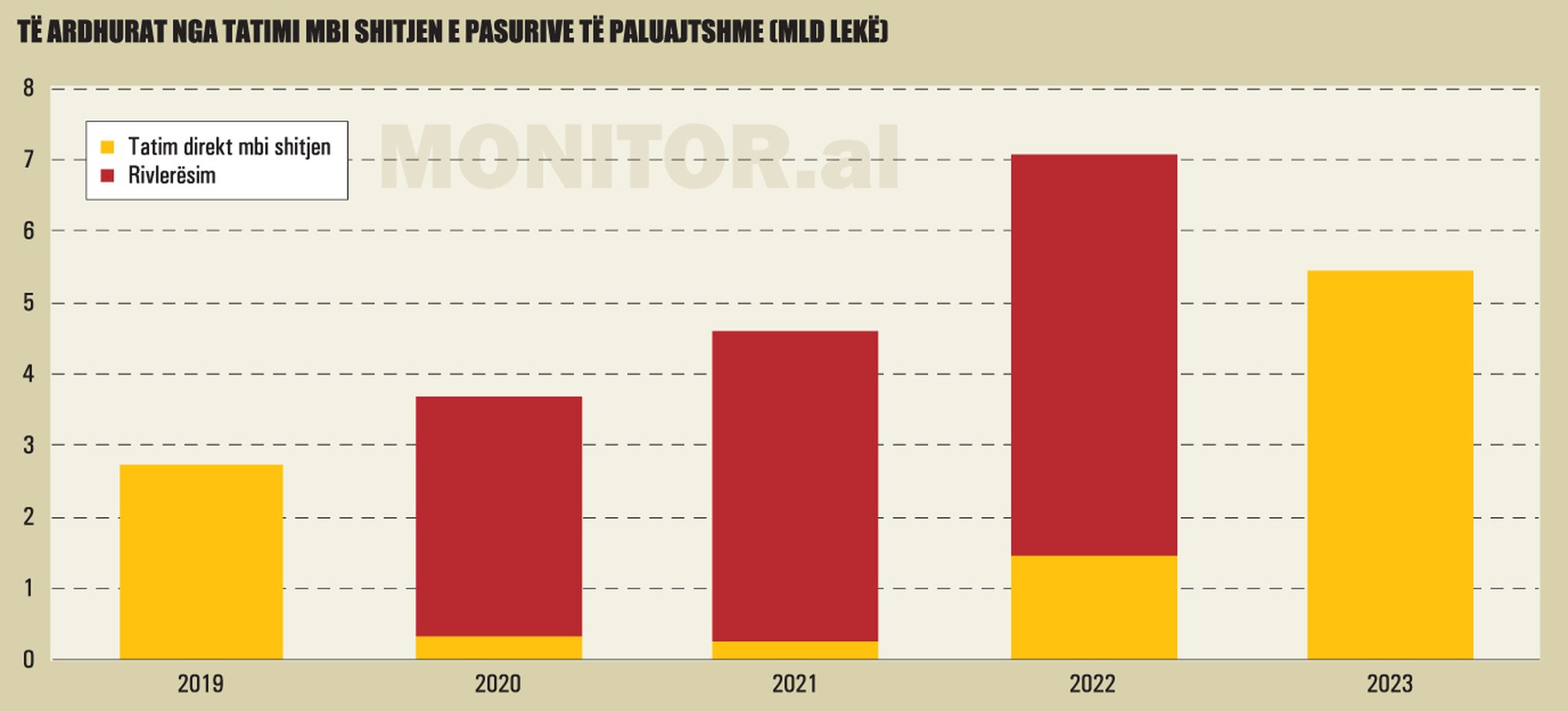
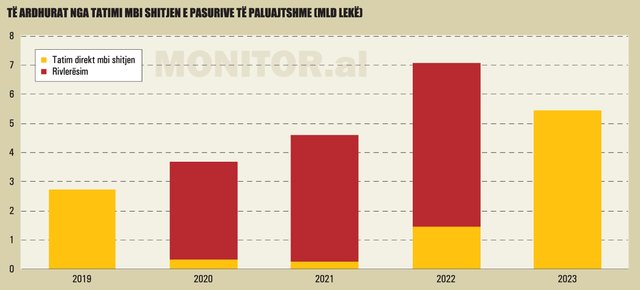
The last revaluation of real estate was carried out during the period 2020-2022 and the data of the General Directorate of Taxes show that the income from this item recorded a continuous increase for three years in a row, while during the corresponding years, the income from the revaluation dominated clearly the structure of the income, compared to the income from sales transactions.
In 2022, the last year when property revaluation was applied, tax revenues reached a record figure of almost 7.1 billion ALL, of which almost 80% was revenue from revaluation. Revenues from this tax doubled compared to 2019, the year before the revaluation began.
This can be explained by the significant increase in the value of the real estate market, but it clearly proves the important effect that the revaluation brings.
Meanwhile, after the end of the revaluation, in 2023, income from this tax immediately fell, with 23% less than in 2022.
Retrieved from Monitor