Details of the storm in the administration, here's who will resi...
/ 2026-10-22 22:25:00Focus


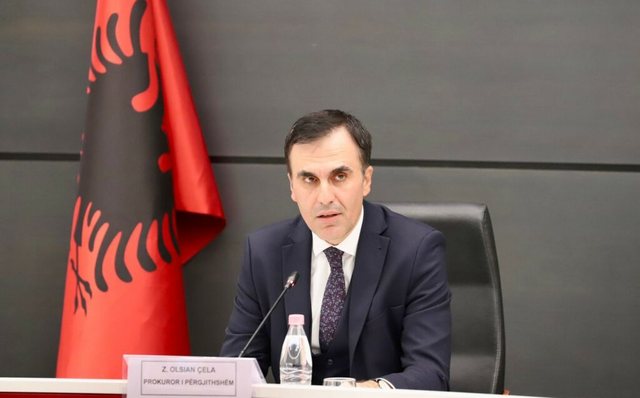
The Prosecutor General, Olsian Çela, has reacted in extremely critical tones to the new draft of the Criminal Code, describing it as a hasty initiative, without in-depth social reflection and with serious consequences for the justice system in the country.
Çela also states that the spirit of the draft of the new criminal code has a repressive tendency that increases the potential for criminalization of the individual in society, expanding the circle of actions that are categorized as dangerous.
Çela emphasizes that "before any discussion on a new draft, a broad social reflection on the need for change itself would be necessary. He recalls that the Criminal Code in force since 1995 has been continuously adapted to reality through numerous interventions, so it cannot be claimed that it is outdated or unsuitable for the times."
Criticism for lack of consensus
According to Çela, "the new draft has not been preceded by a process of reflection on the values that a penal code should represent in a democratic society. He emphasizes that changing the code should stem from a deep historical need and not as a hasty institutional action, which risks undermining the functioning of justice."
In this context, he brings to mind the example of 1995, "when Albania moved away from the authoritarian model of the past to build a penal system on liberal and democratic values. The current draft, according to him, does not have such a moral starting point and does not represent the development of social values."
"Public consultation process, useless"
The Attorney General considers the way in which the draft is being approved to be inappropriate, considering the public consultation process to be formal and useless due to the complex nature of a new Criminal Code. He warns that the proposals brought forward create confusion for magistrates, with unclear norms and a risk of different interpretations in similar cases.
According to him, the legal technique used to construct the provisions also makes it impossible to correct during the consultation process. He warns that the tendency to explain every possible interpretation of the legal norm has consequences for practical implementation and blocks the flexibility of the system.
"The new code has a repressive spirit and violates legal certainty"
One of the most serious concerns raised by Çela relates to the expansion of criminal offenses and the increase in imprisonment measures, which according to him constitutes a repressive tendency with a negative impact on the lives of citizens.
Çela warns that there are provisions in the draft that conflict with the principles of legal certainty and humanity.
Warns of long-term consequences
According to Çela, toughening criminal penalties is not the answer to the challenges the country is facing, adding that Albania already has one of the strictest codes in Europe. He recalls that the Prosecutor's Office has always maintained this stance in lawmaking processes.
He also emphasizes that amendments to the Criminal Code must go hand in hand with amendments to the Criminal Procedure Code, in order to maintain the balance between substantive and procedural norms. Without this coordinated and visionary approach, penal amendments will be ineffective.
"Justice is in crisis"
The Attorney General raises concerns about the inappropriate timing of the draft, noting that the justice system is going through a difficult period, with a lack of staff and an extraordinary overload of files. He emphasizes that this situation has prevented magistrates from being truly involved in the consultation process, due to physical and time constraints.
For this reason, he concludes his response with a clear call: "More than a new criminal code, today the country urgently needs intervention in the Criminal Procedure Code, to correct the things that are going wrong in its functioning and to facilitate processes from unnecessary bureaucracies, which are affecting the delay of investigations and trials."