How Belinda Balluku is fabricating the rumor about Top Channel's...
/ 2026-10-19 16:19:54Focus


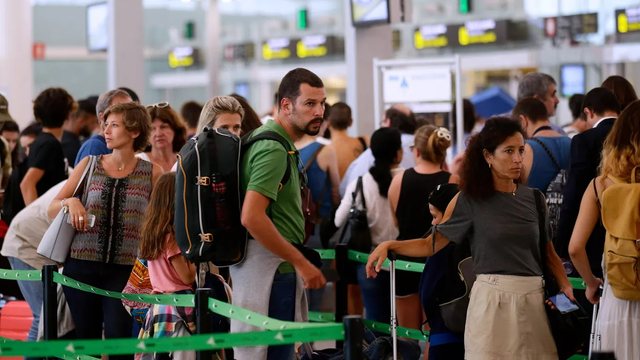
Europe's airports and border crossings are bracing for potential congestion on Sunday, when a new security system that tracks passengers' fingerprints will be launched.
Operators will begin recording biometric photographs and fingerprints of people entering or leaving the European Union at some border points, while the New Entry-Exit System (EES) will be gradually introduced over a six-month period.
Germany will start this Sunday at Düsseldorf airport, then in Frankfurt and Munich, and at a later stage at seaports and other border crossings.
Ports, airports and rail terminals have been forced to install new equipment to carry out these checks, which will enable authorities to automatically check immigration status data and identify people who overstay in EU territory.
"We will know who enters the EU, when and where. This is the digital pillar of our new approach to border management," declared the EU's Home Affairs Commissioner, Magnus Brunner.
Ultimately, EU member states decided that the process would develop gradually, making the system fully operational on April 10, 2026, when it will replace manual stamping of passports.
"Implementing an IT system of this size across 27 member states is a complex and demanding task for which we are prepared. The six-month implementation period will ensure that countries, travellers and businesses adapt gradually," added Brunner.
Despite preparations, British authorities are warning that during the coming summer, especially during the school holidays, there could be long delays for travelers crossing the border into the EU.
The UK Department for Transport has secured two large spaces in Kent that will serve as waiting areas for vehicles queuing for the Eurotunnel or the port of Dover, in order to avoid road congestion.
British Minister for Border Security and Asylum, Alex Norris, said the new checks represent "a significant change for British travellers, so we have worked closely with our European partners to ensure that implementation is as smooth as possible."
The British government has allocated 10.5 million pounds to help ports and operators with the transition process, mainly for setting up testing areas.
Eurostar's senior director, Simon Lejeune, welcomed the "phased implementation of the EES system", stressing that this approach "will help to ensure smoother operation and allow passengers to gradually get used to the new procedure".
The ACI Europe association, which represents European airports, stressed that "the management of border crossings is the responsibility of EU member states, not airport operators."
The system will be implemented by the 29 countries of the Schengen area, including Switzerland, Iceland, Norway and Liechtenstein. The checks will not apply to people holding EU residence permits or long-term visas.
Initially, each country will apply the system at limited points or for certain categories of travelers.
The Netherlands will launch it at the ports of IJmuiden and Eemshaven, while at Amsterdam's Schiphol Airport it will begin on November 3.
However, unlike current passport checks that are carried out inside vehicles, the new scheme requires passengers to stop at special areas and exit the car to undergo verification, a process that Eurotunnel estimates takes around two minutes per person.