Protests, violence, curfews: From France to Albania, why Europe'...
/ 2026-10-20 23:47:20Focus


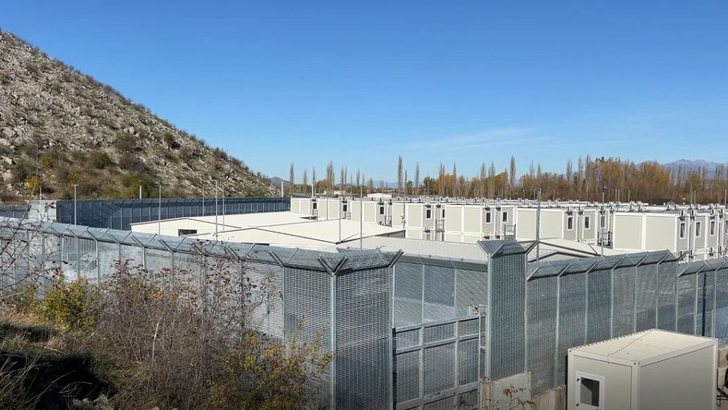
Caught between the ordinary judiciary and the accountant, Giorgia Meloni is exploring new avenues, one of which is the conversion of the "hotspots" in Gjadër into prisons to house prisoners associated with the "Albanian mafia", who are counted to be around 2800 in Italy. This is how the Italian media Il Tempo begins its article , which then quotes the chief prosecutor of Naples, who warned a while ago that: " Mafia of the future, not only in Italy, but also in Europe, will be Albanian "
According to the newspaper, " The prime minister's intention was to transfer immigrants from Africa, rescued in international waters by Navy and Finance ships, directly to Shengjin and Gjadër, awaiting the bureaucratic procedures of their fate. Today the vision has changed! In fact, the latest news reports that almost all of the center's staff have retreated to Italy. It now remains to be determined how these places can be used with a cost/benefit ratio that so far leans in favor of the former."
" The cooperation between Rome and Tirana has deep roots - continues the newspaper - It is enough to remember the biblical exodus of 1991 - immortalized in the film "L'America" by Gianni Amelio - with 20,000 immigrants fleeing from post-communist Albania crushed in the ship of Vlora, which anchored in Bari.
In the following years, we continued with Italian missions such as "Alba" in 2017 and interventions after the earthquake in 2019, in which Italy was the first to intervene.
Currently, the cooperation is even closer, including the Armed Forces, intelligence leaders and Albanian personalities. Among these, a key man of bilateral relations stands out, such as Ilir Kulla, former minister for Religious Affairs, international security adviser to prime ministers and presidents and a great friend of Italy, where he graduated.
Exchanges between the two nations date back to the 15th century, with the birth of Arber communities in southern Italy. Bolstered by this collaboration, ongoing confidential talks are about the hypothesis of redeveloping immigration centers in prisons in order to relieve our increasingly overcrowded and unmanageable penitentiary system. The idea is based on an effective protocol already in use since the time of Prime Ministers Fatos Nano and Silvio Berlusconi, not to mention that Italy and Albania have been involved in ministerial agreements for years and our country has in the past financed two prisons in Albania.
Faced with the overcrowding of the country's prisons, with percentages that exceed 130% and with the increase in the number of suicides of prisoners, there are reasonable proposals to use the area of Lezha, for Albanian prisoners sentenced in Italy.
However, the Port of Shengjin can host immigrants along the Balkan route, in cooperation with the European Union. These interventions would represent a win -win for both countries. The Albanian authorities would also like to use this opportunity to position themselves in the center of European attention, perhaps as a function of the EU accession process. The idea of transferring immigrants to Albania was born from the conversations between Giorgia Meloni and the then British Prime Minister Rishi Sunak, who illustrated the project of "deporting" immigrants to Rwanda. However, while Rwanda is thousands of kilometers from London, Albania is opposite Italy, making the project seem more feasible. The idea was then perfected in the summer of 2023, during Melon's vacation in Albania in talks with Prime Minister Edi Rama, who made his territory available to him. In parallel, the EU has reached an agreement on the new Pact on Migration and Asylum, approved by the Parliament and the European Council last May, which foresees that centers like the Italian ones in Albania will apply starting from 2026.
Despite numerous criticisms, including internal ones, in Europe the Albanian centers are considered a model to be studied. Among the mistakes made was the lack of a solid organizational structure. The agreement signed last year between Rome and Tirana stipulated that Albania would host up to three thousand immigrants at a cost of at least 670 million euros over five years. The half-empty ship with less than 20 migrants, the high costs, the chosen country at risk of flooding, the poorly managed legal-political battle sent the media into a frenzy. With better management, multi-stakeholder coordination and deeper planning, the centers could have been fully operational and provided a concrete response. The government has served the controversy on a silver platter, both for justice and for the opposition. Now we can only try to correct the situation, preventing an ambitious and daring project from turning into a political Titanic," the newspaper article concludes.