"Condemned" protesters?! Who trapped Rama inside the Prime Minis...
/ 2026-10-23 16:02:00Focus


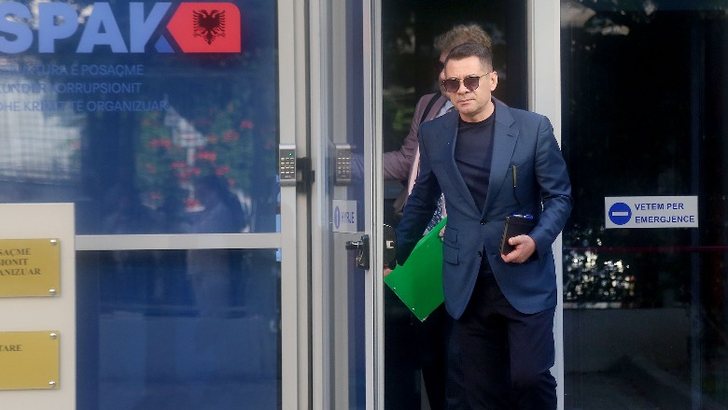
The former chairman of the Parliamentary Investigative Committee for TIMS, Ervin Salianji, has reacted through a post on "Facebook" regarding the official indictment of the former IT director of the State Police, Ervin Muça. In his reaction, Salianji states that TIMS is a mafia story.
Salianji further emphasizes that Muça's arrest is proof that the Parliamentary Investigative Committee on the TIMS interference accurately documented the insecurity and inability and misuse of the state administration to protect important state systems and information.
According to him, this interference in computer systems has seriously compromised national security. Salianji further listed 10 findings of the commission in his response regarding this issue. According to him, his imprisonment was done to forget the issue of the TIMS system and not to investigate Prime Minister Edi Rama, whom he described as the main beneficiary.
Ervin Salianji's reaction:
TIMS mafia history, from illegal appointments to system manipulation to Eliza's keeping in the drawers of the world of illegality show the urgency that SPAK must investigate the scandal more deeply.
The arrest of Ervin Muça, former IT director at the State Police, is proof that the Parliamentary Investigative Committee for interventions in TIMS accurately documented the insecurity and inability and misuse of the state administration to protect important state systems and information. Interference in computer systems and copying data in TIMS seriously violated national security. Only Edi Rama has the power to impose that this issue remain in the drawers of the Parliament and not be sent to SPAK for further investigations as is the legal obligation but also the request of the committee! My imprisonment is also for this reason, to forget the issue and to prevent the main beneficiary from being investigated; Edi Rama!
******
Some of the findings of the Investigative Committee;
Despite the obstacles, the Investigative Commission made findings beyond expectations and managed to fact-check the abuses and interventions in the TIMS system!
1. First finding: From the documentation administered and the testimonies received by the Investigative Commission, it resulted that Mr. Ervin Muça did not meet the conditions to be appointed to the position of Director of the IT Department. Specifically, this citizen had been criminally prosecuted for document forgery in the Italian state in 2007, had been refused a residence permit in 2008, had not completed the decriminalization form, had not completed the mandatory training at the Security Academy, was not equipped with the Personnel Security Certificate and was simultaneously employed as an advisor to the director of the State Cadastre Agency, although the investigations conducted by the Prosecutor's Office have not found any concrete work product.
2. Second finding: From the documentation administered and the testimonies received by the Investigative Commission, it results that the recruitment procedures of the former director Besjon Tanuzi and the current director Enri Ndoni were fictitious and with a predetermined result. This is evident from the fact that they applied for the documents to be appointed to these positions before the vacancy was created, there was no advertisement for the vacant position in these positions and they were the only candidacies that were submitted for approval to the Director General of the State Police. On the other hand, it results that Mr. Tanuzi had no previous experience in the State Police or the latter's IT systems and was not equipped with a security certificate, while it seems that the friendly relationship with citizen Ervin Muça was decisive for his appointment.
3. Third finding: From the documentation administered and the evidence received by the Investigative Commission, it results that the procedure followed for the appointment of the Director of Cybercrime Investigation Ervina Gjana was fictitious and with a predetermined result. This is clearly evident from the fact that Ms. Gjana submitted the documentation before the vacancy announcement, was the only candidate, applications were only open for two days and the appointment was made before the training at the Security Academy, in violation of the legal provisions of Law No. 1082014 “On the State Police”. It also turns out that Ms. Gjana had no previous experience in investigating cybercrimes, her security certificate was not in line with the new task and in 2014, which coincides with the dismissal of the Server Sector specialist at the Information Technology Directorate, procedural materials were referred as a suspect for committing the criminal offense of "Theft", provided for by Article 134 of the Criminal Code.
4. Fourth finding: From the documentation administered and the evidence obtained by the Investigative Commission, it resulted that the first notification of an illegal intervention in the TIMS system came via an email at 1451 on 02.08.2023 from the head of the Server Sector, Mr. Ardit Muço, which was forwarded to the main leaders of the State Police. Then the second notification came via an email at 2254 on 02.08.2023, where in addition to the leaders of the State Police, the media and key state leaders were informed, including the Minister of Interior and the Director of the Police Supervision Agency. Despite the notifications received from the Minister of Interior, Mr. Taulant Balla, the General Director of the State Police, Mr. Muhamet Rrumbullaku, the Director of the Police Supervision Agency on 02.08.2023, the date on which the intervention in the TIMS system began, the institutional reaction came only the next day on 03.08.2023. The statements of Mr. Balla, Mr. Rrumbullaku and Mr. Veliu regarding receiving information and communications with each other are contradictory and do not match each other. If the reaction had been timely, the intervention, which began at 1800 on 02.08.2023 and lasted until 0200 on 03.08.2023, could have been prevented.
5. Fifth finding: From the documentation administered and the evidence received by the Investigative Commission, it has resulted that citizen Ervin Muça, acting Director of the IT Department at the State Police, together with the Director of the Systems Directorate, Besjon Tanuzaj, and other employees of the IT Department, have committed a series of legal violations, putting the security of the TIMS data system at risk. Specifically, these citizens, in collaboration with each other, have allowed unauthorized entry into the premises of special importance of the State Police, have not received permission or prior authorization from the General Director of the State Police to carry out the back-up process, have partially transferred the TIMS system data to external devices, have entered the building using the code of an employee who was on annual leave, have operated late at night and outside official hours, have ordered subordinates to perform duties in violation of the law, and have not drafted acts according to Order No. 3410, dated 28.04.2023 of the General Director of the State Police. Despite flagrant violations of the law, these employees were only suspended for a period of 5 days and were then allowed to continue working normally, without initiating the dismissal procedure, under conditions where both the General Directorate of the State Police and the Police Supervision Agency had ascertained that they had committed actions or omissions contrary to the law, and were putting at risk the security of a critical infrastructure for the State Police.
6. Sixth finding: From the documentation administered and the evidence received by the Investigative Commission, it resulted that on October 14, 2021, there was a cyber attack on the State Police's information systems, including the TIMS system. This attack was not reported, no in-depth verifications or investigations were carried out, and no measures were taken to clean the systems from possible viruses or strengthen security measures for risks that could threaten the system from cyber attacks. It also emerged that on September 9, 2022, there was a second attack on the State Police's information systems, including the TIMS system, which according to evidence was a direct consequence of the failure to take measures in the case of the October 2021 cyber attack. As a result of these two attacks, the leaders of the IT Department at the State Police have stated that the data of the TIMS system until September 2022 is available on online channels, and can be purchased by any person who may be interested. Regarding these claims, which are also supported by official documentation, it does not appear that there have been in-depth administrative or criminal investigations by law enforcement institutions. Failure to conduct these investigations and take the necessary measures increases the risk of recurrence of cyber attacks with devastating consequences for critical State Police systems in the future.
7. Seventh finding: From the documentation administered and the evidence received by the Investigative Commission, it has resulted that certain persons have had unauthorized access to the TIMS system. Although the law and the by-laws provide in detail how a person is granted access to the TIMS system, it remains unclear how private persons, i.e. who do not exercise a state duty related to the access and use of the TIMS system, have access to this database of particular importance. Not only the manner, but also the persons who have granted them this access, the goals and motives of these private persons who have had access to the TIMS system remain unclear and raise serious suspicions of illegality. The TIMS system contains a variety of data, as we have explained above, and free access by unauthorized persons constitutes a serious risk to order and security in our country. This situation, of which both the Minister and the highest leaders of the State Police seem to have been aware, should have prompted the latter to take urgent measures to conduct an in-depth investigation of unauthorized entries into the TIMS system and to take measures to prevent such situations from recurring in the future.
8. Finding Eight: From the public data and the universally known facts, which were brought by the members of the Investigative Commission, it results that employees of the State Police, who are tasked with storing and administering the data of the TIMS system, have used the right of access to make the data of this system available to elements of organized crime, who have a special interest in becoming familiar with the entries and exits of citizens from the territory of Albania, arrest, detention, search orders, prohibitive measures from foreign countries, criminal court decisions by Albanian or foreign authorities, vehicles in which certain citizens move, etc. In order to obtain this information, these citizens are willing to offer considerable monetary amounts, in order to learn in real time the information contained in the TIMS system for themselves or their opponents. TIMS system data has served criminal groups to eliminate their opponents, to limit their movements abroad or even to escape in cases where national or international arrest warrants have been issued against them.
9. Ninth finding: From the documentation administered and the evidence received by the Investigative Commission, it has resulted that interventions have been made in the TIMS system, which enable certain persons not to register their entry and exit from the territory of the Republic of Albania, and if they are registered, the search in the TIMS database is not complete by avoiding criminal databases, which allows Albanian or foreign citizens who may be nationally or internationally wanted, or convicted of committing crimes, to freely enter and exit the territory without any alert from the system. This deviation, as stated by the Director of the IT Department, Ervin Muça, mainly serves individuals with criminal records and may also explain the fact that people wanted by Albanian justice authorities have managed to leave or enter the territory of our country without being detected by law enforcement institutions. This issue also deserves special attention and immediate addressing as it constitutes a serious risk to order and security, and severely damages the work of justice authorities, whether Albanian or foreign.
10. Institutional responsibilities: Following the above findings, they are responsible for committing actions or omissions contrary to the law, in collaboration with each other, seriously damaging the interests of the state and bringing illegal benefits to certain citizens!
11. In order to investigate the role and illegal activity of these citizens, we consider it necessary to conduct a full, in-depth and comprehensive investigation by the Special Prosecution Office against Corruption and Organized Crime (SPAK). The latter may also bring to light new illegal facts, as well as identify other persons who may have been identified during the parliamentary investigation. We draw your attention to the fact that due to the delay in sending requests for information by the majority deputies, the delay in returning responses from the institutions or the failure to return responses from the institutions, as in the case of the Council of Ministers, the rejection of requests to call other witnesses and the short time available, the Investigative Committee of the Assembly has been objectively unable to carry out all the necessary investigative actions that would lead to the full disclosure of the truth. Therefore, SPAK, once this material is made available to it, in accordance with its subject matter competence provided for by Article 135, point 2, of the Constitution of Albania, and Article 75a of the Code of Criminal Procedure, has the opportunity to fully investigate and shed light on the illegal activity of the aforementioned persons.