"We are drowning..." - From Lisbon, Milan to Tirana, "The Guardi...
/ 2026-10-18 23:13:32Focus


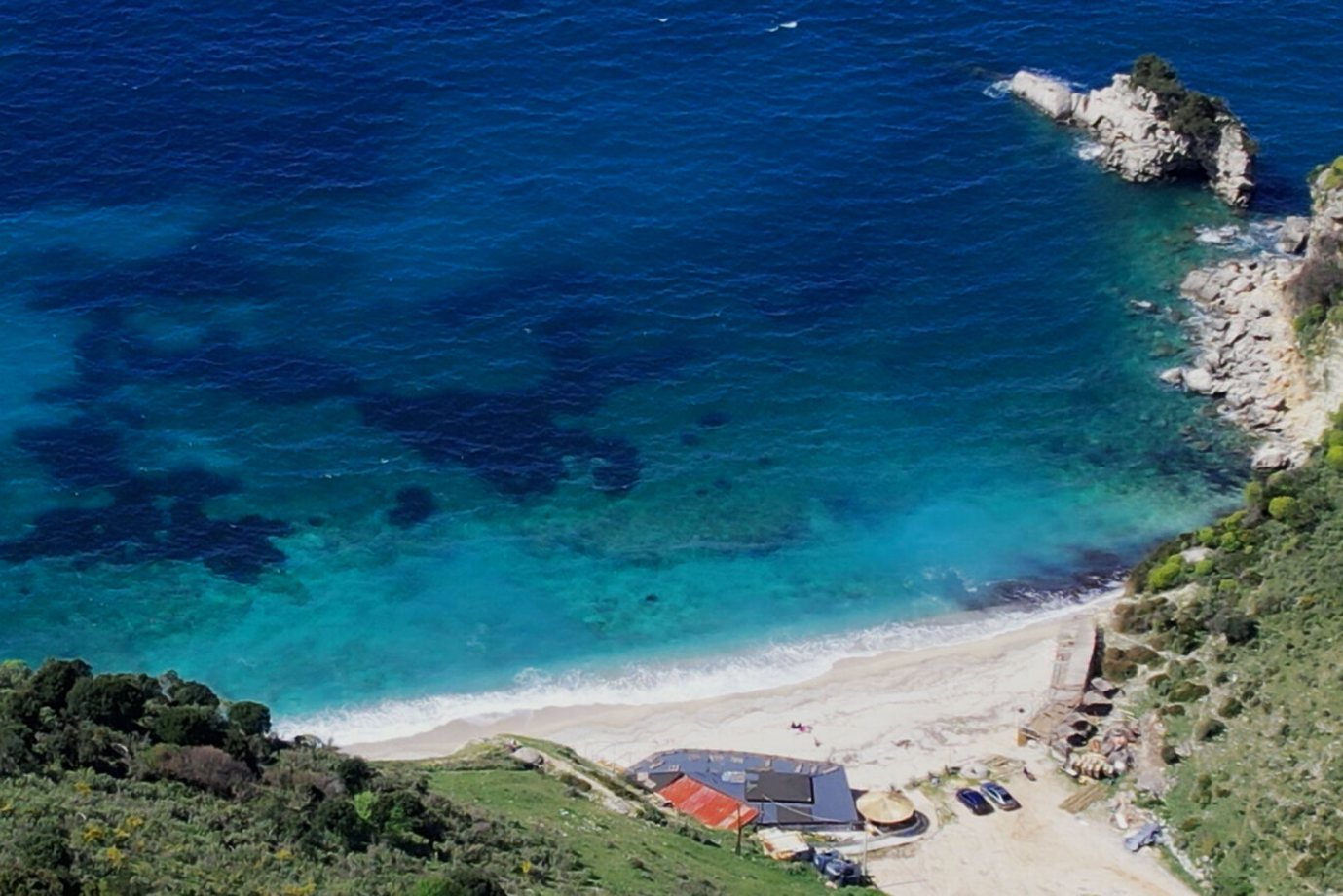
In a small bar-restaurant, on the rocky edge of the village of Manastir, Gëzim Hoxha serves lunch to the first tourists of this season.
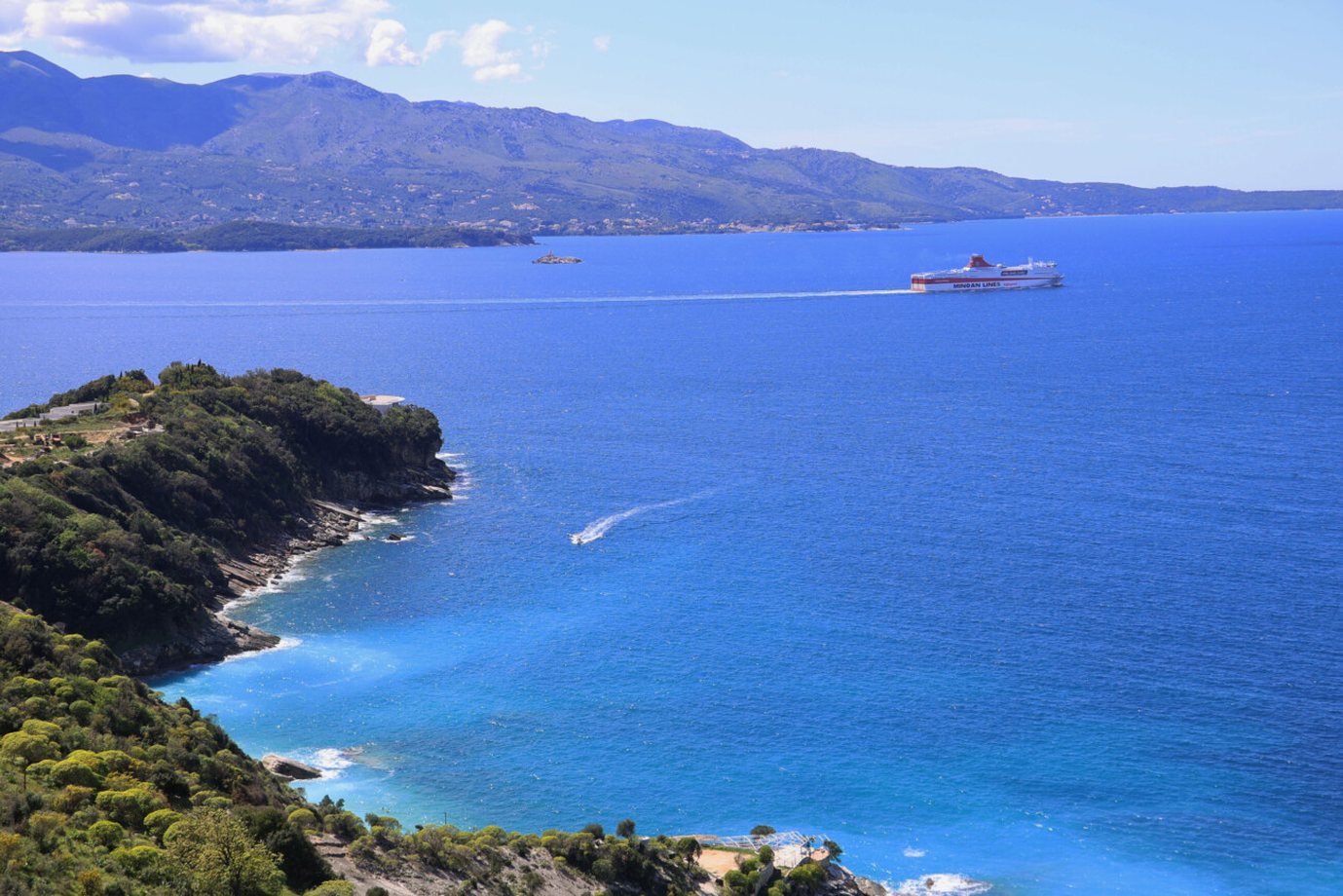
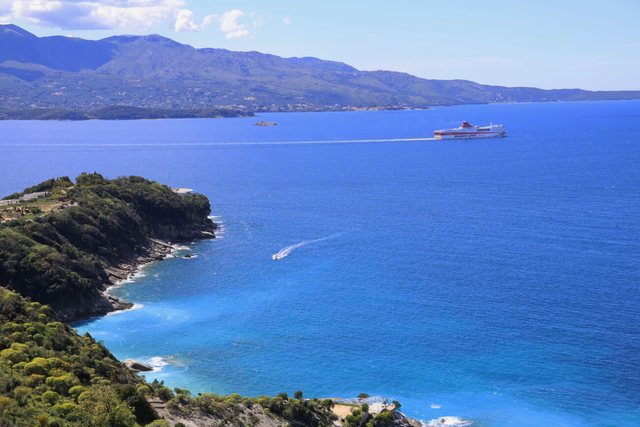
From the terrace of the family business, the view opens towards the Mirrors Beach, the Corfu Channel and the hill where the Monastery of Saint George stands, on one of the most coveted segments of the Albanian coast.
For more than two decades, the family lived between emigration to Greece and the village of Manastir, working there to invest their savings in the small business that today provides their main income. As Gëzim kindly serves foreign visitors who quietly enjoy the hospitality and impressive view, he reveals the tension and questions that torment him about the future of the village itself.
"I lived in Greece for 22 years and invested all the money I earned there here. I set up a small restaurant with five tables and my son, wife and I feed ourselves from it," the 70-year-old said, his hands shaking under the large tray he served a foreign couple.
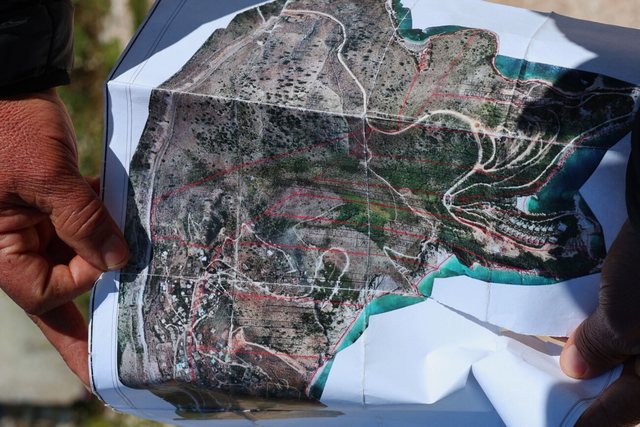
The tranquility of the residents of Manastir has been shaken after a "red map" appeared, which began to be distributed clandestinely in the Saranda Cadastre office. The dreams of residents who already have a legalization certificate in their hands have been equaled to those who do not yet have one, as an "elite tourism" project has already blocked the future of the village.
"I did not enter anyone's property by force. I came here in 2009, like many others in the village," explained Gëzim Hoxha in front of the project that aims to create a "village within a village."
Called "Ksamil Seaside Resort & Residential, The Mirrors, Phase I", it was presented by the company "Premium Finance Invest" sh.pk in 2025 and immediately afterwards, a map began to circulate under the guise of a "status quo" to prohibit legalizations or new construction by residents.
"We are not foreigners, we are Albanians and we want our rights. We go to the Cadastre and they give us some red maps. The state gave me the mortgage. Where does that other person come out today as the owner? He comes out with 300 hectares, with half of the south, who is this?!", Arsen Vaja explained with concern about the conflict between the owners claiming to be heirs and those who have legalized the property.
The company's investments from Saranda to Durrës illustrate the conflicts between investors and landowners in massive tourism projects, as in a project for which it received "Strategic Investor Status" in the Lalzi Bay area, the company failed the first time to finalize it and requested more time to resolve ownership conflicts with the landowners.
"Red Map" questions the existence of the village of Manastir
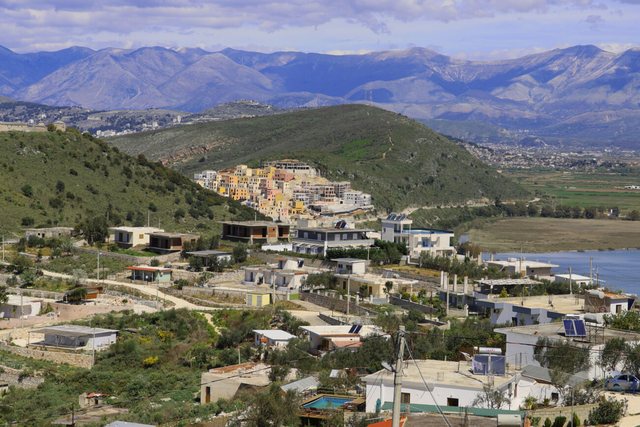
With the fall of communism, a new village was created in front of Ksamil, being baptized with the name "Manastir", as it rose under the hill of the Monastery of Saint George and above the Beach of Mirrors.
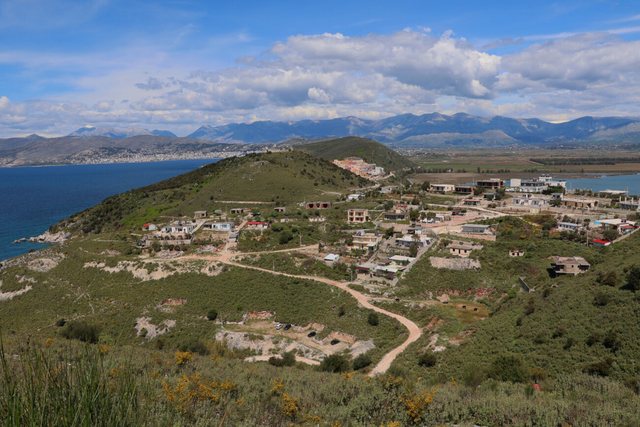
Residents used a former military barracks and other spaces to initially build apartments to live in and, year after year, adapted them into accommodation structures for seasonal tourism during the summer.
"The women here live off the wine. In April and May they return from Greece and work until October," explained Gonxhe Paza, emphasizing that tourism is keeping the village alive.
Without wasting time, she pulled out of her pocket a certificate of ownership issued by the Real Estate Registration Office in Saranda. It shows the year 2018, when the Paza family legalized the building built there, and which confirms the family's ownership of the land in the village of Manastir.
"I demolished the house and made rooms and bathrooms for tourists. This is how we live. My children have run away because they have no work here," Paza added to Amfora Media, pointing to the crossroads between the hope of tourism and the risk of having their homes razed.
"Here, 70% of the village has documents and we want the 30% who don't have them to get them and for the village to be regulated, because we are following the law," explained Kosta Zervoji, another resident, indignantly.
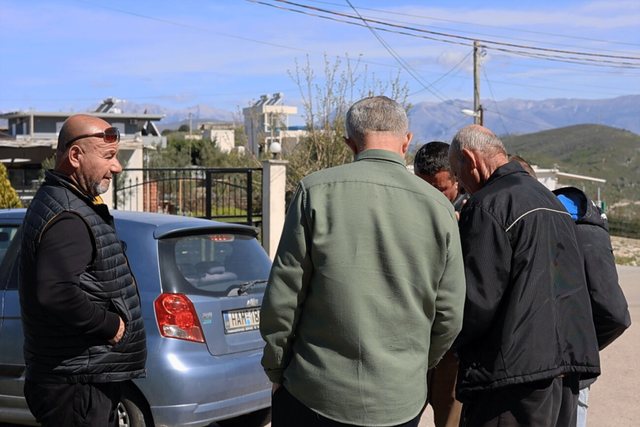
Actions to legalize buildings or invest have been informally halted by the Cadastre office, after a project aimed at building a resort in the area began to take shape through permits that have begun to be approved by the Albanian government.
The company "Premium Finance Invest" applied with the project titled, "Ksamil Seaside Resort & Residential, The Mirrors, Phase I" to the National Council for Territory and Water (KKTU) on January 27, 2025.
This is after it had obtained "Strategic Investor Status" for another project in Durrës, four years ago, which seems to have almost failed, while for the project in Saranda, KKTU approved within 23 days the "Development Permit", which determines the urban development conditions of the property and precedes obtaining the construction permit.
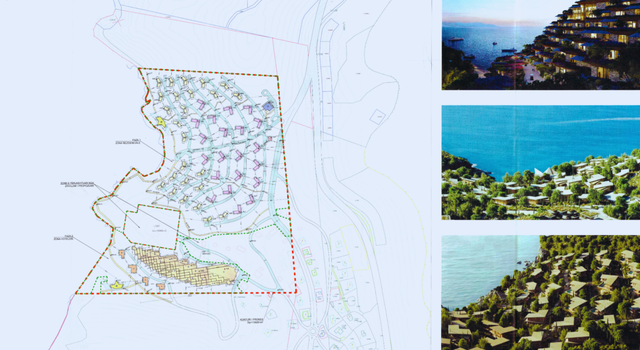
After more than a year, the permit was only made public at the beginning of June, providing more technical data on the project that is expected to be implemented in two phases. Initially, it will focus on the construction of 46 private villas, while in the second phase the project includes a hotel with supporting villas and bar-restaurant services.
The project's layout extends over a good part of the village, which has over 150 buildings, and requires that in both phases, existing buildings be leveled, which according to the residents also possess legalization certificates, which according to them were provided by the state without mentioning that the property has a non-state owner, i.e. other private individuals who claim it.
From the comparison of the layout plan of the tourist resort project with orthophotos and satellite maps, it appears that the planned development overlaps with part of the existing village of Manastir, requiring the inevitable demolition of buildings on both sides of the village. The footprint of the villas and new roads appears to affect areas where homes and family businesses are currently located, raising questions about whether the project can be realized without affecting the legalized constructions over the years.
In the leaked development permit, it turns out that the project will be developed on the property of Iliriana Demiraj (Çoçoli). She is the heiress of the Çoçoli family, which inherits land plots from Ksamil and related to the historical land divisions during the Zog kingdom. Çoçoli herself was not available for comment on the ownership issue, where the project will be developed that has found the residents of the village of Manastir unprepared.
"I came here in 2009, I threw the object in the former military department, I did not enter the place where someone had property and I did not enter by force," explained Gëzim Hoxha.
Dozens of residents of Manastir in February of this year protested in front of the Saranda Cadastre, demanding transparency about the project, but without being able to clarify the fate of their properties, after years of legalization, registration and provision of ownership documentation procedures with state institutions.
In an official response to Amfora, the Local Directorate of the State Cadastre Agency (ASHK) Saranda explained that the institution's archives contain applications from residents of the Manastir (Pasqyra) area since 2006, while part of the documentation also includes requests filed in 2017.
According to the ASHK, the other applications were processed near the cadastral zone 2297 Ksamil and no other data was available, while the 7 identified applications were still in the initial evaluation phase. Meanwhile, the map that the residents claim was given to them by the Cadastral office, with the area outlined in red as part of the project, does not appear to constitute an official document.
Nestled between Mirror Beach, Monastery Bay and the Pigeon Cave, the residents of this village built their lives on family tourism and emigration savings, in a territory that over the years became one of the most coveted assets of the Albanian coast.
"In 2012-2013 we received legalization. We paid for the land, we received the documents and then the mortgage. Until 2020 we had no problems," explained Bedri Hysi.
"Now we have a new owner and most of the village has entered the red line. I am inside the red line," the village resident added.
According to them, despite requests and complaints addressed to institutions, they have not yet received a clear answer on the status of the properties and the reason for their inclusion in the territory marked on the map, even though their facilities have been legalized.
For the residents of Manastir, the concern is related to the development of this new tourist resort in the area where for more than two decades they built their lives and businesses with the belief that the state had recognized their rights over the properties they built. While a tourist project with villas, a five-star hotel and residential structures has been approved for the same territory, many of the residents said they are facing uncertainty over the future of the facilities they have legalized, registered and documented over the years.
"We are in accordance with the law. We have paid for the land, we have received the legalizations and documents. We are not asking for anything other than our rights," said Arsen Vaja.
According to lawyer Elton Laska, the legalization and registration of a property are not formal procedures without legal consequences, but rather they create legitimate rights and expectations for citizens, who invest and build their lives on the basis of these administrative acts.
"Legalization is not a favor of the state, but an administrative act that produces full rights for the owner. Once a property is legally recognized and registered, any restrictions on it must be based on law, be proportional and follow a due legal procedure," Laska explained.
According to him, the problem lies not in economic or tourist development itself, but in the way it interferes with existing property rights.
"If the state changes the rules of the game after previously recognizing property rights, it creates uncertainty for citizens and investors," he assessed.
Bright projects tarnished by ownership conflicts
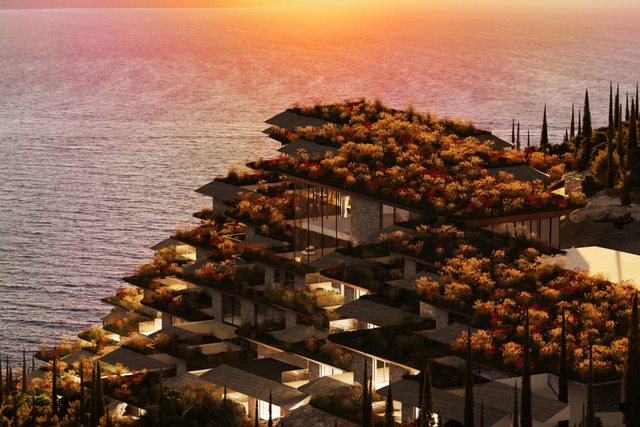
The “Mirror Beach” project in the village of Manastir bears the signature of one of the most prestigious contemporary architecture studios in the world, “Kengo Kuma & Associates”. Founded by Japanese architect Kengo Kuma, already known to the Albanian public as the author of the nearby project for the construction of the Visitor Center in the Butrint National Park.
The studio is known for iconic projects that combine architecture with the natural landscape and for interventions with low visual impact, such as the Japan National Stadium for the Tokyo 2020 Olympic Games. In the project in the village of Manastir, it has as a local partner the studio “EV Engineering” sh.pk
Dubbed “The Mirrors,” the project is divided into two phases with different construction intensities. The first phase, on the Monastery Hill side, covers an area of 92,000 square meters and includes a construction footprint of 5,535 square meters and one- to two-story buildings, with no underground structures.
But the situation changes significantly in the second phase, which extends to the other side of the village, on the side of the “Doves’ Cave”, where the most intensive part of the project is concentrated. On an area of 26 thousand square meters, 23 thousand square meters of construction volume are foreseen, on a construction footprint of 10 thousand square meters. The buildings are foreseen to be up to three floors above ground and underground structures reaching up to six floors. The land use coefficient increases to 38.5 percent, over six times higher than in the first phase.
The company that plans to implement the project, “Premium Finance Invest”, was established in 2016 with German capital, as a non-banking financial institution. Owned by the Austrian-capital company “SIG Holding GmbH”, it is linked to the Tirana casinos and the former “APEX-AL”, with the main beneficial owner Bledar Sinan, who holds German citizenship.
To take a position on the claims raised by the residents, Amfora reached out to the company "Premium Finance Invest" with a request for comment, but it did not respond by the time of publication of this article.
For historian and former restorer Halil Shabani, the debate is not only related to the property rights of the residents of Manastir, but what is happening in the Ksamil area and along the southern coast is part of a broader transformation that is affecting some of the country's most important tourist and natural territories.
"We are seeing that all the most beautiful tourist spots, the most dominant ones, are falling into the hands of those we call oligarchs. They are taking all the cream of the coast," Shabani told Media Amfora.
While Sofokli Thoma, an environmental activist in Saranda, said that what is happening in Manastir cannot be seen in isolation from the broader transformation of the entire southern coastline.
"Here, from the Çuka Canal to Ksamil, there are excavations by hammers. I don't understand what they want to do. Even the constructions in Butrint, where the protected area was 150 hectares, they reduced it. The protected area in Vlora is 800 hectares. Why are they doing it?! Because they know about the constructions," he explained.
On the other side of the hill of the Monastery of St. George, the “Monastery Resort” project is being developed, in what is known as “Monastery Bay”. Amfora revealed that this project destroyed the archaeological potential of the area, while also raising questions about respecting the obligations stemming from the status of the Butrint National Park as part of the UNESCO world heritage.
The Monastery projects became possible after the adoption on February 22, 2024 of Law No. 21/2024, which amended the zoning “On Protected Areas”. The changes relaxed previous restrictions and created the legal basis for allowing tourism developments, including accommodation structures, even in or near protected territories. The new situation brought about the advancement of tourism projects in the Butrint and Ksamil areas, as the boundary of the buffer zone of the Butrint National Park was delimited.
Further away, on another coveted part of the Albanian coast, “Premium Finance Invest” sh.pk was declared a “Strategic Investor with a special procedure” in July 2021 for the “Cape of Rodon Phase 1” project.
The investment worth over 51.3 million euros near Lalzi Bay aimed to build a four-star hotel with 250 rooms, 30 villas, a winery and a water park in the still undeveloped area of Cape Rodoni, benefiting from the status for a period of three years and supporting measures provided for by law, including the right to use the seashore and the beach area in front of the complex for a period of up to 30 years.
However, despite the strategic investor status, the project failed to be implemented within the expected timeframe. In July 2024, the Strategic Investment Committee decided to extend its status for another two years, but with one essential condition: It had to submit full documentation proving agreements with private owners or the transfer of ownership for all plots affected by the investment. But three years after receiving the status, the project still remains conditioned by the resolution of ownership issues, failing to move to the implementation phase as initially planned.
Amfora read that in Cadastral Zone 3365, where the project will be developed, for a good part of the plots, unlike the legalization conflict in Bitola, the hereditary claimants of the lands, including the Franciscan Church of Albania, face the overlapping of "Law 7501" for the division of agricultural land claiming the same plots, while from reading the audits of the Supreme State Control over the years, registrations and benefits of thousands of square meters more than what was due for the division of agricultural land have been discovered. While the prosecution itself has discovered massive forgeries for the alienation of state properties through AMTPs of agricultural lands, which in fact were not such and had the state or early heirs as owners./ amfora.al