Frident Kuqi and Halil Gashi win the 62 million USD auction to b...
/ 2026-10-26 22:13:42Focus


A geological mystery that has lingered for the past year (2023) has finally been solved: What caused a strange cascade of tremors to ripple across the globe for nine days?
Using classified sea maps from the Danish military, a global network of seismic sensors used to detect earthquakes and other evidence, researchers finally pieced together the strange sequence of events.
It all started when seismic sensors at monitoring stations around the world detected a signal in September 2023 that looked nothing like the crackles made by earthquakes. This signal fluctuated at 90 second intervals and continued for days. Most seismic events weaken quickly.
"Some of our American colleagues consider it to be the wrong instrument," said Kristian Svennevig, senior research scientist at the Geological Survey of Denmark and Greenland, and lead author of a study on the findings published Thursday in the journal Science. "They had never heard anything like this before."
A few days after the signal began, Svennevig received a call from authorities in Greenland, who reported damage to an uninhabited research base on a small island off the east coast.
Svennevig assembled an earth science detective team of 68 experts who, with seismic recordings, satellite images, field measurements, drone video and computer simulations, reconstructed what happened.
Evidence revealed that 33 million cubic meters of rock and ice – the volume of 10,000 Olympic-sized swimming pools – had been submerged in Dixon Fjord in east Greenland, causing a tsunami.
The massive wave rose 650 meters above the water's surface, throwing debris onto a nearby cliff face. It landed at 25 feet, but over the next nine days, it swung from one side of the fjord to the other, hitting the sides with enough force to move the walls, creating the seismic signal that spreads around the planet, Svennevig said.
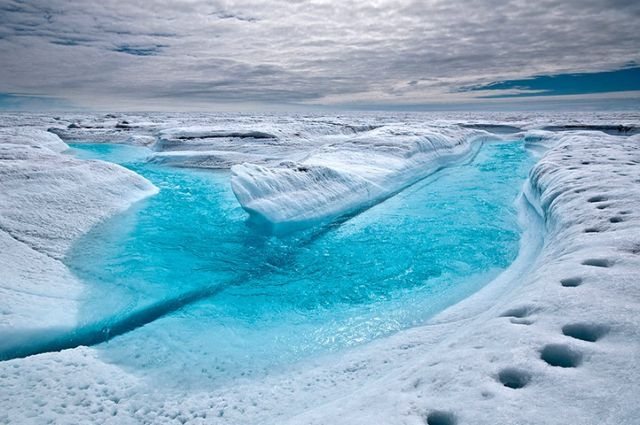
The landslide was caused by a melting glacier below the mountain's summit, according to the study, and Svennevig said scientists are reviewing the types of natural disasters that are now possible in a warming Arctic environment.
In 2017, a glacial slide in western Greenland's Karrat Fjord flooded a village, destroying 11 houses and killing four residents. In Alaska, US officials are closely monitoring Barry Arm Glacier for a possible landslide that could trigger a tsunami there and threaten nearby communities in Prince William Sound.
"If you had suggested just a year ago that a nine-day wave could exist in a Greenland sea, or wherever, people would be shaking their heads," he said. "Now we've seen it, we have to deal with it, and we know these things exist."