"Condemned" protesters?! Who trapped Rama inside the Prime Minis...
/ 2026-10-23 16:02:00Focus


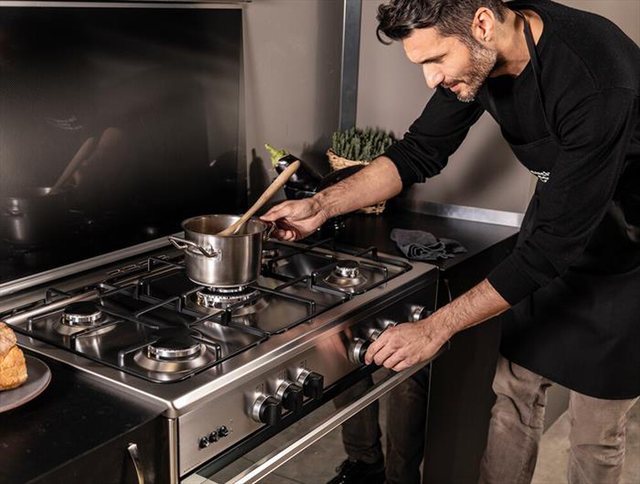
Are you sure you are breathing 'good' air when you cook? If the kitchen is gas, as is the case in 68% of households in Italy, you should think twice.
In reality, it's like being in rush hour traffic in Milan. In fact, even worse.
Smog hidden inside the home is a serious problem.
It is enough to familiarize yourself with the data from the new report of CLASP, the non-profit group for energy efficiency, which in recent months has conducted a study in 7 European countries, including Italy, with the scientific support of the Netherlands Organization for Applied Scientific Research (TNO ). Among the most alarming findings is the fact that 72% of homes with gas stoves exceed the WHO daily guideline value for nitrogen dioxide. As it places Italy in second place behind Spain (77%) and ahead of the United Kingdom (55%), the Netherlands (54%), France (53%), Romania (52%) and Slovakia (44%).
Study in Italy
For the study in Italy, 40 families were included, 36 were the ones in which the data were most successfully collected: 31 families with gas stoves, 5 with electric stoves. Those who cook with gas have a significantly higher concentration of nitrogen dioxide (NO2) in the kitchen and living room, compared to households that cook with appliances.
In homes with gas stoves, the EU hourly limit value for nitrogen dioxide, the most dangerous for the most vulnerable, was exceeded in 24% of cases, while in homes with electric cookers there was no exceedance. Almost all homes examined, whether with gas or electric stoves, exceeded the WHO daily guideline value for fine particles (PM2.5). A value that is not related to the type of hob, but rather to the cooking itself.
Lack of ventilation
There are excesses that show a lack of adequate ventilation and how the latter is no solution. "Through the field study in Italy, we found that households cooking with gas are exposed to significantly higher levels of nitrogen dioxide than those cooking with electricity. In gas stoves, levels of nitrogen dioxide are recorded that exceed WHO guideline values and the limits set by the European Union, to the point that the most sensitive subjects, such as asthmatics, feel its impact directly. Furthermore, we have also found that ventilation is important, but has not had an impact on pollutant reduction," says Sara Demartini, CLASP project manager.
Children and vulnerable people at risk
Data that make us think, especially if we consider the most vulnerable categories such as children and fragile people, as explained by Dr. Laura Reali, pediatrician and member of the European Academy of Pediatrics: "Nitrogen dioxide is a lipophilic gas that can penetrate deep through the mucous membranes and airways. Small lungs, which evolve and penetrate faster, such as those of children who breathe faster than adults, are more directly exposed and more sensitive. If we transfer this situation to the case of a pregnant mother, it turns out that even the mother who inhales nitrogen dioxide can cause harm to her child. Of course, we are talking about prolonged and intense exposures".
"With the study in Italy, we found that in houses with gas stoves, the EU limit value of NO2 for one hour of exposure is exceeded in 24% of cases, while the external levels remain lower than these values. The switch to electric cooking combined with the use of ventilation hoods, well designed to reduce exposure to high levels of particles from cooking, can bring these values below the recommended levels", underlines Piet Jacobs, researcher at TNO
Symptoms related to gas stoves
It is no coincidence that, according to the previous report of CLASP and EPHA (European Public Health Alliance), in the EU there are over 700 thousand children with asthma symptoms related to the use of gas cooking. Asthma, but also attention deficit and hyperactivity disorders; while adults would be affected in the respiratory and nervous systems. We must say that the health effects caused by stoves have been known for more than fifty years, as studies have been conducted on asthma assessments even in the United States.
A new energy label
According to CLASP, little has been done in Europe to prevent nitrogen dioxide pollution from gas cooking appliances, however according to research carried out by the consumer group, a significant number of households in Europe are ready to switch from gas to electric appliances if are aware of the health problems associated with gas cooking. Therefore, the importance of raising awareness of the health impacts of gas cooking is the establishment of an energy label for gas and electric cooking appliances.
That's why, at a stakeholder meeting with EU officials scheduled for November 30, CLASP will demand a new energy label to compare the efficiency of gas and electric hobs and highlight pollution levels. "By easing the transition to electric cooking, we can pave the way for healthier, safer and more sustainable households," says Nicole Kearney, director of CLASP Europe.
An 'electric' future, but at what cost?
According to CLASP, the use of a hood and proper ventilation are not enough. The best solution remains to go electric. However, the costs remain in doubt. For this reason, CLASP recommends the introduction by the EU and the Italian government of appropriate support policies to facilitate the energy transition and protect citizens from the impact of gas stoves.
How the research was conducted
The objective of CLASP was to assess the impacts of pollutant emissions from gas stoves on human health. The study consisted of two phases: the first, the simulation; second measurement in 247 homes in 7 European countries: Italy, Spain, France, Netherlands, England, Slovakia and Romania. Families were recruited through Opinium, a market research company. Participants were selected based on frequency of kitchen use, excluding families of smokers and those living near industrial complexes. The families were not aware of the specific motive of the study, so as not to influence their behavior. 80% of them use gas stoves and 20% electric stoves.
The measurements were carried out by sending a set of sensors, which were to be installed in the kitchen, in the living room, in the bedroom, preferably where the children slept and outside the house. Measurements of air pollutant concentrations and temperature sensors on the plate and oven door were taken to determine cooking time. Nitrogen dioxide samples were also placed outside the homes to have a comparison with indoor levels. In homes with gas cooking, NO2 levels were higher than those recorded outdoors.
Measurements were made for 13 days in each house.