


"Condemned" protesters?! Who trapped Rama inside the Prime Minis...
/ 2026-10-23 16:02:00Focus


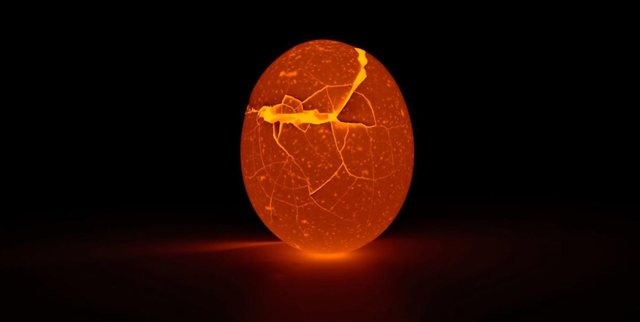
Exploring the origins of life on Earth is one of science's greatest pursuits and is an experimental journey that leads down two "paths."
"How did we come to Earth?", is the question that intrigues us all. The researchers' first analytical option deals with the prebiotic Earth, that is, that of 4.28 billion to 3.77 billion years ago, and tries to understand how life formed from the raw materials. While option number 2 is about studying today's animals in an attempt to trace their evolutionary biology.
Although both "paths" contain many hypotheses, neither of them has a fact that definitively explains the origin of life on Earth.
But what happens if these two analyzes "melt" together? The new study by scientists at Oberlin College and NASA's Jet Propulsion Laboratory (JPL), published this week in the Proceedings of the National Academy of Sciences, aims to do just that.
"The most basic features of biology, that organisms are made of cells, that they pass genetic information through DNA, that they use protein enzymes to direct their metabolism, all emerged through specific processes in very early evolutionary history," he states. renowned Professor of Biology Aaron Goldman. "Understanding how these biological systems first took shape will give us greater insight into how life works," he adds.
Goldman strongly believes that all life is a metabolic system that produces various forms of energy. Humans, cats, dogs and all other animals contain mitochondria that produce energy from our metabolism. Plants, on the other hand, are autotrophic because of their sunlight-absorbing superpowers, but they still use a similar form of energy.
Goldman and the rest of the team found that these electron transport chains may have been aided in the distant past by minerals and ocean water.
This essentially means that the energy transport processes that make life possible are likely the genesis of all living organisms.
Although exploring these ancient energy processes is incredibly difficult, NASA scientists are trying to gather as much data as possible.


