"We are drowning..." - From Lisbon, Milan to Tirana, "The Guardi...
/ 2026-10-18 23:13:32Focus


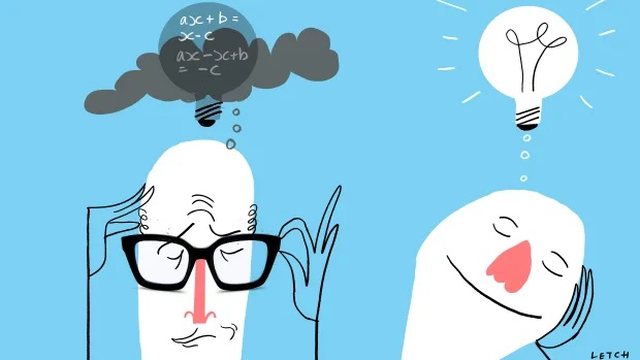
How much is a child's future success determined by innate intelligence? Economist James Heckman says it's not what people think. He likes to ask educated non-scientists, especially politicians and policy makers, how much of the difference between people's incomes can be related to IQ. Most think about 25%, even 50%, he says. But the data suggest a much smaller impact: about 1 or 2%.
So if IQ is only a small factor in success, what separates low earners from high earners? Or, as the saying goes: If you're so smart, why aren't you rich?
Science doesn't have a definitive answer, although luck certainly plays a role. But another key factor is personality, according to a paper Heckman co-authored in the Proceedings of the National Academy of Sciences last month. He found that financial success was linked to conscientiousness, a personality trait marked by diligence, persistence and self-discipline.
To reach this conclusion, he and colleagues examined four different sets of data, which, among them, included IQ scores, standardized test scores, grades and personality assessments for thousands of people in the UK, US and Holland. Some of the data sets followed people over decades, tracking not just income but criminal records, body mass index and self-reported life satisfaction.
The study found that grades and achievement test scores were significantly better predictors of adult success than raw IQ scores. This may seem surprising – after all, don't they all measure the same thing? Not enough. Grades reflect not only intelligence, but also what Heckman calls "non-cognitive skills," such as persistence, good study habits, and the ability to collaborate—in other words, conscientiousness. To a lesser extent, the same applies to test scores. Personality matters.
Heckman, who shared a Nobel Prize in 2000 and is the founder of the University of Chicago's Center for the Economics of Human Development, believes that success depends not only on innate ability, but also on skills that can be learned. His research suggests that childhood interventions can be helpful and that mindfulness is more malleable than IQ. Openness—a broad trait that includes curiosity—is also related to test scores and grades.
IQ still matters, of course. Someone with an IQ of 70 won't be able to do things that are easy for a person with an IQ of 190. But Heckman says that many people fail to enter the job market because they lack skills that aren't measured by tests. intelligence. They don't understand how to behave politely in job interviews. They may show up late or not dress properly. Or at work, they make it clear they won't do more than the bare minimum.
John Eric Humphries, a co-author of the paper, says he hoped their work could help clarify the complicated, often misunderstood notion of ability. Even IQ tests, which are designed to assess innate problem-solving skills, appear to measure more than just intelligence. In a 2011 study, University of Pennsylvania psychologist Angela Duckworth found that IQ scores also reflected test-takers' motivation and effort. Diligent and motivated children will work harder to answer difficult questions than equally intelligent but lazier ones.
Learning personality or character traits in school would not be easy. For one thing, it's not always clear whether more of a trait is always better. The higher, the better for IQ, and possibly mindfulness. But personality researchers have suggested that middle ground is best for other traits—you don't want to be so introverted that you can't talk, or so extroverted that you can't shut up and listen.
What does this have to do with economics? “Our ultimate goal is to improve human well-being,” Heckman says, and a key determinant of well-being comes down to skills.
A newer study published this month in the journal Nature Human Behavior focused on the flip side of success: adversity. After following nearly 1,000 people from New Zealand for more than 30 years, researchers concluded that tests of language, behavioral skills and cognitive skills taken when children were just three years old could predict who was more likely to have in need of welfare, commit crimes or become chronically ill.
The lead author of that paper, Duke University psychologist Terrie Moffitt, says she hopes the results will encourage compassion and help, not stigma. Her results also suggested that helping people improve certain types of skills before out of diapers would benefit everyone. Bloomberg