Details of the storm in the administration, here's who will resi...
/ 2026-10-22 22:25:00Focus


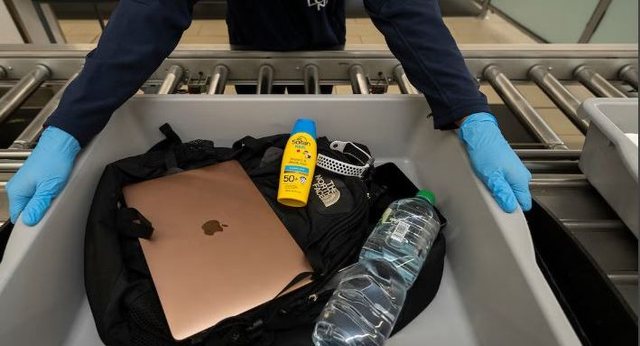
Getting through airport security can be a tedious part of the air travel process, but some European airports have managed to speed it up thanks to the installation of state-of-the-art scanners that allow passengers to carry any amount of electronics and cosmetics in their luggage. theirs without having to take them out. But despite the positive reception of the devices, Brussels recently called for a return to the previous model of limiting liquid containers to 100 milliliters.
Effective but insufficient
The C3 EDSCB technology, as these advanced scanners are called, displays high-resolution three-dimensional images of luggage contents from CT scans and can easily detect explosive ingredients in all types of cosmetics, liquids or electronic devices. Therefore, passengers do not need to open their suitcases or take out some of their belongings, which can create delays, and only have to go through a metal detector. But its effectiveness was called into question by a technical report the Commission sent to the European Civil Aviation Conference (ECAC) last May, according to which the software of these scanners cannot guarantee their reliability for containers containing more than 330 milliliters.
Then, on July 31, Brussels announced the decision to apply "temporary" restrictions on these C3 explosives detection systems as a "precautionary measure" until "certain technical problems are resolved," a Commission spokesman said. Officially, however, "the Commission has not changed its opinion on the quality of this new generation of scanners and their performance has not been questioned," the spokesman added. Airports already using the C3 model will now have to revert to the traditional X-ray scanner, whose technology is insufficient to show the interior of objects in detail and thus detect explosive material in liquids.
Financial loss for airports
These new scanners are “eight times more expensive” with maintenance costs “four times higher”, so airports that have already invested in these new scanners to improve the passenger experience “will be severely penalized, as the benefits related to the use of this state-of-the-art technology is unlikely to materialize," the Airports Council International for Europe (ACI) said in a statement.
Most passengers at Zaventem airport in Belgium said they were used to not traveling with liquids and trying to leave electronics at home, so this change in regulations would not affect them much. Those who had encountered the high-tech C3 scanners or advanced body scanners at an airport, however, noticed a fundamental difference in the ease with which they gained access to boarding gates.
However, the answer is unanimous among airport staff and travelers: everyone wants to start their vacation as quickly and easily as possible. To that end, those who have decided to postpone their holiday in September should make sure that their sunscreen and beauty products do not take more than 100 milliliters if they do not want to lose any more of their free time at an airport checkpoint.