


Is this police force professional and capable of handling violen...
/ 2026-10-16 18:54:07Focus


1. Our solar system is made up of the sun and everything else that orbits our star; planets, dwarf planets, moons and space rocks.
2. Astronomers believe that the edge of our solar system is about 15 billion kilometers away from our Sun.
3. The planets of our solar system have been the object of tremendous interest to ancient civilizations for thousands of years. There are thousands of things that few people know about our solar system, in this article we will introduce you to some interesting facts:
4. According to astronomical studies, our sun was created 4.6 billion years ago by the gravitational collapse of a giant molecular cloud.
5. Our Sun needs 240 million years to complete a single orbit around the center of our galaxy, the Milky Way.
6. According to astronomers, since our Sun was formed, it has performed nineteen orbits around the galactic center.
7. Did you know that our star, the Sun, rotates counterclockwise?
8. The surface temperature of our Sun is about 5505 degrees Celsius.
9. Since its formation, our Sun has used about half of the hydrogen in its nucleus. This means that there is still a lot of fuel to burn, so do not worry.
10. Most of the mass of the solar system is inside the Sun, ie over 99 percent, while the remaining mass is found on Jupiter.
11. According to astronomical calculations, the magnetic field of Jupiter is about fourteen times stronger than that of Earth.
12. Remember the big storm on Jupiter? Well, this giant storm is one of the greatest mysteries of astronomy. Experts have almost no information about it. Everything about it is a mystery. What power did it have, what caused it and why is it red?
13. Did you know that the large red dot on the surface of Jupiter is actually an anti-cyclonic storm? It is believed to have started about 300-400 years ago.
14. Solid objects of the solar system; planets, moons, etc., make up 0.0001% of the total mass of the Solar System.
15. Although our Sun is giant, it is small if we compare it to VY Canis Majoris; a red supergiant located in the constellation Canis Major. This star is so large that, if placed in our Solar System, the surface of VY Canis Majoris would extend beyond Jupiter's orbit. VY Canis Majoris is so large that astronomers estimate that it is 1,000,000,000 times larger than our sun.
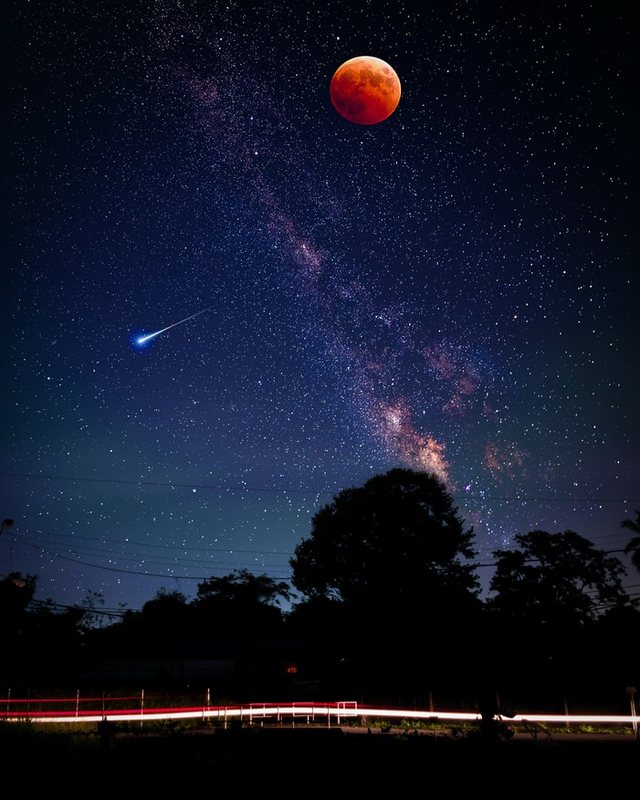
16. Did you know that Jupiter saved the Earth? Comet Lexells was traveling toward Earth following a trajectory that would cause it to crash into our planet. However, thanks to Jupiter's strong gravitational pull, the comet was pulled toward the planet.
17. Our sun is made up of about 98% hydrogen and helium.
18. We practically live within our Sun. This is because the outer atmosphere of the Sun extends far beyond the visible surface; it is extraordinary. Toxils in orbit, in this delicate atmosphere.
19. Practically the Sun can raise a million Earths.
20. As many of us have probably learned in school, the distance from the Sun to the Earth is an Astronomical Unit or AU.
21. The heliosphere which is the outer atmosphere of the Sun is thought to expand to about 100 Astronomical Units; The Astronomical Unit is equal to 149,597,871 kilometers.
22. Scientists suggest that the boundary of the Heliosphere, referred to as Heliopauses, is fifteen billion kilometers away from our Sun.
23. Experts believe that the Sun's atmosphere lies billions of miles below, because they believe that the Sun's atmosphere actually has a "tear" shape.
24. Compared to the rest of our solar system, the mass of the Sun is only one trillion percent of the total volume of our solar system.
25. Astronomers believe that within our solar system there are more than ten thousand objects that can be large enough to be rounded off by their gravity.
26. If we were to look at the universe from an external point of view, we would see that our solar system is located on the side of Orion, which is about 26,000 light-years away from the center of our galaxy, the Milky Way.
27. As you already know, there are eight planets in our solar system, but there are also hundreds of unidentified objects located in the most remote part of our cosmic "neighborhood".
28. The Moon is considered the closest astronomical object to Earth. Why did not we visit more often?
29. Of the eight planets in our solar system, Mercury, Venus, Earth, and Mars are made up mostly of rocks and metals. And there is a missing planet between Mars and Jupiter.
30. Jupiter, Uranus, Neptune and Saturn are composed mainly of hydrogen and helium. They are Gas Giants.
31. According to astronomers, Neptune has the fastest winds in the Solar System. Winds on the surface of Neptune can reach up to 2100 kilometers per hour. Scientists have not yet determined the reason.
32. Uranus is the coldest planet in our solar system with temperatures that can drop to -224 degrees Celsius.
33. Jupiter is the fastest planet in our Solar System. It takes Jupiter less than ten hours to complete a complete rotation around its axis.
34. Comets are commonly referred to as "dirty snowballs" because of their composition, ice and rocks.
35. According to astronomical observations, there are 176 known natural satellites coming into orbit around the planets in our solar system, of which 168 satellites orbit full-size planets. 8 moons orbit the dwarf planets.
36. Jupiter is the planet that has the largest number of moons; a total of 63 confirmed satellites have been discovered and some astronomers argue that there may be even more, hiding around the gas giant.
37. Jupiter, being the largest planet in our solar system, is considered to have the largest ocean in the solar system; astronomers believe it is approximately 40,000 km.
38. Astronomers have discovered some objects coming into orbit around the sun, which are located far away from Pluto. One such object is believed to be Planet X, a theoretical planet that must be somewhere there, but astronomers have not yet found it.
39. The Kuiper Belt is one of the two main reservoirs of comet material and is believed to extend to more than fifty astronomical units. Astronomers also consider it to be one of the most remote regions of our solar system.
40. Comet Oort cloud is believed to extend to 50,000 Astronomical Units from the Sun.
41. Astronomers estimate that the Oort cloud contains trillions of icy bodies.
42. According to experts, at the outer edge of the Oort cloud, distant cosmic bodies are believed to have more gravitational influence from nearby stars than from the Sun.
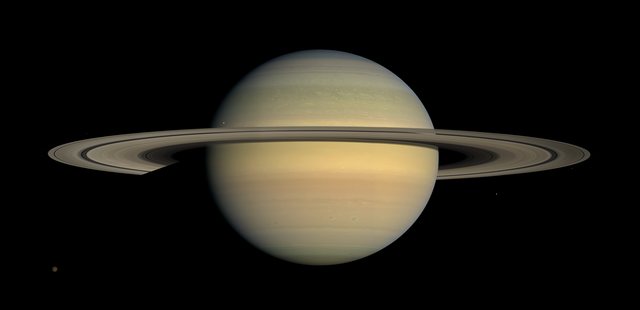
43. Saturn can actually "swim", but only in part, as the total density of Saturn is 0.69 - seventy percent of the density of water.
44. Saturn is not the only planet that has rings, Jupiter, Uranus and Neptune also have beautiful rings.
45. Jupiter's dark rings are composed mainly of dust particles and are thus very difficult to detect. Astronomers believe that inside these rings are particles extracted from Jupiter's volcanic moon, "Io".
46. Astronomers have found that Uranus's ring system is similar to Jupiter, although the contents of Uranus's ring system consist mainly of material that was produced by the impact of relatively small "satellites".
47. Saturn is delightful. In fact, the planet has another giant ring, discovered in 2009; it can only be seen through infrared rays.
48. Did you know that the favorite planet of the Solar System, Pluto, was accidentally discovered in 1930 after astronomers noticed small and unexpected changes from the predicted orbit of Uranus and decided to look further; thus Clyde Tombaugh discovered Pluto.
49. Pluto was considered the ninth planet of our solar system for seventy-six years, was reduced to a dwarf planet, and was our most favorite dwarf planet since 2006.
50. Pluto is extremely small. Researchers estimate that Pluto is slightly more than 2,253 kilometers, smaller than the United States.
51. Despite the fact that Mercury is the closest planet to orbit around the Sun, it is no longer the hottest. Due to the fact that Mercury has no atmosphere, there is nothing that would hold the Sun's heat on this planet.
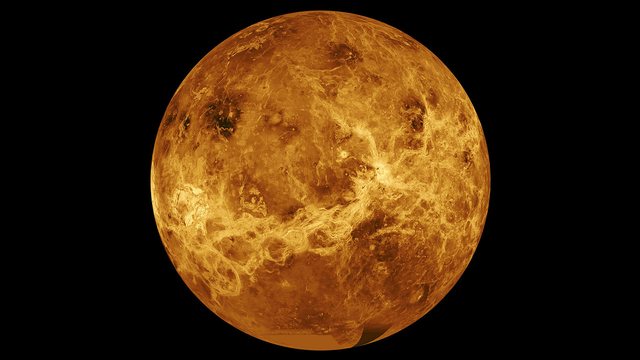
52. According to astronomers, the hottest planet in our solar system is Venus. The second closest planet to the Sun has a very thick atmosphere; astronomers estimate it to be a hundred times thicker than the Earth's atmosphere. Because of this, massive amounts of heat from the Sun are kept on the planet and astronomers estimate that the average temperature of Venus is above 468 degrees Celsius. This makes exploring Venus really difficult.
53. Although Mercury is the closest planet to the Sun, researchers believe that ice can be found near the poles of Mercury.
54. Did you know that Venus is the only planet in our Solar System that rotates in the opposite direction of any other planet? Venus is a real rebel. Now it is understood why they say that women are from Venus…
55. Here's a fun fact: A single day on Venus is, in fact, longer than his year. Venus needs much more time to revolve around its own axis than around our Sun.
56. Saturn's moon, Titan has an atmosphere very similar to Earth's atmosphere. Titan's atmosphere is twenty percent larger than Earth's atmosphere.
57. Scientists suggest that given the similarities with Earth, there may be biological activity; making it an ideal place to seek life outside of Earth.
58. Ganymede, Jupiter's natural satellite is considered the largest natural satellite in our solar system and has a diameter of 5,268 km, which is 8 percent larger than that of the planet Mercury.
59. The diameter of Ganymede is 2% larger than that of Saturn's Titan, which is the second largest moon.
60. Did you know that Ganymede, Jupiter's largest and most massive moon, has the highest mass of all planetary satellites? It has 2.02 times the mass of the Earth's moon.
61. Ganymede is the only one in the solar system known to possess a magnetosphere which is a space near an astronomical object where charged particles are controlled by the magnetic field of that object.
62. Saturn Mimas Moon is one of the heaviest objects in the Solar System, also resembling the "Death Star" (the imaginary space station known from the movie Star Wars, Episode IV: A New Hope) because of its giant crater , 130 kilometers wide.
63. Mimas is the smallest astronomical body known to be rounded in shape due to self-gravity.
64. Asteroid 243 Ida has a satellite coming around it, called Dactyl. 243 Ida is also one of the shortest objects in the solar system.
65. The largest dwarf planet orbiting our Sun is called Eris, orbiting the Sun three times the distance of Pluto.
66. Eris was recently discovered (2005) and is the ninth most massive body known to revolve around the Sun.
67. Eris is estimated to be 27 percent larger than Pluto, but there is uncertainty about its size; to calculate it properly, more research is needed.
68. Dysnomia is so far the only known natural moon of Eris, its diameter is estimated to be between 350 and 490 km.
69. Saturn Moon Hyperion is the largest non-spherical moon in our solar system.
70. In its composition, Hyperion has a density as much as half that of water, which means that it would float if placed in water (hypothetically).
71. Astronomers believe that Hyperion is a fragment of a much larger object that was destroyed in the distant past, thus taking on its irregular shape.
72. The surface of Hyperion contains a large amount of deep craters, which together with its irregular shape, give the moon the appearance of a giant sponge.
73. Ceres is by far the only known dwarf planet located in the interior of the solar system and is closer to the Sun than Neptune.
74. It is considered the largest asteroid in the interior of our solar system.
75. Researchers estimate that Ceres contains an inner ocean of liquid water beneath its surface.
76. This dwarf planet contains more fresh water beneath its surface than all the freshwater on Earth taken together.
77. Sedna, a large planetoid is the first dwarf planet discovered in the Oort cloud.
78. In visible light, Sedna is one of the reddest objects in the solar system.
79. Sedna is one of the most distant objects known in the Solar System.
80. Sedna makes the longest rotation in the Solar System, its orbit takes about 11,400 years to complete.
81. 2012 VP113 is a planetoid that has the most known perihelion - (closest approach to the Sun). Researchers suggest that the 2012 VP113 is about half the size of the Sedna.
82. There are four objects in our solar system that have perihelions larger than 47 astronomical units; Sedna, 2010 GB174, 2004 XR190 and 2004 VN112.
83. Olympus Mons, located on Mars is actually the largest volcanic mountain that has been discovered in our solar system.
84. Mars has water; Scientists have discovered traces of water on Mars but not in liquid form.
85. Comet Hyakutake is believed to have had the longest tail ever discovered, over 570 million km long.
86. Did you know that Uranus is the only known planet in our Solar System that actually rotates sideways?
87. Think about it, if you are going to shout in space, no one will hear. This is because there is no air in space, which means that nothing can convey your voice, so even if you were to shout or speak, no one would be able to hear you.
88. Researchers find it difficult to explain the moons of Mars, Deimos and Phobos, some even theorizing that these moons are trapped in the orbit of Mars.
89. Phobos will probably crash one day on Mars. Due to the extremely low orbit, tidal forces are slowly lowering the orbit of Phobos. Astronomers have estimated that in about 50 million years, this moon will fall on the red planet.
90. Surprisingly, Mercury and Venus are two planets in our solar system that have no moon surrounding them.
91. Do you know that the earth's moon has water? Astronomers suggest that water in the form of ice may be present in craters on the Moon.
92. We have researched our solar system considerably in recent years. But despite this fact, Mercury is the least explored of the planets in our solar system.
93. Did you know that there are more than 500,000 small planets that have been discovered and cataloged by the Planet Center?
94. Venus in addition to being the hottest planet, is also the most dangerous planet that in its atmosphere is filled with sulfuric acid.
95. Despite the fact that there is a strong possibility that hundreds of dwarf planets exist in the Kuiper belt, the International Astronomical Union has accepted only four: Pluto, Eris, Haumea and Makemake.
96. Astronomers believe that more than 50 tons of space rocks and dust fall to Earth every day.
97. One day on Mercury equals 58 days on Earth.
98. Gravity on our planet is six times stronger than on the surface of the Moon; this means that you would weigh less on the Moon than on Earth.
99. The magnetosphere is one of the main reasons why life can exist on our planet. It helps divert harmful radiation from the Sun, away from Earth.
100. Astronomers believe that there is a very high chance that there is life on Saturn's moon, Enceladus.


