"We are drowning..." - From Lisbon, Milan to Tirana, "The Guardi...
/ 2026-10-18 23:13:32Focus


President Donald Trump hosted French President Emmanuel Macron at the White House today for talks, at a moment of deep uncertainty about the future of transatlantic relations.
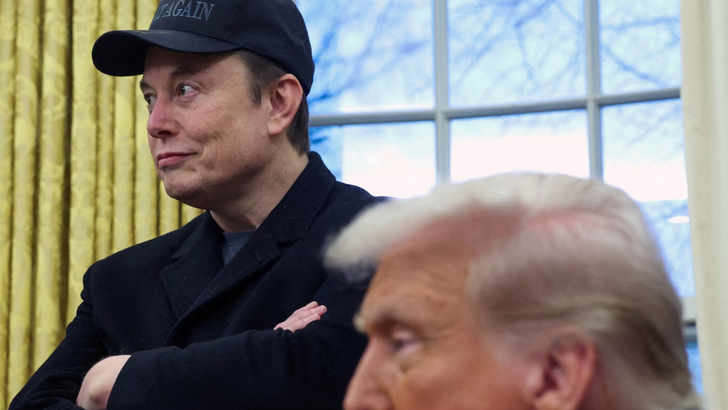
The French president attempted to correct his American counterpart on the nature of European support for Ukraine during Oval Office talks on Monday, interrupting President Donald Trump as he spoke to point out that he was getting the facts wrong.

The extraordinary moment highlighted the tense dynamics of Monday's talks. While Trump and Macron appeared friendly and willing to engage on Ukraine's future, the talks were set against a backdrop of rhetoric.
"You know, Europe is lending money to Ukraine. They're getting their money back," Trump began, as he prepared for a new deal to secure Ukraine's mineral revenues as back payments for American aid.
Macron reached out to grab Trump's arm to intervene.
“No, actually, to be honest, we paid. We paid 60% of the total effort. It was like the US: loans, guarantees, grants,” he said. “We have $230 billion in frozen assets in Europe, Russian assets. But that’s not collateral for a loan, because it’s not our property. So they’re frozen.”
Trump seemed to avoid interjecting: " If you believe that, that's fine. They get their money, and we don't. But now we will ."
The two leaders began their day by participating in a more than two-hour virtual meeting with other leaders of the Group of Seven economies to discuss the war.
Emmanuel Macron said he was given a "very friendly" welcome by Donald Trump upon arrival at the White House, where he participated in a virtual meeting with G7 leaders from the Oval Office alongside his American counterpart.
"The welcome was very good and friendly, as usual: we attended the G7 videoconference meeting and had a first discussion. The virtual meeting of G7 leaders was "perfect," Macron told reporters as he left the White House, where he and Trump had participated in a call with the group leaders from the Oval Office.
Trump has also made demands for territory in Greenland, Canada, Gaza and the Panama Canal as well as for precious rare earth minerals from Ukraine.
A little more than a month into his second term, the "America First" president has cast a huge shadow over what veteran American diplomats and former government officials had considered America's reassuring presence for global stability and continuity.