Protests, violence, curfews: From France to Albania, why Europe'...
/ 2026-10-20 23:47:20Focus


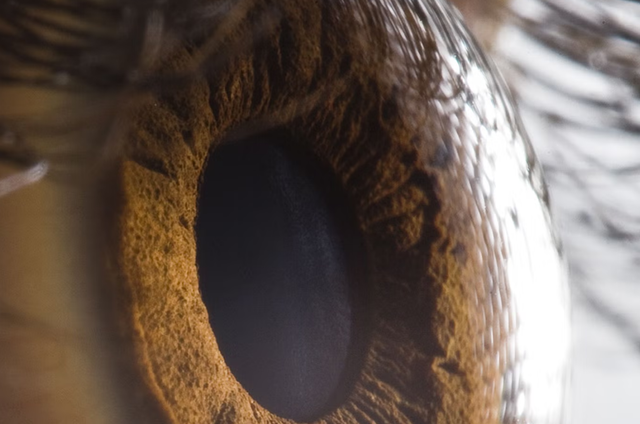
Scientists say they have discovered a new color that has only been seen by five people in the world, called 'olo'.
The color, said to be a saturated blue-green hue, cannot be seen with the naked eye without the help of laser stimulation, which scientists claim can make people see beyond the normal range of color perception.
Researchers developed the Oz Vision System technique, named in homage to the green-tinted glasses that people in the Emerald City wear in 'The Wizard of Oz,' to detect the new color in a study, published in the journal Science Advances.
The group found that when Oz laser signals are intentionally "flickered" by just a few microns (one millionth of a meter), subjects perceive the natural color of the stimulating laser.
When these same Oz microdoses are given with precision, subjects can be made to perceive different colors of the rainbow, colors unseen beyond the natural human range, and images such as "flashing red lines" or "spinning dots on an olo background."
"We predicted from the beginning that it would look like an unprecedented color signal, but we didn't know what the brain would do with it," said Ren Ng, an electrical engineer at the University of California, Berkeley.
Prof. Ng, who was one of five people who took part in the experiment, told BBC Radio 4's Today programme that the olo was "more saturated than any colour you can see in the real world".
"Let's say you go your whole life and only see pink, baby pink, a pastel pink," he said.
"And then one day you go to the office and someone is wearing a shirt, and it's the most intense pink you've ever seen, and they say it's a new color and we call it red."
During the study, the Oz laser stimulated only the M cones in the retinas of the eye, "which would in principle send a color signal to the brain that never occurs in natural vision."

To verify the color observed during the experiment, each participant adjusted a controllable color counter until it matched the olo color.
The color was given the name 'olo' for a reason, as it shows binary 010, indicating that among the L, M and S cones, only the M cones are lit.
The document stated: “We call this new color 'olo.' Subjects report that olo in our prototype system appears blue-green with high saturation when viewed against a neutral gray background.
“Subjects find that they must desaturate the olo by adding white light before they can achieve a color match with the nearest monochromatic light, which lies at the edge of the gamut, clear evidence that the olo extends beyond the gamut.”
But the findings have been disputed by other experts.
"It's not a new color," said John Barbur, a vision scientist at City St George's, University of London, who said the research had "limited value."
“It is a more saturated green that can only be produced in a subject with a normal red-green chromatic mechanism when the only input comes from M cones.”
Oz could theoretically be used for everyday color displays, like those on your TV or phone screen — but that application seems highly unlikely, said co-first author James Fong, a doctoral student in computer science at the University of California, Berkeley.