How Belinda Balluku is fabricating the rumor about Top Channel's...
/ 2026-10-19 16:19:00Focus


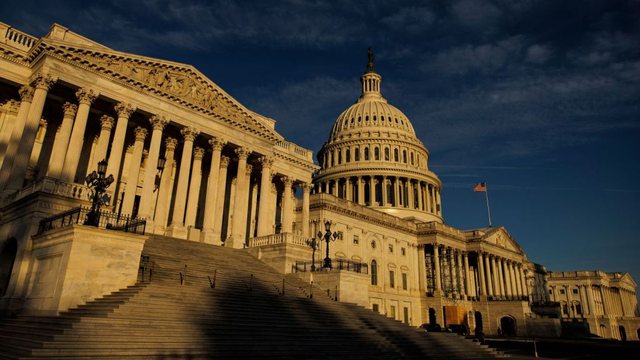
Republicans won control of the Senate, an important victory that would give President-elect Donald Trump a key tool to implement his legislative agenda. The VOA correspondent reports more on this important shift in the balance of power in Washington.
For the first time in four years, Republicans have won the majority in the US Senate.
“This is definitely a happy day for the Republican Party!” said Senate Majority Leader Mitch McConnell.
Republicans secured expected victories in the swing state of Pennsylvania...
"It looks like we're headed in a very good direction," said David McCormick, the Republican senator-elect.
And in Texas, Democrat Colin Allred fell short of Republican Sen. Ted Cruz.
"I will fight for you, for your jobs, for your safety and for your constitutional rights," said Senator Ted Cruz.
In these elections, the 435 seats of the House of Representatives were also voted for, with the Republicans expected to maintain the majority in this chamber of Congress.
In the races for the Senate, the Democrats secured victory in California…
"I pledge to be a part of the great battles to protect our freedoms and to protect our democracy," said Democratic Senator-elect Adam Schiff.
Control of the Senate was decided by several key races where the outcome was not certain. There were similar contests in Ohio and Montana, where Republican Tim Sheehy defeated incumbent Democratic Sen. Jon Tester.
With control of the Senate, President-elect Donald Trump will be able to confirm his Supreme Court nominees should a vacancy open up, as well as have a smoother path to pass his legislative agenda.
"With a majority in favor of Donald Trump, he can not only confirm his cabinet secretaries without having to get the support of Democrats, but also their deputies. There are thousands of appointments to be made within the executive branch and especially in the courts," says researcher Casey Burgat, of George Washington University.
The last time Republicans had control of both houses of Congress was during the first two years of Mr. Trump's first term in 2017./VOA