How Belinda Balluku is fabricating the rumor about Top Channel's...
/ 2026-10-19 16:19:00Focus


"I just asked the President to dismiss the Minister of Finance. I consider this step necessary to avoid damage to our country. We need a functional government that has the strength to make the necessary decisions for our country", with these words German Chancellor Olaf Scholz announced on Wednesday evening, 6.11. that the center-left tripartite coalition in Germany failed and that he had fired the finance minister, Christian Lindner.
The 66-year-old social-democratic chancellor did not spare the harsh criticism of the 45-year-old vice-chancellor from the liberal party. He accused him of irresponsible behavior, given the extraordinary situation in which Germany finds itself.
The bone of contention: The budget brake
Scholz had asked Lindner to temporarily loosen the budget brake to fill the budget gap. Scholz's latest offer included four packages: a package to lower the price of energy for German companies, a package to protect jobs in the automotive industry, a package to stimulate investment by bringing tax breaks to companies that want to invest in Germany, as well as a package to increase support for Ukraine, which is facing a difficult winter. It is about 10 billion euros more, of which 3 billion are money for Ukraine, which the finance minister does not release.
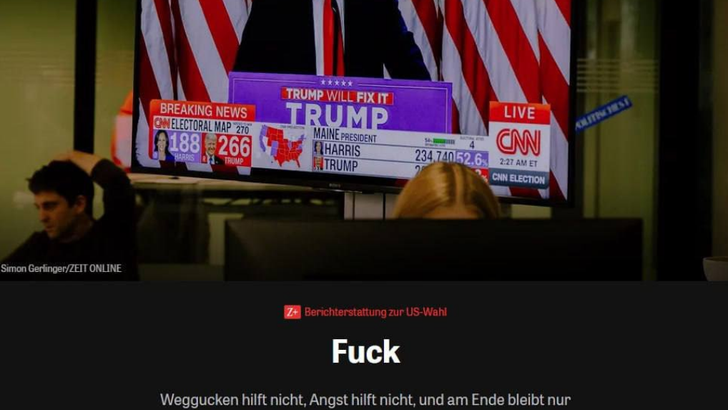
Scholz said that especially the support for Ukraine is an important signal, especially after the victory of Donald Trump in the elections in the USA, which tells the Ukrainians. "You can count with our help!". Sholz added that "The Minister of Finance shows no willingness to implement this offer for the benefit of our country. I don't want to impose such behavior on the country," Scholz said, thus justifying his decision to ask President Frank-Walter Steinmeier to fire the liberal politician.
Vote of confidence in January, elections in March?
Scholz revealed how he will proceed: "We agree with Robert Habeck: Germany needs quick clarity on the further political course," the chancellor said. He announced that on January 15 he will seek a vote of confidence in the Bundestag , to pave the way for early elections that could be held in March. He also announced that he wants to use the remaining weeks of parliamentary sessions to pass some important laws that are no longer waiting that he would also speak with the leader of the conservative opposition, Friedrich Merz: "I want to offer him constructive cooperation in two main areas for our country: in the rapid strengthening of our economy and in defense".
The Liberals withdraw from the coalition
After the dismissal of their minister, the liberals announced that they will also withdraw the other ministers from the coalition. The chairman of the parliamentary group, Christian Dürr, announced in Berlin that the FDP ministers will submit their collective resignation to the president. With this action, the FDP ended the tripartite coalition of the center-left. Dürr said that the voters should now decide which direction the country should take, but promised that for the remaining period, the FDP will continue to be constructive in the Bundestag and cooperate with all democratic parliamentary groups.
In a statement to the media, the dismissed minister, Christian Lindner, said that Scholz's proposals were not enough at all to grow the German economy. According to him, Germany needs deep economic change that would include bolder measures, such as reducing public spending and incentives for businesses, to enable them to face competition and recover the country's economic position.
The opposition demands a vote of confidence as soon as possible
German Vice-Chancellor from the Green party and at the same time Minister for Economy and Energy, Robert Habeck, expressed regret for the breakdown of the governing coalition with the SPD and the FDP. But he said that after the election of Donald Trump as President of the USA, that Germany and Europe must show the ability to act. "We will quickly pave the way for new elections," said the Green politician, in a statement made in the evening in Berlin near the chancellor's office, where he had gone together with the foreign minister, Annalenan Baerbock.
The chairman of the CDU, at the same time a candidate for chancellor, Friedrich Merz, had not yet reacted until the evening. But from the ranks of his party, many voices were heard that the vote of confidence should take place as soon as possible without delay.
"Olaf Scholz must ask for a vote of confidence now without delay, so that we have a new government capable of acting," deputy leader of the CDU/CSU parliamentary group in the Bundestag, Matthias Middelberg, told the German news agency dpa. Roderich Kiesewetter, another Christian Democrat politician, also criticized the long deadline for the vote of confidence. Kiesewetter said there are other options, such as a constructive no-confidence vote, which would allow the FDP, the Greens and the Union to elect Friedrich Merz as chancellor.
Regular parliamentary elections in Germany are scheduled to take place in September next year. Friedrich Merz is officially the chancellor candidate of the conservative CDU/CSU, and the main rival of the current chancellor, Olaf Scholz.
The two populist parties welcomed the breakup of the coalition
The far-right Alternative for Germany (AfD) party welcomed the collapse of Chancellor Olaf Scholz's ruling coalition, calling it a long-awaited "liberation" for Germany. AfD parliamentary group leaders in the Bundestag, Alice Weidel and Tino Chrupalla, charged on Wednesday evening that the coalition of Scholz's Social Democrats, the Greens and the FDP's liberals had led the country into an economic abyss. "We now urgently need a new political start to pull the economy and the country out of the deep crisis it has been plunged into due to the ideology-driven policies of the SPD, the Greens and the FDP," they added.
Sahra Wagenknecht, chairwoman of the Sahra Wagenknecht Alliance (BSW), criticized Chancellor Olaf Scholz for dragging out the vote of confidence until January 15, calling it a "drag of political bankruptcy". She accused Scholz of a "smell speech" instead of an apology for the government's failings. Wagenknecht said Scholz's plan to relax the debt ceiling to finance arms for Ukraine while infrastructure and pensioners in Germany suffer shows "that this government has rightly failed." In German politics, it is unusual for a minister to be dismissed from office. In total, there were five motions of confidence according to Article 68 of the Constitution. Only in two cases Helmut Schmidt in 1982 and Gerhard Schröder in 2001) was the vote of confidence sincere, to ensure the support of the parliamentary majority. While in three other cases (Willy Brandt in 1972, Helmut Kohl in 1982 and Gerhard Schröder in 2005), vote of confidence was used as a strategy to trigger early elections./DW