"We are drowning..." - From Lisbon, Milan to Tirana, "The Guardi...
/ 2026-10-18 23:13:32Focus


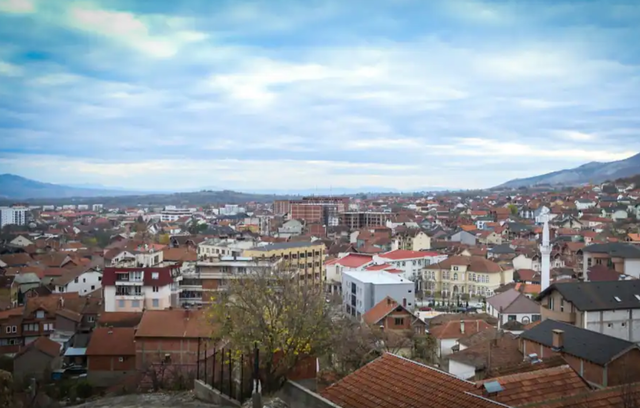
Acting Deputy Prime Minister of Kosovo, Besnik Bislimi, said that the European Commission's Progress Report on Serbia has found that this country violates the rights of Albanians living in this country.
"The report emphasizes that the institutional framework for the protection of minorities remains incomplete and that Albanians continue to face discrimination, underrepresentation and passivation of addresses," Bislimi wrote on social media.
In the Progress Report for Serbia, published on November 4, in the section on the protection of minorities it is stated that "members of the Albanian national minority continue to raise concerns regarding the way the police check their residence status in southern Serbia, resulting in the 'passivization' of certain addresses."
“Authorities should better explain to the public how these controls are carried out and address concerns expressed regarding the reported lack of effective means of appeal,” the Report states.
According to Bislim, it was now "proving that the practices [of deactivating addresses] constitute an articulation of policies aimed at ethnic cleansing of Albanians through administrative means."
The Kosovo government, as well as Albanians in Presheva, Medveđa and Bujanovac, have in recent years continuously denounced what they consider to be the deregistration of addresses. There have even been protests over this issue.
Deregistration means erasing citizens from their registered addresses. This step results in the loss of Serbian citizenship, and consequently all civil rights – including the right to vote, own property, have health insurance and a pension, and be employed.
The issue of address deactivation was also mentioned in the US State Department's report on human rights in Serbia for 2023.
It stated that the passivation of addresses appears to have been carried out disproportionately against Albanians, especially in Medvedja.
"This passivation, which has been going on for years, is very important that the EU has finally agreed to reflect it and make it part of the final assessments of the official European Commission report, placing emphasis on controlling the passivation procedures," said Bislimi.
Also, in the section on the protection of national minorities of the Progress Report for Serbia, it is stated that the action plan "to improve the representation of Albanians in institutions has not yet produced the necessary results."
"National minorities continue to be underrepresented in public administration and the police," the Progress Report for Serbia said.
Acting Deputy Prime Minister of Kosovo, Besnik Bislimi, said that the state will continue to raise the issue of Albanians in southern Serbia at every international level, until their rights are fully guaranteed.
More than 60,000 Albanians live in Serbia, making up the fourth largest minority there, according to the last population census in 2022.
In international reports, the Presevo Valley – a term used for Presevo, Medvedja and Bujanovac, municipalities inhabited by an Albanian majority in southern Serbia – is considered completely isolated and is said to receive attention only during election times.
In July of this year, the only Albanian MP in the Serbian Parliament, Shaip Kamberi, submitted to this institution a draft resolution on the situation of Albanians in the Presevo Valley, requesting that this topic be part of the dialogue between Kosovo and Serbia, which is mediated by the European Union.
This draft resolution calls for the implementation of the agreements of 2001, 2009 and 2013, and for the immediate suspension of administrative measures for the deregistration of addresses./REL