Protests, violence, curfews: From France to Albania, why Europe'...
/ 2026-10-20 23:47:20Focus


The leaders of the Western military alliance meet today in Washington.
NATO's annual summit, which runs until July 11, coincides with the 75th anniversary of its founding and takes place while the war in Ukraine continues.
According to the general secretary of NATO, Jens Stoltenberg, the Washington summit will focus on three main topics.
The first is strengthening the defense. Since Russia's annexation of Crimea in 2014, NATO's main priority has been to strengthen defenses to avoid war. This agenda was transformed two years ago, after Russia launched a full-scale invasion of Ukraine.
NATO has agreed on a new strategic concept at the Madrid summit, which was based on existing defense strengthening efforts.
A year later, in Vilnius, the Allies have agreed on new plans to fulfill that vision.
And, the Washington Summit will now focus on the implementation of these plans, to deter armed attack and protect the alliance.
Since Madrid, NATO allies have made progress in implementation—increasing defense spending, adding high readiness forces, modernizing command and control, transforming collective defense exercises, and successfully integrating new allies: Finland and Sweden.
However, the question is whether NATO is ready to fight and thereby prevent a protracted war, like the one in Ukraine? For this reason, it is important to strengthen the "European pillar" of NATO.
The second topic of the summit will be supporting Ukraine's efforts to defend itself against Russian invasion.
Ukraine will be "at the top of our agenda and we are on the right track for a successful summit", Stoltenberg said.
However, the chances that Ukraine, during the Summit in Washington, will receive an official invitation to join the NATO alliance are almost non-existent.
The NATO package for Ukraine will consist of three parts: language, coordination and assistance.
The language regarding Ukraine's membership will have to be built on the Vilnius pledge that "Ukraine's future is in NATO."
Senior US officials have referred to the Washington package as a "strong bridge" to membership that is "well lit, short, fair, unobstructed".
But negotiations on the exact wording of the summit communique are likely to continue until the last minute.
And, the third topic of the summit will be the strengthening of NATO's global partnerships.
NATO allies are increasingly realizing that the challenges they face are intertwined with other regions.
For example, 40 percent of Europe's trade passes through the South China Sea, while Russia's war in Ukraine has been supported by North Korean munitions imports and Chinese dual-use goods.
As the US Assistant Secretary of State for European and Eurasian Affairs, Jim O'Brien, has confirmed, the Indo-Pacific partnership will be a main topic of the Washington Summit.
NATO's four Indo-Pacific partners - Australia, Japan, New Zealand and South Korea - are already regular participants in the alliance's summits.
Representatives of all NATO partners, including the European Union, will also be in Washington.
Kosovo will also be included for the first time in an event within the summit.
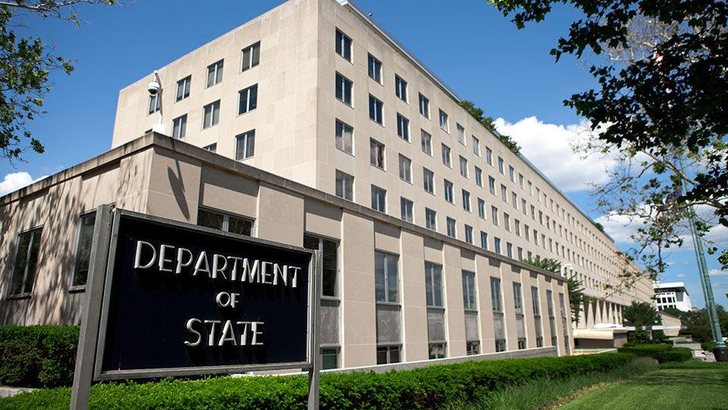
President Vjosa Osmani will participate in the activity organized by the US Department of State for Women, Peace and Security.
The summit will also be Stoltenberg's last, as he will hand over the post to current Dutch Prime Minister Mark Rutte in the fall.
In the past, Rutte has strongly supported the idea that Europe should strengthen its defense and intelligence capabilities, but has also acknowledged that US supplies are critical to achieving that goal.
Rutte's experience as prime minister of the Netherlands for nearly 14 years, leading various coalition governments, will help him meet the challenge of holding together NATO's 32 allies.
But the biggest challenge for him and NATO will be the adaptation of the alliance in the face of an increasingly aggressive Kremlin./ REL