Is this police force professional and capable of handling violen...
/ 2026-10-16 18:54:07Focus


On Saturday morning, January 3, in the tea room of Mar-a-Lago, Donald Trump's Florida club, Marco Rubio stands silently next to the president, facing reporters. He glances left and right, swaying from one foot to the other, barely hiding his emotion. The US Secretary of State is watching the dream of his life come true: the fall of Venezuelan dictator Nicolás Maduro, kidnapped in the night and transferred to New York to stand trial for drug trafficking.
Because, following the operation directly, Rubio did not simply imagine Venezuela falling into the clutches of the United States. Beyond that, he saw that it was the turn of Cuba, Caracas's historical ally. "If I lived in Havana and were in government, I would be at least worried," the diplomat said later with a smile that showed the satisfaction of someone who has set in motion an irreversible mechanism.
This spectacular coup bears his signature. It is his personal revenge: that of the child of Cuban exiles against the communist regimes of the continent, but also the revenge of the neoconservative hawk against the isolationist wing of the Trump administration.
For several months, the first Latino Secretary of State in American history has become an essential link in the presidential apparatus. Already catapulted to the top of diplomacy, but also national security advisor, director of the National Archives, administrator of the United States Agency for International Development (USAID) – before it disappeared – he is now also the conductor of the American offensive in the “Western Hemisphere”.
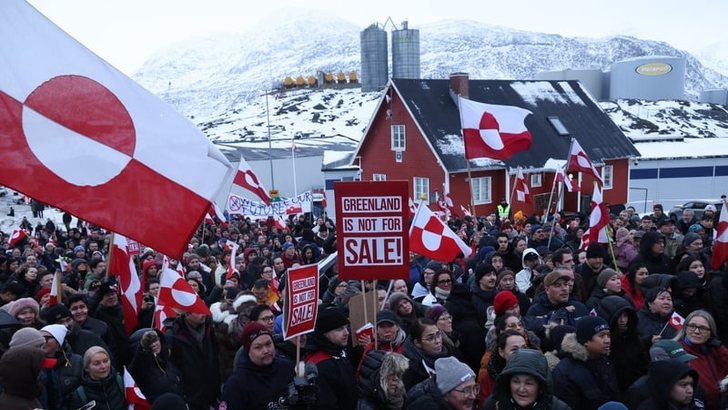
The national security strategy, released in November, which proclaims the revival of the Monroe Doctrine – repackaged as the “Donroe” Doctrine – which preaches US dominance over the American continent, is the most significant example of the considerable influence Rubio has gained within the presidential cabinet. “It was good, wasn’t it? I wrote it myself,” he boasted during his press conference at the end of the year, before retreating to emphasize that he had merely “participated” in its drafting – fully aware that Trump tolerates no one but himself as arrogant. After steering the course of Venezuela’s destiny, he is once again tasked with pressuring Denmark to extort Greenland, the missing piece of the new American emperor’s imagined Western Hemisphere.
IN THE HEART OF THE REACTOR
At 54, Marco Rubio has just completed another rung in his fascinating rise to power. He was elected to the West Miami city council at just 27. He then spent eight years in the Florida House of Representatives, which he presided over from 2006 to 2008, before being elected U.S. senator in 2010 and running for the Republican primary in 2016. Gone are the days of the relentless insults of that bitter campaign that pitted him against Donald Trump.
His future boss had given him the derogatory nickname “Little Marco”; he had called him “little hand” in return. Today, Trump affectionately calls him “the kid” and sees him as a potential successor in 2028. Experienced, loyal and trustworthy, Rubio has managed to penetrate the president’s inner circle. By securing the post of national security adviser, he has taken an office in the White House, in the heart of the reactor. There, he has been able to speak directly into Trump’s ear. Yet this diplomat remains one of the few neoconservative hawks in an administration filled with ardent opponents of military adventures abroad. "He has survived, while most of the hawks who surrounded the president during his first term were dismissed," notes with astonishment Charles Kupchan, a fellow at the Council on Foreign Relations think tank, who served on the National Security Council under Bill Clinton and Barack Obama.
His past as a fervent defender of Atlanticism, of the leading role of the United States on the world stage, of human rights and democracy, did not make him suitable for embracing Trump's initial project: a nationalist retreat within the borders and a unilateral pursuit of American interests. Faced with the isolationist camp, which sees Iraq as the absolute example to avoid, this admirer of George W. Bush supported the 2003 invasion (before retreating from this position in 2015). "The world is in a better state since Saddam Hussein is gone," he declared.
In 2015, he spoke before the Council on Foreign Relations: “America is the first power in history motivated by a desire to expand freedom, not just to expand its territory,” he said at the time. Rubio then outlined three pillars of foreign policy: military power, the protection of free trade, and a “moral clarity” in “defending freedom.”
In the Senate, he has consistently railed against Russia, China, Iran. And Venezuela – his obsession. He made an open threat to Maduro in 2019, posting photos of toppled dictators, including Libyan tyrant Gaddafi, on social media. His stance on immigration at the time was diametrically opposed to the brutality of the current government’s deportations. In his autobiography “An American Son,” published in 2012, the son of immigrants defends those who entered the country illegally: “They do exactly what we would do if we lived in a country where we couldn’t feed our families.”
And yet the Secretary of State has converted to the MAGA religion. Under the urging of Elon Musk, he has led the dismantling of USAID, the US foreign aid agency, carried out a massive purge of the diplomatic corps, abolished the departments charged with promoting human rights, dealt the final blow to the Voice of America, and withdrawn the United States from UNESCO. Once a supporter of aid to Kiev, he has revised his stance – “The United States is financing a stalemate in Ukraine” – and has allowed the president’s pro-Russian envoys, his friend Steve Witkoff and son-in-law Jared Kushner, to take the reins.
Democratic Senator Chris Van Hollen, who had confirmed his nomination believing he would defend “democracy and human rights abroad and respect for the Constitution at home,” is furious: “You’ve done quite the opposite,” he told him. But Rubio got what he wanted: to win the blessing of MAGA ideologues. “He’s going to be the Kissinger of our time,” predicted Stephen Miller, the president’s deputy chief of staff, in May…
A real ideological metamorphosis? “To become Trump’s secretary of state, he had to change his foreign policy stance,” says Charles Kupchan. “He has influence: you can see it in Ukraine, where he helped the peace plan shift from a pro-Russian stance to a somewhat more balanced text, and also in Venezuela.”
TO PUT AN END TO SOCIALIST REGIMES
How did the top diplomat convince his boss to overthrow Maduro? “The president was already torn between opposing forces,” the researcher analyzes. “He is deeply committed to a neo-isolationist rhetoric, close to the ideas of Vice President JD Vance, but also sensitive to neo-imperialist discourses, more embodied by his Secretary of State.” These aspirations have merged in the Venezuelan file, transforming it into a “police operation” against a drug trafficker, rather than a regime change. “This allows them to justify the offensive as a continuation of Trump’s promise: ‘to make America safe again,’” notes Politico magazine.
A clear compromise is also in the choice to leave the Chavista government in place, as long as it obeys Washington. Meanwhile, Rubio, the Spanish-speaking hawk, inherits the task of administering Venezuela remotely.
The child of Cuban immigrants, raised in Miami's anti-communist neighborhood, would probably have preferred to see the regime fall. Marco Rubio is the son of a father, Mario, a bartender, and a mother, Oriales, a cleaning worker, who immigrated to Florida in 1956. And he has one fixed idea: to end socialist regimes. "Anything that is harmful to a communist dictatorship is something I support," he declared in 2019.
In late 2014, he opposed the normalization of relations with Cuba under Obama. And in 2015, he launched his presidential campaign from Miami’s Torre de la Libertad, a symbolic monument to Cuban exiles. Gradually, he focused on Venezuela. In early 2017, Rubio introduced Trump to the wife of Leopoldo López, then a political prisoner, and called on foreign companies and governments to cut off all trade with Caracas. In 2019, he co-sponsored a bill aimed at restoring democracy there and convinced Trump to recognize opposition leader Juan Guaidó as legitimate president. However, he never lost sight of his main target: Havana. A settling of scores, both political and intimate, that has shaped his history. But he understood that the path to victory in Cuba ran through Caracas.
THE NEW VICE-KING OF CARACAS
For twenty years, Hugo Chávez and Fidel Castro built an unprecedented partnership that ultimately linked the fate of their countries: Venezuela, possessor of the largest oil reserves on the planet, sent 100,000 barrels of oil a day to the Caribbean island. In return, Havana – a hotbed of doctors and spies, experts in maintaining authoritarian power – infiltrated 20,000 agents into the Venezuelan state apparatus and exported its culture of repression.
For Cuba, it was a matter of survival: this subsidized oil paid for electricians, doctors, professors. For Venezuela, it was political life insurance. Havana saved the regime during the coup against Chávez in 2002 and during the protests against Maduro in 2014 and 2017. But when the Venezuelan “Comandante” died in 2013, the world price of oil began to fall sharply. Caracas, which had bet everything on this resource without ever reinvesting in infrastructure, remained exhausted. Oil production tumbled lower and lower. The Castro regime, which had survived sixty years of a US blockade, was slowly drowning – not because of Washington, but because of its dying ally.
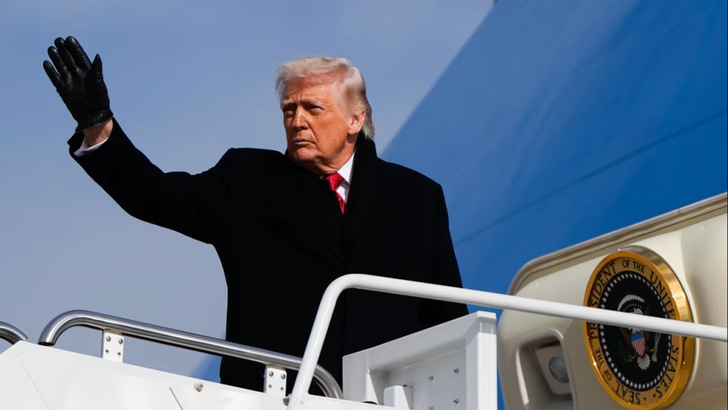
Rubio learned his lesson. There is no need for an invasion. By drowning Venezuela, he is killing Cuba. He influenced the banning of Venezuelan tankers. He imposed sanctions on those who organized the trade of black gold between Caracas and Havana. And on January 3, after getting rid of Maduro, he announced that America would take control of the country’s oil industry. On January 4, Donald Trump, from Air Force One, calmly declared: “Cuba is about to fall. Without Venezuelan oil, they cannot survive. I don’t think we need to act.”
Then, on January 11, he reposted a message on his Truth Social network proclaiming his secretary of state as the next Cuban president. Rubio, now the new viceroy of Caracas, is preparing for this final transition. His childhood dream has become state policy.
At Mar-a-Lago, as Trump spoke, Marco Rubio quietly savored, swaying from one foot to the other, his double victory: Cuba's fate was being sealed through a domination exercised from afar – that of the new American imperialism./ L'obs - translated by Lapsi.al