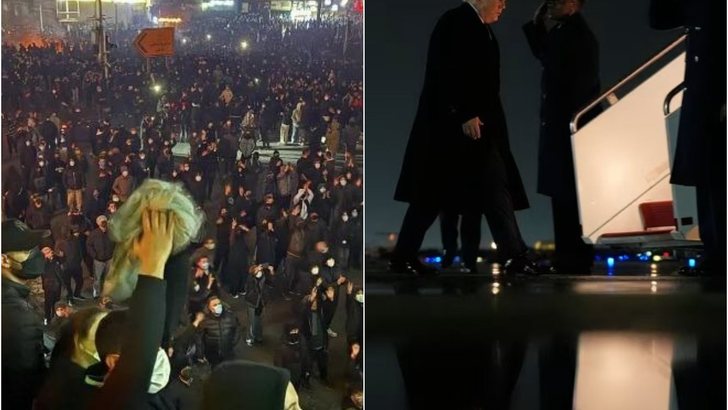
Is this police force professional and capable of handling violen...
/ 2026-10-16 18:54:07Focus


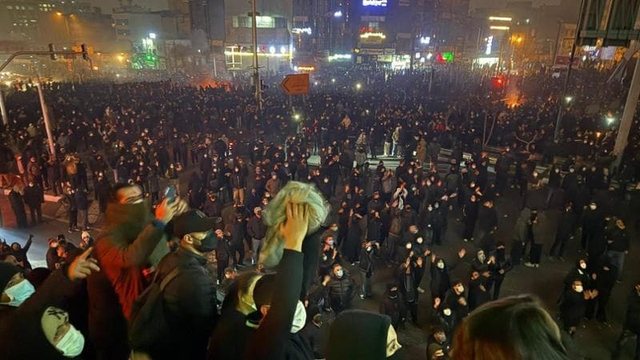
The Atlantic Council analyst and former Israeli military intelligence official explains why the Iranian regime appears stabilized, why it is unlikely to fall like Syria, and what could change the situation, including a possible role for the United States.
Is the Iranian regime at its end?
I would like to make two preambles. First, it is very difficult to know what is really happening in Iran, even before the internet shutdown. Second, the collapse of regimes is difficult to predict. However, as long as the dictatorship maintains cohesion, without divisions or cracks in the leadership, and as long as the protesters do not have a clear leader, the regime may survive these protests.
How can the situation move forward?
The regime cannot meet the economic demands of the population, but it is quite stable for now. Iran is not like Syria. For real change to happen, we need to see something dramatic, either an internal rupture, or real US involvement. Without that, the ayatollahs will find a way to overcome the protests, even if it is the biggest challenge since 1979.
Where does this stability come from?
First, from the Revolutionary Guards (IRGC), which are very powerful, about 300–500 thousand people, competent. Then, about 13 million Iranians (less than 20% of the population) support the regime. And not all opponents are willing to risk everything, some want change, but are afraid of the vacuum and the consequences.
What happens if the protests continue?
If the protesters stay and increase their presence on the streets, creating cracks in the theocracy, we could see a change in direction from the ayatollahs. But that doesn't mean the immediate end of the regime.
What major internal change could occur?
The IRGC could seize power and remove President Masoud Pezeshkian. In an extreme scenario, Khamenei could be removed and a new supreme leader installed. Or there could be a foreign policy shift, with Iran seriously negotiating with the US.
Are these protests similar to those that toppled the Shah in 1979?
The Shah left after a year of protests. I think Khamenei will not leave like Bashar al-Assad in Syria. He sees himself not only as a defender of Iran, but more than that.
Does the movement need Trump to have more chances?
We need to be careful about what the US can and wants to do. As in Venezuela, the US president has often worked with the regime instead of the opposition. For this reason, I don't think the US is really investing in Reza Pahlavi. Trump wants to be different from Obama and Biden.
Is Pahlavi a realistic hypothesis?
I think most Iranians don't want another Pahlavi. He's taking advantage of the lack of leadership in the opposition, but his ability to influence is limited. Israel is trying to support him, but it seems like a lost cause.
What developments are expected?
If there were a US intervention, Iran could become a regional and even international problem. /Corriere della Sera