Protests, violence, curfews: From France to Albania, why Europe'...
/ 2026-10-20 23:47:20Focus


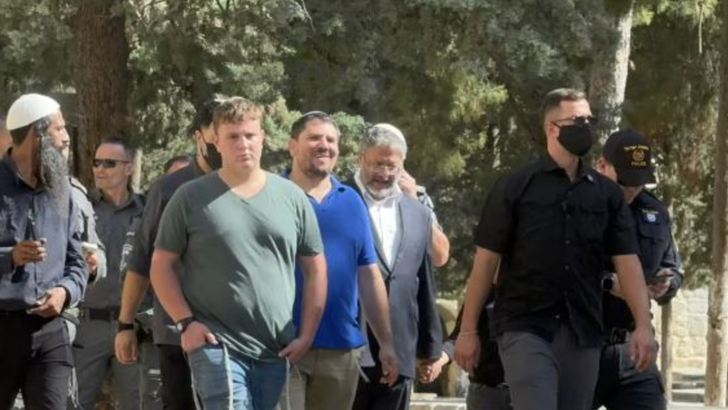
A visit by far-right Israeli minister Itamar Ben-Gvir to the Al-Aqsa mosque compound in Jerusalem has caused high tensions. It is seen as a provocation by Muslim believers.
In fact, in all the initiatives and negotiations for a final and peaceful solution between Israel and Palestine, the status of Jerusalem has proven to be the most difficult issue to resolve, especially after the Oslo Accords.
Al-Aqsa Mosque/Al-Haram al-Sharif (The Noble Sanctuary) has become the main obstacle in this impasse, which continues to deepen due to Israel's repeated and persistent violations of the status quo in Jerusalem.
Why is Al-Aqsa important to the Islamic world?
Al-Haram al-Sharif is located in the Old City of Jerusalem and is the third holiest site in Islam, after Mecca and Medina in Saudi Arabia.
The complex covers an area of 144,000 square meters and includes the Al-Aqsa Mosque, the Dome of the Rock, and all surrounding buildings, courtyards, and spaces, including Islamic foundation properties related to Al-Aqsa.
Muslims believe that the prophet Muhammad was transported on a miraculous journey from the Great Mosque of Mecca to the site where Al-Aqsa is today and from there he ascended to heaven, an important event in the Islamic calendar, known as Isra' and Mi'raj.
The Dome of the Rock, part of the Al-Aqsa compound, was built in 691 AD and is one of the oldest surviving Islamic structures. It contains the Holy Rock, also known as the Broken Rock, which has a small hole leading to an underground chamber called the Well of Souls, where, according to Islamic belief, souls awaiting the Day of Judgment are heard.
What significance does it have for Judaism?
In Judaism, this site is known as the Temple Mount and is considered the holiest site. According to Jewish tradition, the First Temple and the Second Temple were built there, and it is believed that the Third Temple will be rebuilt on this site at the coming of the Messiah.
Traditional Jewish law prohibits Jewish settlement in the area to avoid violating the holy land. However, several religious Zionist organizations, supported by prominent Israeli political figures, are demanding the immediate reconstruction of the temple and Jewish prayer rights in the area.
UNESCO resolution and reactions
In 2016, the United Nations Educational, Scientific and Cultural Organization (UNESCO) adopted a landmark resolution regarding Al-Aqsa Mosque, strongly condemning Israel's aggression and illegal measures against its foundation and personnel, demanding the restoration of Muslim access to the holy site and respect for the status quo.
The resolution caused outrage in Israel, largely due to its use of terminology that referred to the country only by its Islamic name and considered it an exclusively Muslim country.
History and legal basis of the status quo
Since the 19th century, the Al-Aqsa compound has been governed by a status quo agreement, a modus vivendi that prevents conflicts between different parties.
The administration of Al-Aqsa belongs to the Muslim institution, the Jerusalem Islamic Waqf, which is under the auspices of the Kingdom of Jordan, which has been recognized and confirmed by the international community, including the UN, UNESCO, the Arab League, the European Union, Russia, and the United States.
In 1852, the Ottoman Empire issued a decree regulating the possession and division of the holy sites in Jerusalem, prohibiting changes in their status. This was internationally recognized in the Treaty of Berlin in 1878, which emphasized that no change could be made to the status quo of the holy sites.
Violations and tensions after the creation of Israel
In 1929, during the British Mandate in Palestine, the first violation of the status quo occurred when a group of Zionist Jews prayed near the Western Wall (al-Buraq Wall), which caused violent clashes and casualties.
After the 1967 War, Israel occupied the West Bank and the Gaza Strip and declared sovereignty over East Jerusalem, violating international law and establishing its own administration in the area.
In 1980, the law passed by Israel declaring Jerusalem the united capital of the state of Israel was strongly condemned by the international community and the UN Security Council.
However, Israel accepted the status quo as the legal framework for administering Al-Aqsa, but in practice has consistently violated it, controlling entrances, demolishing a neighborhood to create the Western Square, and establishing a military presence on the site.
Content and violations of the status quo
The status quo includes clear rules for access, movement, prayers and activities in the Al-Aqsa compound. Any unilateral change by either party is a violation and risks escalating violence in the region.
After 2000, the situation worsened with Israeli leader Ariel Sharon's provocative entry into the Al-Aqsa compound, which sparked the Second Intifada with thousands of casualties. In 2003, Israel unilaterally restored access for Jews and non-Muslims, breaking previous agreements.
Access and freedom of movement have been increased with numerous restrictions for Palestinian Muslims, while Jews are allowed to enter exclusively part of the compound, a serious violation of the status quo and religious freedoms.
Jewish prayers at the compound have increased, alarming Muslims and fueling fears of a partition plan. Israel has also carried out unauthorized excavations and works at the compound, causing international concern.