How Belinda Balluku is fabricating the rumor about Top Channel's...
/ 2026-10-19 16:19:00Focus


Protests against fuel price hikes last year forced the government to set up the Fuel Transparency Board to put an end to market price abuses. The main purpose of the Board was to control the profits of traders so that the final price at the retail supply points was as low as possible. But a year later, Faktoje has verified that the Ministry of Finance does not have any data on fuel profit margins, contrary to what Minister Delina Ibrahimaj declares.
Esmeralda Topi – Faktoje.al
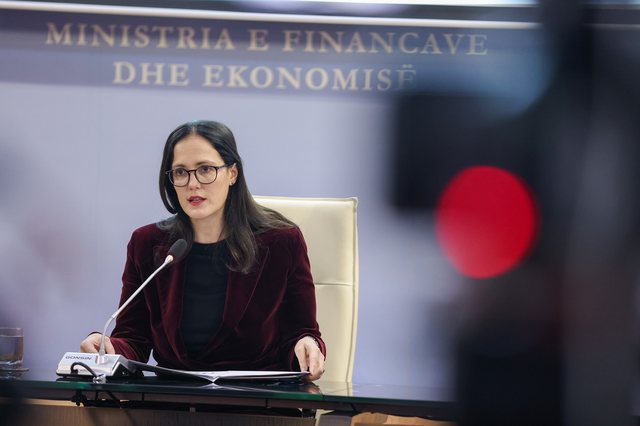
"The profit margin of this sector has been significantly lower this year compared to last year, and this has been our goal, to control traders' profits and the final consumer price to be as low as possible." - declared the Minister of Finance and Economy, Delina Ibrahimaj, during the year-end conference, as she answered the interest of journalists regarding the progress of the Fuel Transparency Board.
But has this structure fulfilled the purpose of creation?
On the one year anniversary of the creation of the Fuel Transparency Board, Faktoje decided to verify whether the Board has managed to control the traders' profits and the final price of oil, gasoline and gas, as claimed by the Ibrahimaj ministry, which is also the chairman of the Board.
Our verifications show that the Ministry of Finance does not have any official data on the performance of the profit margin of entities in the hydrocarbon field, despite Ibahimaj claiming that the companies have reduced profits.
In a document that bears the seal of the institution she leads, it is clearly written that according to the law, companies have a deadline for submitting balance sheets on March 31 and the profit margin is part of these financial reports.
"The tax administration has data for calculating the profit and profit margin of the entities based on the financial reports, which the taxpayers, according to the law, are obliged to submit by March 31. Regarding the calculation of the company's profit margin for the year 2022, the Tax Administration still does not have the financial balances for the year 2022, as the deadline for their submission is March 31, 2023. After the submission of the financial statements and the Income Tax declaration, it will it is possible to calculate the profit margins for the year 2022 (on an annual basis) but not for limited periods (a few weeks or a few months) such as the period from the date of creation of the Board to December 31, 2022." - writes the Ministry of Finance,
"In order to calculate the profit margin for a limited period, in the subjects operating in this sector, full dedicated controls must be developed, to analyze every sale and purchase transaction carried out during this period. The procedure for carrying out these checks based on the Tax Procedures Law, analyzing the results and preparing the relevant conclusions require a considerable time frame." - it is written further in the same document.
Even in an official response to Faktoje, the Ministry of Finance admits that it has no data on the profit margins of fuel companies.
"The Tax Administration has data for the calculation of the profit and profit margin of the entities based on the financial reports, which the taxpayers, according to the law, are obliged to submit by March 31. Regarding the calculation of the company's profit margin, the Tax Administration still does not have the financial balances of 2022, as the deadline for their submission is March 31, 2023." - clarifies the Ministry of Finance, sticking to the same argument, the legal deadlines.
And if Finances and Taxes do not have data yet, then why did Minister Ibrahimaj declare that the profit margins of oil companies have decreased significantly?
"It is just a rhetoric, the Ministry cannot have access to the accounting balances of the companies operationally. It is simple to justify before the public the policy they have undertaken and to say that the cost has been divided fairly between the public and the companies, so that the companies have not abused either. The only way the government has access to companies' balance sheets is when they are submitted to the tax authorities, and they can look at profit margins." - argues professor Selami Xhepa for Faktoje.
Board Results: Only 1 license suspension and 3 fines
From the first meeting of the Fuel Transparency Board on March 15, 2022, until the meeting on March 14 of this year, the members of this structure have taken a total of 75 decisions, which determined ceiling prices for oil, gasoline and gas. For companies that did not respect the decisions of the Board, the law provided for penalties ranging from fines to suspension of activity. But even at this point, the results are poor.
In one year, the State Market Surveillance Inspectorate fined only three entities in the amount of 2,000,000 ALL.

The three violations belong to the month of March 2022, a period when the Board of Transparency and Temporary Restriction of wholesale/retail trading prices of oil and gas by-products had just started work.
While one month later, in April 2022, ISHMT temporarily suspended the license of an entity with this argument:
"With decision no. 13, dated 04.04.2022, issued the administrative measure against the entity "Bregu Oil" sh.pk, with Nipt-L42823001F "License suspension for 3 months for the exercise of activity and the obligation not to change the condition of oil and gas products".
How the Board has changed the price of oil, petrol and gas
From the beginning of March 2022, the ceiling price of oil, gasoline and gas is set by the Transparency Board, based on a formula that calculates the costs of purchasing the product, taxes, administrative expenses and a profit margin.
The Fuel Transparency Board has met 75 times to set ceiling prices, but only one of the meetings has been made public to the media. Other decisions are announced through press releases.
The graph below shows the Board's decision-making regarding oil, gasoline and gas prices from the first meeting of this structure to the last.

Referring to the charts, the lowest price that the Board has set for oil was at the last meeting, namely on March 14, where the ceiling price for oil trading was set at 189 ALL per liter. Whereas, the highest price for oil set by the Board was in June of last year, where oil reached 256 ALL per liter for one day.
On the other hand, even though the Board was created to keep prices under control, during this year there were not a few cases when the price of oil on the international stock exchanges decreased, but the Transparency Board in Albania decided to increase the price of this product.
For example, in August of last year, the price of crude oil on the stock exchange, the Brent index, fell to about 94 dollars per barrel, reaching the levels before Russia's attack on Ukraine, but oil on the domestic market traded at 221 lek per liter, from about 190 lek per liter that was at the end of February, before the war started.
The Ministry of Finance justifies the non-reflection of the drop in oil prices in the domestic market as follows:
"According to the Ministry of Finance, the Transparency Board, since its creation, has strictly adhered to the movement of the Platts Mediterranean exchange for diesel, gasoline, and the official invoices of the operators. The Ministry of Finance and Economy feels obliged to clarify public opinion that not every movement of the crude oil exchange is reflected at the same time and to the same extent in the diesel and gasoline exchange."
At this point, Professor Selami Xhepa considers the continuation of this structure unnecessary.
"Taking this measure at the first moment, I personally consider it justified considering the extremely high and unprecedented uncertainties that were encountered at the moment of the outbreak of the conflict in Ukraine. But I call it unjustifiable that for a period of one year since the creation of this authority, we do not have an assessment from the Competition Authority for the measures that should be taken, for how to close this structure. Or if it is judged that the conditions of fair competition are not met with the current structure of the market, i.e. if we are still dealing with market dominance, then the Competition Authority must give an orientation on how this board established in order can be transformed. temporary, to be included in the form of a permanent decision-making structure, similar to the Energy Regulatory Authority. Even the Competition Authority should have made a report on how decision-making is made by this Board." - says Xhepa for Faktoje.
But the Board itself, which is legally in charge of its merger, still does not have such a decision.