How Belinda Balluku is fabricating the rumor about Top Channel's...
/ 2026-10-19 16:19:00Focus


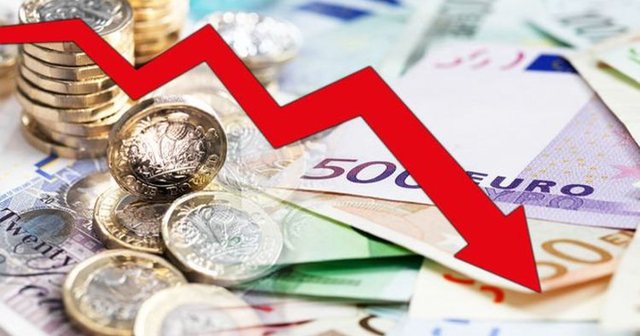
Throughout 2023, the local currency strengthened rapidly. According to the data, the strengthening of the lek first peaked in July last year, where the euro/lek exchange rate dropped to an average of 103.2 lek, with an annual appreciation of the lek of 12.1%. After the slight weakening in the following months, the lek strengthened again in the last two months of 2023, as the euro/lek exchange rate touched another low level, of 102.8 lek, in December.
But what were the reasons for the appreciation of the lek?
"Scan Intel" has conducted an analysis where it briefly addresses some of the possible reasons.
The Bank of Albania follows a free exchange rate regime, which means that the exchange rate reflects the ratio between the demand and supply of the currency. This ratio is mainly dictated by the dynamics of foreign trade and financial exchanges. So, from the Bank's analysis, it appears that the currency trend in Albania during 2022 and during 2023, as well as the strengthening of the lek, were influenced by the improvement of the external sector. So, this has come mainly as a result of the increase in exports of services and the continuous growth of foreign direct investments.
The impact of foreign direct investment
Let us first analyze the performance of foreign direct investments. According to data from the "Bank of Albania", Foreign Direct Investments reached a new historical record for 2023. Referring to the figures, they marked the value of 1.49 billion euros, an increase of 8.7% compared to the previous year. Considering that new foreign investments generally come in foreign currency, this has also affected the Euro-Lek ratio.
According to the Bank of Albania, during the fourth quarter of the year we left behind, incoming foreign exchange flows in the form of foreign direct investments were mainly concentrated in real estate, to the extent of 26%. Of these, about 2/3 are citizens of EU countries. Overall, the share of non-resident buyers has returned to growth after a downward trend since 2020. We emphasize that the purchase of real estate by foreigners reached 1.6 billion euros. Foreigners have shown interest in real estate, especially in coastal areas.
Impact of remittances
Let's talk about another factor, that is, about the level of remittances in the past year. Immigrant remittances set a new absolute record last year, of almost 930 million euros, according to the latest figures from the Bank of Albania. The figure is even higher than 2022 and 2008, when the previous record was set. The significant increase in remittances in our country has started since the pandemic, but it has been emphasized even more with the price crisis of 2022.
If we compare it with the period before the price crisis, we see that immigrants have brought at least 167 million euros more to the country than last year. So, we can conclude that these incoming foreign exchange flows in the economy have influenced the devaluation of the European currency. It is worth mentioning that remittances in value have been the main financier of the balance of payments.
The impact of tourism
On the other hand, we can also analyze incoming flows from tourism. Taking into consideration that last year and the beginning of the current year were successful, this has also brought higher income in 2023 to the extent of 4.2 billion euros. The exchange rate is one of the indicators sensitive to the aforementioned developments, as well as the effect of tourism on the economy.
So, from a simple calculation, through the aforementioned formal channels, over 6 billion euros entered our country last year, without mentioning here the informal channels of money injection into the market that are also an influencing factor in the exchange rate of foreign currencies against the lek.
So, we can say that the recent appreciation in the foreign exchange market is a consequence of demand-supply, and the balance of payments clearly shows this.
According to the "Bank of Albania", the appreciation of the local currency has also reflected the increase in confidence towards our national currency in the foreign exchange market. Focusing on developments in 2023, the strengthening of the exchange rate seems to have been dictated by a high oversupply in the domestic foreign exchange market.
But what impacts has the exchange rate had on the economy?
The impact of this exchange rate fluctuation has been analyzed earlier, especially for families, however, according to the "Bank of Albania", the impact of the exchange rate appreciation on the economy has been overall positive. First, it has resulted in lower inflation rates, something that is evident both in the regional context. By having lower inflation rates, we have a slower increase in the base rate, producing a less negative impact on economic growth. Secondly, the appreciation of the exchange rate has had a positive effect on the strengthening of financial stability. This is reflected in the improvement of the borrowers' ability to pay in foreign currency, which has influenced the improvement of the quality of the balance sheets of the banking sector. Thirdly, the appreciation of the local currency has reduced the external debt of the private and public sector.
The impact of the exchange rate has also been noticed in the indicators of deposits and loans. Affected by the fall of the euro, citizens seem to be saving in euros, but have received loans in Lek. What is noticed is especially the demotivation of loans in euros, since the interest rates for loans in euros are higher than for those in lek.
In December, real estate loans for individuals had an average interest rate of 4.5% for loans in Lek, and 5.2% for loans in Euro currency. Compared to the rates reported at the beginning of the year, both of these rates have increased, but the one for real estate loans in the Euro currency was higher.
On the other hand, the Bank of Albania has decided to increase again the purchases of Euros in the foreign exchange market this year. With the objective of increasing the foreign exchange reserve, the Bank of Albania intends to purchase through auctions 250-330 million euros during the year 2024. According to the institution, a total of 20 auctions are planned to take place between February and December 2024.
For the year we left behind, the initial auction calendar predicted purchases between 160 million euros and 220 million euros. But, as a response to the strong devaluation of the Euro during the summer season, the Bank of Albania decided to increase the purchased amount in the range between 220 and 300 million euros.
Referring to the data analyzed by "Scan Intel", the history of currency auctions in Albania dates back to 2013. Last year, i.e. in 2023, a total of 17 auctions were held, while a total of 85 held auctions were registered in the span of 10 years.