How Belinda Balluku is fabricating the rumor about Top Channel's...
/ 2026-10-19 16:19:00Focus


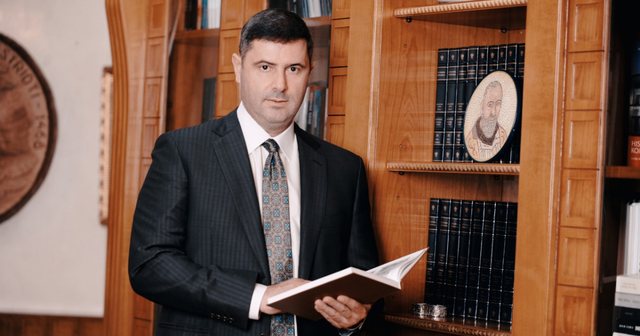
The President of the Tirana Chamber of Commerce and Industry, Nikolin Jaka, in an exclusive interview for Vox News, lists in detail the problems faced by the Albanian economy today. With exhaustive arguments, Jaka brings the concrete proposals that must be undertaken to promote and save the Albanian economy. The 2024 budget and fiscal package, the most important documents of the year, according to the president of the Tirana Chamber of Commerce and Industry, not only have not been discussed with interest groups, but have been introduced to them through the media. However, this institution, after having discussed with the entrepreneurs, brings in this interview a series of concrete proposals that should be reflected in the official government document. What does Jaka say about these proposals? What are the main incentives that should be pursued by the government? How can the emigration of young people be saved? What are the business needs and what are the sectors that require support? Scanning of means in customs, fiscal amnesty, or the concrete initiatives that DHTIT is undertaking for a new economic approach. We reveal all in this interview given to Vox.
Mr. Jaka, already the headline of the end of the year as the most important government decision is the 2024 budget and the accompanying fiscal package. Are you as a direct interest group familiar with the changes that are foreseen this year?
The budget for 2024 and the fiscal package, approved by the government and which are currently being discussed in the parliamentary committees, have not only been presented to DHTI-Tirana, but also to other business organizations. It sounds very absurd that the budget and fiscal package are approved by the government without first consulting business.
However, DHTI-Tirana has been informed by the media about this budget for 2024. From the multi-responsible analysis with the management structures and its membership about this budget, it finds that: the fiscal package presented in this budget is very minimalistic, with some changes such as are: some VAT exemptions, increase in excise duty on cigarettes, increase in carbon tax, as well as the income tax law.
Based on this budget, which was approved by the government and without organizing any consultation table beforehand, we can conclude that:
- We do not see this budget as a budget that supports the real economy, as all the countries of the region and those of the EU are doing;
- Our constant demands for fiscal incentives for the manufacturing industries, which are facing the crisis of rising prices of energy, fuels, and raw materials, are not reflected;
- In this budget, we expected a reflection of the incentive policies, how the mass emigration of young people will be mitigated, where the business is feeling the cost of the lack of labor force and the high specialists who are missing from the labor market;
- This budget does not support agriculture and farmers. The input-output VAT differentiation scheme continues. Subsidies are several times lower than the needs of the sector, continuing to rank last in the Western Balkans region;
-Albanian entrepreneurship from this budget does not see any support with budget funds to promote productivity and production for export.
Therefore, DHTI-Tirana will soon come up with some concrete proposals for the fiscal package for 2024 addressed to the government.
Prime Minister Edi Rama came to the field to present this project. Will there be a roundtable discussion with interest groups and is there an official request from the government to reflect business demands, mainly in the fiscal package?
-Up to this moment, we have not received any signal, invitation or request from the Albanian government to discuss the 2024 fiscal package.
What are the business requirements to be reflected in the package and do you already have a concrete proposal for what you want to be present in next year's budget?
From its membership, DHTI-Tirana has received many requests and proposals, hoping that they would be reflected in the 2024 fiscal package. We are listing some of the important legal changes that we think should be reflected in the 2024 fiscal package as follows:
i) Farmers' VAT compensation scheme
The removal of the percentage of VAT compensation for agro-processors in the purchases they make from farmers brought:
- High VAT burden for agro-processors, who are automatically taxed in the market with a net tax of 20% on sales, without any right of deduction;
- Decrease in the income of farmers, who were deprived of the amount they received as compensation from agro-processors;
- The non-crediting of VAT led to a decrease in the interest of domestic processors and producers, finding opportunities in imports.
- The removal of the compensation was done without any economic and financial analysis, bringing back the decline of interest in documenting transactions, thus influencing the increase in informality.
Proposal:
- In Law no. 92/2014 "On VAT", the VAT rate for the agro-processing sector should be 5%-7%, as the countries of the region and part of the EU currently have;
- The inclusion of all operators in the sector of collection and processing of agricultural and livestock products in the VAT scheme, regardless of the declared annual turnover.
ii).Removal of the excise duty on liquefied gas. The existing excise tax of 6 Lek/liter currently burdens the cost of a large part of producers who use liquid gas as a fuel for industrial production.
In the whole region and EU countries, the processing industry is exempted from gas excise and the same model should be implemented in our country.
iii).Adjusting the right to deduct VAT for fuel.
Fuel costs take a significant weight in the costs of any business, both in administration and production and distribution, especially since it has been almost two years since the increase in the price of fuel is no longer showing a downward curve.
However, businesses are often penalized in terms of the VAT deduction they have paid for the purchases of fuel necessary for their economic activity. Some norms established empirically 15 years ago are still used. For concretization, there are many production activities that consume fuels of a fuel nature and are recognized with a discount of only 2%.
Proposal:
In instruction no. 6, dated 30.01.2015 "On VAT", a revision of all norms for allowing the deduction of fuels, especially those of "other" nature, which include many production and commercial activities, should be done.
v) Drafting and implementation of the Law on Fiscal Amnesty.
DHTI-Tirana stands by the proposal for drafting a well-structured fiscal amnesty law, as it will be a support for the economy.
It is very important that the Fiscal Amnesty is enabled in close cooperation with private enterprise and interest groups, so that its effects positively affect the Albanian economy.
Beyond the discouragement that the Fiscal Amnesty as a whole does to honest entrepreneurs, this law must find the right instruments for the informal enterprise to lose all hope of continuing its activity in informality.
Through these proposals, they expect the Albanian government to set up a working group with joint experts of private enterprise and institutions responsible for the economy, for the points proposed above.
What is being said out loud is salary increase or indexation of pensions. But in fact, there is an accompanying fiscal package from which it can be seen that the budget revenues will be maintained next year. What does this mean for business? What are the points you dispute?
DHTI-Tirana is in unison with the government for increasing the minimum wage in all sectors of the economy. Wages and other motivational incentives are being developed by all businesses so that employees feel motivated to work.
But, we must be aware that this burden of increased costs due to the increase of the minimum wage does not burden only the business.
When we talk about salary increases in the public sector. Can business go along with these increases? Is there any fiscal stimulus from the government, or is everything handled by the business itself?
The important provider of qualification is the private sector, it is the enterprises that offer jobs and special qualification courses through internships, internships and on-the-job training.
The government should support entrepreneurship, accompanying it with fiscal facilities and financial support for qualification and employment promotion. On the other hand, it is necessary for the manufacturing industries to be protected from the informal economy and unfair competition in the market.
Business demands that policy undertake concrete initiatives for the qualification of the workforce to respond to the needs of the labor market.
DHTI-Tirana expects the government to create incentives to encourage companies to hire qualified young people according to the needs of the labor market, for example: the state undertakes to cover the payment of social security contributions for the first 3 years , businesses accept apprentices and students for a 6-month internship where the state again covers the social security contribution during the internship period.
In what is seen in the relation of the draft budget, there is more talk about theory or medium-term strategy. Is there really a medium-term strategy that supports certain business sectors? Do you specifically have sectors that need to be part of concrete strategies and not just on paper?
The Tirana Chamber of Commerce and Industry has positively evaluated the approval of the "Business Development Strategy for the period 2021-2027" document.
Although this document is based on a vision for "a competitive Albanian economy", the year 2023 is coming to an end and from the point of view of entrepreneurship, we do not see concrete actions that will lead to the realization of these objectives provided by this strategy. The real challenge of the economy should be to build a competitive economy with high export power.
The enterprise asks the government to provide a package of support measures in implementation of the strategy, which should guarantee the competitiveness of "made in Albania" products in the regional and EU markets.
- Support measures must guarantee measurable indicators for the competitiveness and internationalization of entrepreneurship, with the increase in the number of Albanian companies in the global market; increasing exports especially to new markets, to occupy a greater space of products and services in the global value chain.
- The deepening of measures and financial support is required, focusing on the sector of manufacturing industries, agro-processing, agriculture, energy and transport, digital technology, with the aim of facing the crisis of rising prices in the world market and long-term measures aimed at overall economic recovery;
- The competitiveness of Albanian SMEs in the global market is also conditional on the level of innovation development.
- The need to reform the university system with concepts and practices that make it "a model of entrepreneurship support", to encourage innovation and the successful development of entrepreneurial ideas and projects.
- Development of human capital. The lack of qualified workforce today is considered one of the main barriers to entrepreneurship, especially for those working in the productive sectors, affecting the reduction of productivity and competitiveness of the products/services offered to the market.
Mr. Jaka, for years you have contested the way of scanning at customs, considering it a high bill for business. In a recent audit of the KLSH, there is talk of a value of around 105 million euros taken from the state budget alone. How much has this cost the business and what do you suggest should be done with the scanning concession?
DHTI-Tirana has long proposed to the government the removal of the scanning fee for all vehicles transporting goods worth less than 2000 euros. For a vehicle with a total value of 1001 euros in total goods, 25 euros of scanning is paid, which is not performed and has never been performed.
Mr. Jaka, one last question. In your opinion, which are the business sectors that should be prioritized in the short-term plan and does DHTIT have a concrete strategy on which business it should support at this time?
DHTI-Tirana supports its activity in the 4-year management platform of DHTI-Tirana 2023-27, which is broken down into concrete objectives and measures that are implemented every year. It focuses on the main sectors of entrepreneurship, which also constitute the basis of its membership, such as in the sector of the manufacturing industry, energy, construction, tourism, transport and services as a whole.
Its short-term strategy is: A strong response from the business voice, not only as DHTI-Tirana, but other partner organizations will also join us, to come up with a concrete statement for the review of the 2024 fiscal package, asking the government legal fiscal changes focused on supporting the manufacturing industry as a whole and the agricultural sector, which should have an impact on mitigating the consequences of the chain effect of price increases on the global market, not only for small businesses, but also for large ones who are facing financial difficulties, lack of liquidity, etc., as we are at an uncertain crossroads from the point of view of the sustainability of the business and its competitiveness.
***
©Copyright Vox News
This article is exclusive to Vox News, it is copyrighted according to Law No. 35/2016, "On copyright and related rights". The article can be republished by other media only by citing Vox News and placing the source link at the end, otherwise any violator will be held responsible according to Article 178 of Law No. 35/2016.