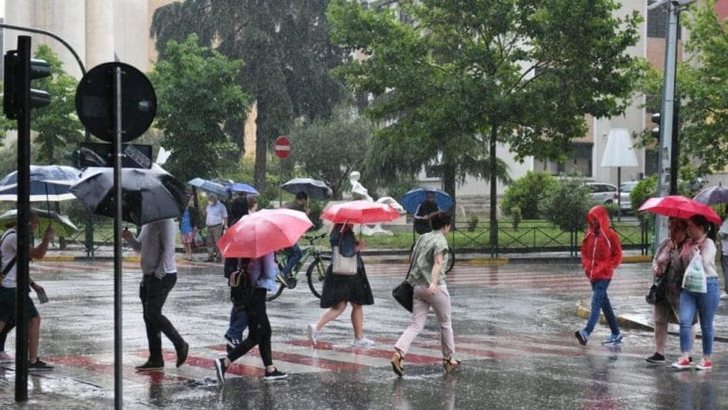
Details of the storm in the administration, here's who will resi...
/ 2026-10-22 22:25:00Focus


Current and projected climate change will affect meteorological and environmental conditions in Albania. As average temperatures increase, decreased precipitation and rising sea levels will have several long-term impacts.
These changes will also lead to increased frequency and intensity of weather-related disasters and will affect crop and livestock production.
The latest report by the National Environment Agency states that, especially in lowland areas, corn yields are expected to decrease by 17% and tomato and watermelon yields to fall by 6-11%.
While in agricultural areas with limited irrigation opportunities or a complete lack of irrigation, grape yields are expected to decrease by 17-23%, olive yields by 11-20%, while wheat yields are expected to increase by 4-5%.
The risks facing the agricultural crops sector are:
-Increasing risk of drought and water shortage
-Increased demand for irrigation
-Massive floods, every 3-4 years (floods have caused the loss of about 10,000 ha of wheat, 15,000 ha of fodder, 1,000 ha of fruit trees and over 1,500 ha of vineyards).
The greatest damage occurred in the northeast (Shkodra and Lezha regions).
While in livestock, climate change has a more direct impact on the reproduction, health and death of animals as a result of rising temperatures.
Heat stress will be experienced more in grazing systems in mountainous areas where animals, mainly small livestock, despite being local breeds, are not adapted to heat stress.
"The effect of heat stress on meat production will be associated with reduced forage production, lower nutritional value and increased production costs, and more concentrated feed products will be used for feeding," the report says.
The report states that pork and poultry production will be most affected in lowland areas due to high temperatures.
Water availability and quality issues will also affect the livestock sector.
Animals will be most affected by water shortages, due to limited water infrastructure and its poor maintenance.
Most small livestock, sheep and goats, are local Albanian breeds raised mainly in the grazing system and will be most vulnerable to climate change in Albania.
Out of ten breeds of sheep, three of them are at risk of extinction and out of 17 breeds of goats, 10 of them are at risk of extinction and climate change will negatively affect their level of risk.
The availability of water will also affect the lack of hygiene during the animal breeding process, having consequences for their health, as well as the quality and safety of their products.
The report also highlights the fact that insect-borne diseases may be affected by higher temperatures and changes in rainfall patterns, which could translate into increased prevalence of existing diseases caused by insects and macroparasites, accompanied by the emergence and spread of new diseases.
"Local and rare breeds may become extinct as a result of the impact of climate change and disease epidemics," the report says.