Is this police force professional and capable of handling violen...
/ 2026-10-16 18:54:07Focus


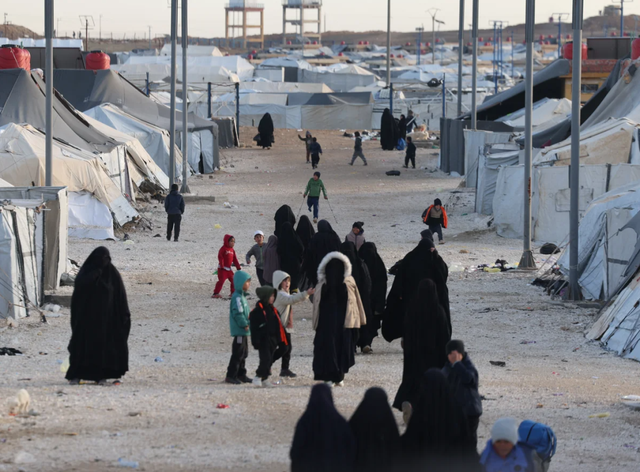
The Guardian has published a long article on the story of Eva, the Albanian girl who, after more than 12 years of suffering in the camps of Syria, has returned to Albania.
Eva Dumani was kidnapped at the age of 9 along with her brother by her father, who was later killed fighting for the Islamic State. After many years spent in the infamous al-Hawl camp, where thousands of women and children from over 40 countries have been arbitrarily held, Eva managed to escape and return to her family in Albania.
Her uncle, Xhetan Ndregjoni, who met her at the Turkish-Syrian border, described the reunion as an unforgettable moment.
"We've been waiting for this day for 12 years ," he said. "It was incredibly emotional when he saw his brother and mother."
Eva, now 20 years old, has started high school and is trying to make up for lost years of education.
The Guardian emphasizes that Eva's case is one of the few successful examples of repatriation, while dozens of other Albanians, women and children, still remain trapped in Syrian camps.
Now Eva's uncle's concern has shifted to the approximately 25 Albanians who still remain trapped in northern Syria.
"We ask the government to bring home the other children who are in this situation, it is very important that they are also close to their families ," he said.
About 6,000 foreign nationals from countries including Serbia, Bosnia and Albania were detained in al-Hawl after the fall of IS in 2019, many of them women and children. Most have suffered for years in conditions that Human Rights Watch described as “inhumane, degrading and life-threatening,” marked by chronic shortages of food and medicine and violence from women still loyal to IS.
Human rights organizations warn that children and their mothers are in immediate danger from extremist groups operating in the area.
The article also mentions that many European countries and Australia are facing similar dilemmas, as the al-Hawl and al-Roj camps are being dismantled and detainees are attempting to leave on their own. Experts warn that governments can no longer turn a blind eye and must draw up clear plans for repatriation, rehabilitation and security monitoring.
"People will return, whether the countries want them to or not, especially if they have managed to escape," said Devorah Margolin, a senior fellow at the Washington Institute for Near East Policy.
Margolin said the emptying of the camp showed that governments that had been hesitant or refused to repatriate their citizens could no longer turn a blind eye.
"People will return to Europe. And it's much better to have a clear plan to deal with trauma, reintegration and security, than to let them sneak in and not deal with them at all. That's an invitation to problems ," she said.
In a recent interview with al-Roj, Elona Shuli (the eldest of three sisters sent to Syria as children and married to an IS fighter at the age of 13) said she hoped to be repatriated from Albania. Holding her two children in her arms, she spoke while occasionally glancing at an Albanian woman standing nearby. A relative later said that some of the more extremist Albanian women act as “watchdogs” over her and her sisters, trying to keep them connected to IS ideology.
The Albanian government has told Shuli's family that it cannot repatriate her because it cannot determine her exact location in the al-Roj camp. The Guardian's reporters found Shuli within minutes after giving the camp administration her name and being guided to the tent where she was staying.
Across Europe there has been little public reaction to the changing situation in Syria, despite ongoing concerns about the return of IS-linked individuals.