"We are drowning..." - From Lisbon, Milan to Tirana, "The Guardi...
/ 2026-10-18 23:13:32Focus


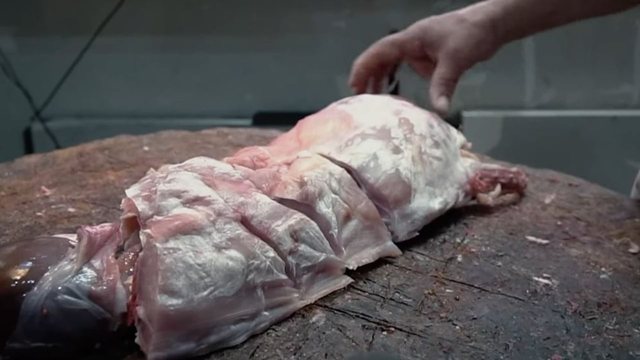
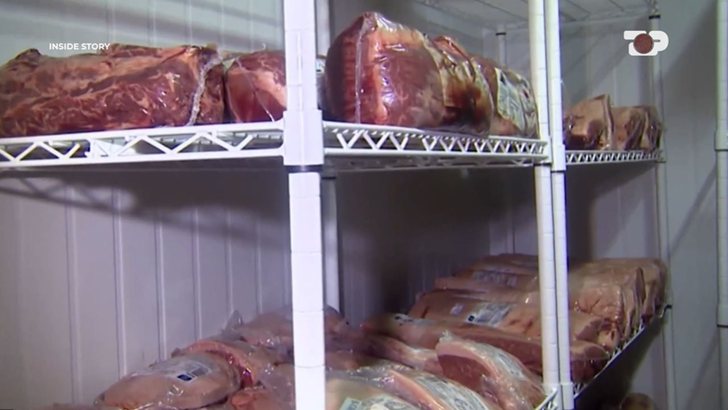
In early March 2025, about 8 tons of chicken meat with salmonella ended up with the consumer. The product was discovered by the AKU after a random check of the importing entity “AMG”. The ISUV laboratory confirmed the presence of salmonella 10 days later, while the public was notified a week later. As a result, all the meat was distributed on the market through a network of 154 suppliers who remained untraceable. In this case, the Tirana prosecution launched an investigation against 3 AKU inspectors suspected of 2 criminal offenses.
At that time, the owner of the company "AMG Food" who brought 27 tons of meat from Brazil, divided into 4 lots, was also detained but was immediately released.
"In this specific case, we have a change in a ministerial order that states that all shipments from third countries were required to undergo sampling until the analysis was released and then released on the market for human consumption. In this specific case, we have avoided blocking the product until the analysis was released, so the sample was taken while the product was still on its way to the consumer, and after the response was released," said Ervin Resuli, a food safety expert.
The company "Dimal" also acted in this way. Referring to the sensational case of thousands of kg of chicken fillets that resulted in salmonella, experts say that there was a clash between the analysis results.
The company that had imported them from Brazil from a certified facility, with regular tests showing no salmonella, became suspicious after the ISUV tests came back positive for salmonella. The subject sent them to Greece.
"When it results in problems, because there are always doubts about the analyses, the companies themselves conduct their own analyses outside Albania, because in this specific case it resulted without salmonella when they sent it to Greece. When the analysis is satisfactory, the companies have the right to return it to Brazil, at the costs of the expert company. They have the right to choose a laboratory to show their truth, a laboratory in the gray without salmonella, even in Brazil without salmonella," said Granit Sokolaj, a food safety expert.
The integration mission, the weaknesses found in the progress report on food security and the decline of agriculture
Food safety is one of the criteria that Albania must meet to join the EU. The lack of a strong traceability system, weak control, and the ping-pong of responsibilities between institutions are the reasons why it does not receive a positive assessment in any progress report.
In the document published at the end of October 2024, Chapter 12, “Food safety, veterinary and phytosanitary policy” leaves a number of homework tasks that need to be completed. It is considered that Albania has made very little progress in relation to food safety.
The report highlights that the legal framework is still not in line with the General Regulation of the Food Law.
Also regarding veterinary policy, the report notes that national legislation is not in line with EU animal health law; the reform of the veterinary sector remains incomplete; human resources are not fully provided at central and local level.
The report suggests that capacity needs to be strengthened to implement surveillance and vaccination programmes for infectious animal diseases, including rabies. While limited progress has been made in developing capacity and accreditation for the laboratory network, there are still no validated methods to guarantee the reliability of results.
"Trust me, completing Chapter 12, which is food security, will be one of the most difficult chapters to complete. Even last year's progress report is the worst report..."
Transparency and risk communication by the responsible institutions, which are the AKU and the Ministry of Agriculture, is one of the weak links that is also highlighted in the progress report. Although the law obliges them, they do not inform the public in real time about dangerous products. This is also found in the materials published in this investigation. Although the AKU says that it has taken hundreds of samples for analysis, the results are never made public.
The report suggests that the principle of transparency should be applied to official control systems and that a multi-annual national control plan is lacking in the country.
"Whenever there is a lack of transparency, of course suspicions increase. The consumer must know at all times which products are high-risk. They must be informed every day about the measures that have been taken," said Ana Vuksana, a food safety expert.
"Risk communication, which is a legal obligation of the AKU and the Ministry of Agriculture, is one of the links that has been lagging since we have had a Minister of Agriculture. We do not have proper risk communication, but the consumer must be informed in real time, dozens of samples may have been taken for analysis, but we do not have any information," said Granit Sokolaj, a food safety expert.
Those responsible for endangering the health of the population often hide behind the excuse that the product came from a certified country. They often overlook the fact that even in this case, the control system in place must be able to identify and prevent the entry of contaminated products.
"In trade, anything can happen, and the rules may not be respected as written in the law. We can be exposed to expired products, to products that may not meet the hygiene and sanitary conditions to be safe for consumption in our country," said Kapllan Sulaj, Dean of Biotechnology and Food, UBT.
Nevoja për furnizim me mish nga vendet e Amerikës Latine, nga ku janë konstatuar tonelata të infektuara me salmonelë, e ka një shpjegim. Bujqësia, dhe veçanërisht blegtoria, po përjeton një situatë të vështirë, me rënie drastike të numrit të krerëve të bagëtive.
Kjo situatë ka ardhur si pasojë e mbështetjes financiare shumë të vogël, mungesës së skemave, subvencioneve joefikase dhe emigrimit. Si pasojë, vendi po varet gjithnjë e më shumë nga importi.
Sipas të dhënave të instat, nëse në 2014 kishim 500 mijë krerë lopë, në vitin 2024 kjo shifër u përgjysmua duke arritur në 272 mijë. Rënie drastike pësoi edhe numri i të imtave, dele apo dhi. Nga 2.8 milionë, tashmë në vend llogariten vetëm 1.8 milionë krerë. Kjo ka sjellë rënie të prodhimit të mishit të vendit dhe nënprodukteve.
“Nëse ky trend vazhdon pas 10 vitesh i bie që ti çojmë fëmijët në kopshtin zoologjik për të parë një lopë, një dele apo një dhi”, u shpreh Ana Vuksana, eksperte e sigurisë ushqimore.
Shqipëria nuk i ka përmbushur asnjëherë 100% nevojat për mish. Sipas ekspertëve kulmi i prodhimit u shënua në vitin 2014 duke plotësuar deri në 70% të nevojave, por me rritjen e turizmit sfidat janë edhe më të mëdha.
“Tani presim edhe 10 mln turistë dhe ato vijnë për produktet e freskëta shqiptare, nuk them që nuk mund të gjejmë ka akoma burime por ka edhe produkte importi që shiten si produkte vendi mund të ndodhë” u shpreh Kapllan Sulaj, Dekan i Bioteknologjisë dhe ushqimit, UBT
Sektori është i kërcënuar edhe nga prania e shumë sëmundjeve si mortaja, të cilat çojnë në shfarosjen e tufave. Kjo, së bashku me mungesën e interesit të të rinjve për t'u marrë me blegtori, e bën sektorin të paqëndrueshëm.
“Nuk mund të themi se Shqipëria ka sëmundshëmri të lartë te kafshësh, por e rëndësishme është momenti i reagimit. A jemi ne të gatshëm, nëse na bie një sëmundje, ta izolojmë, ta kontrollojmë dhe të mos japim kosto shëndetësore tek konsumatorët? Këtu ngrihet një pikëpyetje e madhe”, u shpreh Ervin Resuli, ekspert i sigurisë ushqimore.
“Fatkeqësisht kemi sëmundje në blegtori, kemi sëmundje të panjohura siç është mortaja tek të vegjlit që i shfaros tufat, edhe nëse nuk i prek duhet të asgjësohen tufat ku bie...por gjithashtu ka mungesë interesi për të mbajtur bagëti. Një i ri thotë më mirë bëhem berber se sa çoban, megjithëse norma e fitimit të një çobani, sigurisht me shumë lodhje, është shumë më e lartë”, u shpreh Granit Sokolaj, ekspert i sigurisë ushqimore
Experts point out that this sector, which contributes about 18% to the Gross Domestic Product, receives less than 1% of funds from the state budget. The sector with the largest number of employees, about 460 thousand, has a budget of 146 million euros, or 6.7 million euros more than the previous year. Millions of euros of funding are missing due to the interruption of IPARD funds. 25 million euros will be spent on food security. As a result, the sector is becoming less and less attractive, the costs of domestic products have increased, opening the door to massive imports.
"This year we were in numbers, less than 97, but this is a chronicle that has been warned. We have also lost IPARD funds, while Serbia will receive 298 million in funds. The sector is underfunded, it continues to be unattractive, only pensioners are working in agriculture. If there are no subsidy policies, if there are no fiscal policies, the farmer is in all cases disadvantaged," said Ana Vuksana, a food safety expert.
A study by the Food and Agriculture Organization of the United Nations (FAO) finds that low financial support is one of the factors driving the decline of agriculture. Based on these findings, experts suggest that Albania should radically review its policies for the sector.
"FAO in a 2022 study says that subsidy schemes have contributed to the reduction of animal numbers. So the schemes need to be completely reviewed, after a detailed analysis of what has worked and what has not, and without this analysis we can add schemes year after year but without avoiding the decline of the sector," said Ana Vuksana, a food security expert.
In mid-July 2025, during a roundtable on agriculture and rural development, Prime Minister Rama requested the suspension of the National Food Authority's activities. He called it an institution that "does more harm than good". Unscheduled inspections were suspended, with only those of the annual plan continuing. The action that was taken during the summer, had the participation of NFA inspectors but was led by the Tax Administration.
The AKU is in the process of deep reform. An evaluation committee has currently been established for all AKU inspectors. The reform envisages the restructuring of three existing institutions; the AKU, the Directorate of Fisheries and Aquaculture Services and the National Veterinary and Plant Protection Agency by merging their inspection functions into a single central structure.