Protests, violence, curfews: From France to Albania, why Europe'...
/ 2026-10-20 23:47:20Focus


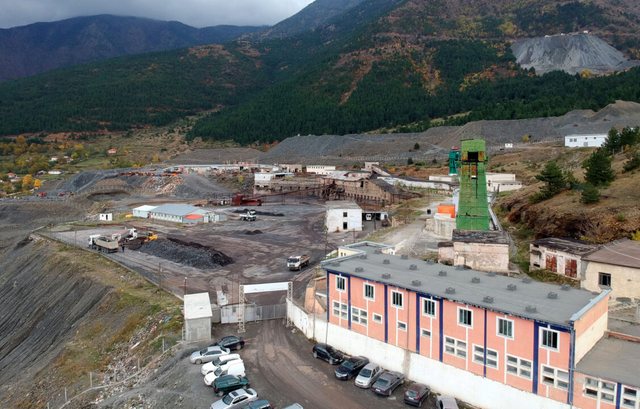
The discovery of hydrogen gas seems to be of essential importance for the years to come, and the prestigious National Geographic has dedicated an article to the Bulqiza mine, as one of the deposits with significant amounts of this substance.
The discovery of a large amount of hydrogen deep in an Albanian mine has led researchers to search for more gas trapped under the Earth.
Geological fieldwork often takes place in dangerous places, from the slopes of erupting volcanoes to the depths of the cold Antarctic abyss. And yet, they tend not to occur inside exploding mines.
A team of scientists went to exactly such a place to explore: the chrome mine in Bulqiza in Albania, northeast of the capital Tirana.
And instead of searching for precious minerals or various rock formations, they were researching the cause of these explosions: pure hydrogen gas – a renewable energy source capable of transforming the world.
As reported in a recent study in the journal Science, the team managed to find the gas. Deep under the Earth, they came across a small bubbling pool like a jacuzzi. "The gas was really intense," says Bardhyl Muceku, a geologist from the Polytechnic University of Tirana and one of the authors who participated in the study. About 84% of the gas was hydrogen, and this was just one of the spills in the Bulqiza mine, which in total produced at least 200 tons of hydrogen per year.
The world is only a few years away from being able to extract significant volumes of natural hydrogen gas from the Earth efficiently. The first thing to do is to find these reservoirs.
"We have a lot of work ahead of us," says Geoffrey Ellis, a petroleum geochemist with the US Geological Survey. Discoveries like Bulqiza are reason to be optimistic that there may be enough hydrogen trapped underground to power the planet.
Hydrogen growth
Hydrogen is the most common element in the cosmos, but it is hard to find on Earth. When it's not combined with other compounds, it's just a colorless gas that likes to escape into the sky. This is considered a shame, since if we could capture it, it would help us get through warming without the need for fossil fuels.
"It could be used as a low-carbon energy reserve," says Katriona Edlmann, a geoenergy expert at the University of Edinburgh, who was not involved in the study.
“You can burn it and it just produces water. Or it can be used in fuel cells and produce electricity. It can also be distributed in the same ways as natural gas."
It is not unknown to humanity that hydrogen has been coming out of planet Earth for centuries. "We've been aware of hydrogen leakage for thousands of years," says Edlmann, "and small gas-filled pockets can be found all over the globe."
Hydrogen gas, as a molecule, is small, light and diffusible, and therefore, according to scientists, any underground reservoir has been leaking into space for a long time.
The oil industry has also not been looking for hydrogen. "They weren't interested, it wasn't what they were looking for, and often in their searches for oil or methane gas deposits, they didn't report the presence of hydrogen in the company's reports," Ellis says.
Today, hydrogen is used as a small source of electricity, but what is important is the fact that it must be produced. There are a number of ways to do this from using solar energy to separate hydrogen from water molecules, to using steam to extract hydrogen from methane gas.
But these methods are either too expensive, or known to emit greenhouse gases, or both. "Free hydrogen is the key step towards a hydrogen economy," says Ali Hassanpouryouzband, an energy scientist at the University of Edinburgh.
In an ideal world, pure hydrogen gas extracted from underground would be the most economical way to obtain the valuable substance. But this world seemed imaginary for a long time, until in 2012, a significant reservoir of hydrogen gas was found in Mali. Since then, many pockets of hydrogen have been found, including some in Europe or Latin America.
Now, the fact that hydrogen gas cannot be trapped underground "doesn't seem very justified," says Ellis.
Hydrogen hunters
But where else could hydrogen be trapped? Searchers can't just randomly go out looking for it. First, they look for clues about where it is produced, so they need to know how the Earth makes it.
Although some microbes are known to produce the gas, hydrogen hunters tend to focus on geological producers. Volcanic rocks rich in iron or magnesium in the presence of water, which can produce hydrogen. Natural radiation emanating from certain rocks can also split water to forge hydrogen.
The Bulqiza mine in Albania was a prime target for researchers for two main reasons. First, it rests on an ancient seabed dating back to the time of the dinosaurs, which is filled with fluids and iron-rich volcanic rocks, making it a promising hydrogen factory.
And second, it has erupted on several occasions, in 2011, 2017 or even 2023. This gas was first reported in 1992, but even after the first few eruptions, it was thought that the culprit was methane.
"At the beginning of these incidents, we didn't even think it was hydrogen", says Muceku. Although quantities of methane were discovered by scientists in Bulqiza, most of the gas that came out was hydrogen. With a minimum of 200 tons per year, this is one of the most prolific hydrogen spills ever found.
Optimism for the Future of Hydrogen
However, hydrogen hunters are not so happy anymore. Mucek's team estimates that the mine contains a total of 5,000 to 50,000 tons of volatile steam. Stores of millions of tons of hydrogen gas are trapped and being sought by energy-focused researchers.
Important here is the fact that this gas was not broken down by useless geological reactions. "This accumulation must have formed over a period of tens of thousands of years," says Ellis.
While Muceku explains that when the mine was cut deep, hydrogen began to escape and cause accidental explosions. The excavations appear to have cracked the roof of a hidden tank.
Excavated slabs at the bottom of the sea have always been high-priority targets for hydrogen gas hunters, but this study has highlighted a new notion that we may be dealing with the beginnings of a new era, that hydrogen energy can be found in similar types of tectonic sarcophagi throughout the world.
History is just beginning to be written.