Is this police force professional and capable of handling violen...
/ 2026-10-16 18:54:07Focus


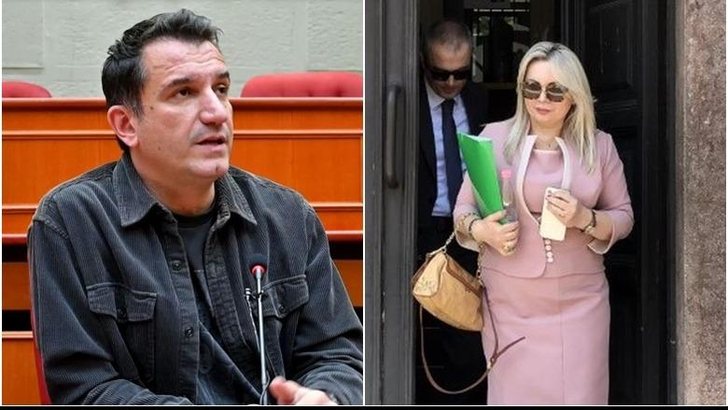
The inauguration ceremony of the statue of writer Ismail Kadare at the "Juvenilja" cafe on January 28, on the 90th anniversary of his birth, has sparked public reactions between publisher Bujar Hudhri and doctor Skënder Brataj.
In a long post, publisher Bujar Hudhri shared personal and professional memories from his long-standing collaboration with Ismail Kadarena, as well as reflections on the inauguration ceremony of the statue, the work of sculptor Henri Mimani.
Gudhri describes the moments of the ceremony, the speech given by its leader, and the personal feelings that, according to him, prevented him from expressing everything he thought about the writer.
The post also includes memories from the "Juvenilja" café, described by him as Kadare's favorite place in Tirana, where important parts of the author's work were written and processed, as well as episodes from the publisher-writer relationship over the decades of collaboration.
After this post, doctor Skënder Brataj reacted publicly with a critical article against Hudhri.
Brataj opposes the positions and assessments expressed by the publisher regarding the ceremony and the figure of Kadare, emphasizing that the writer's bequest for his "protection" after death was addressed, according to him, to intellectuals and Albanian society as a whole.
In his reaction, Brataj expresses dissatisfaction with Hudhri's role in various public events related to Kadare, including the statue unveiling ceremony and commemorative activities following the writer's passing.
Posting to Juvenilja
At “Juvenilja”, Kadare’s favorite café, on January 28, the day of his 90th birthday, a statue of the writer, the work of sculptor Henri Mimani, was inaugurated. The entire ceremony was led by a respected doctor, who is now also a friend of the Kadare family. He unveiled the statue, delivered the speech of the occasion, which he concluded with the declaration that the writer had left him a legacy: “Protect me when I am gone.”
As I listened to this supposed bequest, the thought crossed my mind that, precisely at the midnight of the dictatorship, when his head was spinning, Kadare had dared to be brave enough to write and manage to publish “The Palace of Dreams”. And he was completely alone, unprotected, writes Mrs. Kadare in her memoirs. No one was close to him, except for the love of his life, Helena. And only his extraordinary talent, his brilliant work, which had meanwhile become the property of the world treasury, protected him.
And the dictatorship didn't dare touch a single hair!
When it was my turn to speak, I felt that this statement had thrown me off my rails, a feeling of longing had taken over me. Kadare in bronze seemed so distant to me and I felt lonely. The sight in front of me brought me to my senses, that beautiful and silent group of people, Kadare's true friends, who had accompanied my beloved writer in the years when I was not by his side. I saw them gray-haired, old, sad. Then suddenly I felt joy, admiration, in their eyes, but I almost lost it and it seemed to me that I could not say the words that I had in my mind and heart for the sacred man of my human and professional life.
I don’t remember exactly when we first sat down at “Juvenilja”. In the early years we always went to the bar-restaurant “Piaza”, which was owned by his Albanian-American friend, Mr. Ekrem Bardha. He preferred that café, especially when we sat outside (Kadare came to Tirana in the spring and autumn) and it was full of people. We continued to frequent that café until in 2000 Kadare bought an apartment in the Sky Tower. He liked that apartment very much, until a building was built in front of his windows, which eventually covered his view of Mount Dajti. In the former Bllok we found a chic café. It also had a chic name: “Davidoff”. Later he described this café in his last poem, Tirana in Winter. I don’t remember how long we continued there, except when another season we found ourselves in another café, with a name he liked, “Princ Park”. Amidst the greenery, the flowers, the waiter service, we continued in this cafe until one day he said to me: “Let’s go for a walk, we’re stuck here. Let the driver pick up the car.” And so, one beautiful spring day, through the trees, we walked until we reached an asphalt road. We walked, we walked. It was downhill and our feet moved easily, when suddenly we found ourselves in front of a cafe with tables outside and a building that imitated a castle. We sat down. I saw that he was amazed. I want another espresso, I said. No, I just want a bottle of water. Then… praise the cafe, criticize me. How did you not know about this cafe? How lost you are. It seems to me that you are still in Elbasan, in vain you say that you live in Tirana!
So "Juvenilja" became his favorite cafe. It was like the "Rostand" of Paris. But our "Juvenilja" is far and away the most beautiful, I teased him. In his cafe in Paris, he had a ritual, where he wrote every day. While at "Juvenilja" he only drank coffee. I remember, in an interview for the New York Times, he said that in the Parisian cafe he wrote, but in Tirana he couldn't do this, because everyone knew him. I told him one day jokingly: don't worry, I can steal some of your motifs, I'm not a writer and I don't want to be. That's right, I didn't know, he joked back.
On the day of the 25th anniversary of the collaboration: May 4, 2021 at Bar Juvenilja, Tirana
He found a nook inside the "Juvenilja" castle, which became his real studio. All the waiters got used to it, and without us even speaking, he would bring the long espresso for Kadare. He would pour it two or three times, then put it aside. (He would get very annoyed when the attentive waiters tried to take his cup away. He wanted it there, on the table, like an object.) Then, immediately, he would grab one of the pens and blank sheets of paper that I brought him. Don't bring me more than necessary, he would order me. (Apparently, the blank, unwritten sheet of paper bothered him, because it seemed to him that he had not completed his task.)
They were written here at "Juvenilja", as well as the continuation in Mali i Robit, with hundreds of pages of literature, notes, interviews. I remember how our table grew larger towards the end, especially when he wrote The Dispute and When the Rulers Quarrel. Two books that exhausted him, that he kept in his mind and on the table for a long time. Three years each book. Endless notes, references, a few pages written per day. The next day I would see him cross them out when he read them at night, until one after midnight. You could see him being tortured, but what could I do? Ah, you're not helping me at all, he was joking. You're not a good publisher, but a driver, yes. You're a very good driver, period. And I would say back: do you see how important I am? I'll take you to Mrs. Helena in my arms! But to publish, you've published enough in 50 languages. Forget the Albanian publisher, there are people who read you now in the languages of the world.
But for Kadare, the Albanian reader was the most beloved! He was so sensitive that he could easily make a fuss when he found a problem that we might have with readers at fairs or in meetings with them. And I remember when I had to go to America for a specialization, invited by USAID. How coincidentally, while Kadare and Mrs. Helena were landing in Rinas, I had to fly to Washington. I was in Elbasan at the time and I told him this on the phone. What America? he called me back. Now you were in America! (In fact, I was almost five years ago.) I communicated with the hosts, who postponed the plane tickets and hotels for another week. No, Kadare insisted, even more firmly. I had no choice but to write to the American embassy that “for work reasons” I could not come to America. I do not believe that any compatriot has ever sent such a letter to the American embassy!
In the corner of Juvenilja, putting the last corrections to “When Rulers Quarrel”
Many years later (2025) I would go to America. And I remember a quote by Sami Frashëri where it says more or less: “It is said that every job has its time, but the real time for a job is when this job begins!” In January 2024, a rainy day like the General of the Dead Army, while we were locked inside the “Juvenilja” castle, I told him that now that I had finished his work in seven volumes, I would take up an ordinary job, because you are no longer writing. What job? He was seriously interested. Yes, I will distribute and sell books throughout Albania. I saw that he suddenly tensed up. I know this transition well in conversations with him, when lightning strikes from nowhere. This is a sacred mission, he told me loudly as the others turned their heads from our table. I felt that penetrating gaze of his when it feels like the ground is slipping away from under your feet.
My book distribution and sales campaign ended without any results. Now the bookstores didn't want to take books in bulk and on credit. Albanian bookstores in the districts order one, two, three books by mobile phone. I was far behind, I remembered too late.
This is how the idea for a bookstore in America was born. I regret that he did not manage to see that, finally, with an Albanian-American friend of mine, Pashk Camaj, on the very day of his ninetieth birthday, we opened the online bookstore “Alblibris”, with physical books, for all Albanians in America. How happy he would be, because he loved bookstores so much! I am sure that he blesses and congratulates me from above. And I remember in this case his sister, Kakuja, when she told me: “Ismail is very auspicious. When he was little, young couples would take him to their room on the first night for good luck!”
My memories of Kadare are not over, but I want to end them today with an excerpt from my note as editor in the first work of the seven-volume series.
"There is no greater fortune for a publisher than to be present in the creative life of a writer like Kadare, who revises his writings whenever he gets the chance, with the sole aim of improving them artistically and, especially, linguistically. During the three years when the twenty-volume series was being prepared, he read each of his books in full. Meanwhile, in his studio, in his favorite café, while closely following the changes, criticisms and improvements that the author notes with his hand between the lines, at the end of the text or on the sides of the pages of the manuscripts of his former works, you feel as if you were present at the time when they were written, before the nineties. A completely different miracle has been the process of publishing the author's new creations. Always, after leaving the 'Juvenilja' bar, we would walk in nature, in the Grand Park by the hills of the lake, and he would begin to show the continuation of the subject, which he had not yet put into paper. As in a dream, you see particles of gold slipping through your fingers, so it is impossible to capture the magic of words when you are the only one listening to them. In those unforgettable hours, as if they were not of this world, I was always overcome by a feeling: how much I would like to instantly convey to the reader everything I heard and experienced! But how could this be achieved? The publisher is truly an intermediary between the author and the reader, but he can also become an obstacle between them. From thirty years of experience with a living classic of world literature, I have learned how the art of publishing and printing this series could become invisible, so that its Albanian reader, present and future, could permanently hear the echo of Kadare's voice himself.
Post by doctor Skender Brataj
The hypocrisy of a publisher like Bujar Hudhri!
Date 1.02.2026 – Bujar Hudhri: “The words I could not say at the inauguration of the Kadare Statue at 'Juvenilja'”
“At 'Juvenilja', in Kadare's favorite cafe, on January 28, the day of his 90th birthday, the statue of the writer, the work of sculptor Henri Mimani, was inaugurated. The entire ceremony was led by a respected doctor, who is now also a friend of the Kadare family. He unveiled the statue, delivered the speech of the occasion, which he concluded with the declaration that the writer had left a bequest:
'Protect me when I am gone.'
As I listened to this supposed bequest, the thought suddenly came to my mind that, precisely at midnight of the dictatorship, when his head was spinning, Kadare had dared to be brave enough to write and manage to publish 'The Palace of Dreams'. And he was completely alone, unprotected, writes Mrs. Kadare in her memoirs. No one was near him, except the love of his life, Helena. And only his extraordinary talent, his brilliant work, which had meanwhile become the property of the world treasury, protected him.
And the dictatorship did not dare to touch a single hair!
When it was my turn to speak, I felt that this statement had thrown me off my feet, a feeling of longing had taken over me. Kadare in bronze seemed so distant to me and I felt lonely. The sight in front of me brought me to my senses, that beautiful and silent gathering of people, Kadare's true friends, who had accompanied my beloved writer in the years when I was not with him. I saw them gray-haired, old, sad. Then suddenly I felt joy, admiration in their eyes, but I almost lost it and it seemed to me that I could not say the words that I had in my mind and heart for the holy man of my human and professional life.”
Dr. Skender Brataj: Mr. Hudhri, I am telling you the words that I have not been able to say these five years!
They do not say for nothing that you have to put people to the test to know them!
This is the second time that Mr. Bujar Hudhri, with his hypocrisy, shows his true face in two solemn events for us Albanians in relation to Kadare!
He does not know rules, courtesy, humanism, respect for traditions, silence when necessary or civic education. He only knows economic interest.
On the day of Kadare's death, in a delicate and solemn moment, where silence, respect and humanity should have accompanied the genius of Albanian letters to his final resting place, a small, miserable man, in order to shift attention to himself, made a statement accusing the Emergency Medical Service that I direct, that the ambulance had no equipment!
Yesterday he wrote that he could not say the words he wanted to Kadare on the day the statue was installed (if Kadare heard the word "statuje", which he wrote in Albanian as "shtatore", I don't know if Mr. Hudhri would find a place to fit in).
He could not say those words to "Juvenilja", because the ceremony was opened by a respected doctor.
Mr. Hudhri quotes: "As I listened to this supposed bequest, the thought immediately crossed my mind that, precisely at the midnight of the dictatorship, when his head was spinning, Kadare had dared to be brave enough to write and manage to publish 'The Palace of Dreams'".
The bequest left by Kadare for his own protection, if not that of national figures, was very clear to him for a long time. He did not leave the bequest to Skënder Brataj, but to Albanian intellectuals. Where do you belong, Mr. Hudhri?
Kadare was clear about the war he started against national figures, which is why he advised:
"National figures must be protected, because they are the moral passport of a people; without them, the nation is impoverished in dignity."
"Kadare warned us that the denigration of national figures is an old weapon against small nations and the most dangerous thing is when this work is done by the people of the country themselves, with strange zeal", especially in Albania.
This was the bequest, Mr. Hudhri, and these bequests were also heard by his family who were present! You should be the first to protect him, because he still brings you financial profits, don't forget.
That statement would have derailed you because you couldn't see anyone close to Kadare. Your face smiled when you raised your head and saw his friends around you! Why?
It's true that you opened up, that you smiled, because many of his friends didn't let them come near him to drink coffee when he was alive. You laughed because now you know that they can't meet Kadare anymore!
Do you remember that day that gentleman came to "Juvenilja" and asked Mr. Kadare to open a bookstore named KADARE in Gjirokastra and Fier? Do you remember when Kadare said yes? You attacked him, insulted him and humiliated him with all those epithets, that he could not do such a thing, that he was not capable, and other low motives that he repeated that day.
That gentleman impressed me very much with his calmness; he did not answer you, did not insult you, greeted you and left. If you do not remember, I am telling you to bring that gentleman into some writing. Maybe the time has come for him to open that bookstore! That day Kadare did not speak to you again, at least until we left Juvenilja.
Yesterday you wrote: "I am sorry that Mr. Kadare failed to see that, finally, with an Albanian-American friend of mine, on the very day of his ninetieth birthday, we opened the online bookstore 'Alblibris', with physical books, for all Albanians in America. How happy he would have been, because he loved bookstores so much!"
You did not allow the bookstore with his name to be opened in his house in Gjirokastër, you did not allow the Albanians of Albania and our lands this opportunity, I do not know how far the hypocrisy goes.
You were lucky enough to be his publisher, so don't confuse personal, economic interest with friendship! I was lucky enough, albeit late, to be his friend and family's friend, but I was always present.
Remember in "Juvenilja", when you told me that you don't let people (even his friends) get close to you, because they don't even pay for their coffee?
Precisely because you couldn't see friends close to Kadare, because you consider him your property!
This is your way: to attack his friends, to insult them and to belittle them according to your own standards. No one can stand before you, but you forget that we are not publishers, we are friends of Kadare.
Mr. Hudhri, Kadare is not your property. He belongs to Albanians, he belongs to world literature.
When I saw the title of your article yesterday, I thought that you would finally say something sensible, you would raise some concern.
First, Mr. Hudhri, you knew that Kadare's friends were trying to find the funds for a statue to be placed in "Juvenilja". You had had the photos sent by his real friends on your phone for six months, but you didn't come closer, you didn't worry about any detail, to see it before it was cast in bronze, before the place where it would be placed was chosen, how it would be placed, who was taking on and organizing all these actions, in time, in money, in fatigue and discussions.
With what courage did you want to speak in front of his friends (those who gave you the opportunity to speak simply because you were the publisher, not because you deserved it)? But you know very well why you didn't participate in this event of Kadare's friends. Were you afraid of paying a penny, or not? You remained anonymous so as not to pay. Kadare's friends who contributed preferred to remain anonymous, because they did not need to be seen. One of them says: It is not Kadare who needs us, it is we who need Kadare. He is very right.
We, his friends, also invited you to the anniversary of his death, where again you did not ask who organized it and who paid for it. What have you organized since his death, Mr. Hudhri?
I thought that, finally, as a publisher, as an intellectual, as an Albanian, there in front of his friends who brought you a smile when you saw them, in front of his statue, you would have the courage to say:
"Today marks the 90th anniversary of the birth of the great Albanian writer Ismail Kadare in France, today a memorial plaque is placed in the house where he lived for 34 years as a member of the French Academy."
I thought you would say: How is it possible that on this marked day, in Albania and the Albanian lands, a year and a half after his death, on the 90th anniversary of his birth, there is not a square, street or institution named after Kadare, there is not at least one statue in Tirana or Gjirokastra, there is not a bookstore named after Kadare?
Oh yes, I forgot: “Alblibris” has opened online, not “Kadare”!
The legacy he left referred to this national void that has plagued us, the greed of how to earn only money.
True friends have courage, those who gave a signal on the 90th anniversary of his birth, those who know what is the place of national figures, of which Kadare is an indisputable part.