Is this police force professional and capable of handling violen...
/ 2026-10-16 18:54:07Focus


Israeli Prime Minister Benjamin Netanyahu is using the same campaign strategy that has served him well for decades as he tries to retain power in next month's elections, portraying himself as the only person who can keep Israelis safe in a hostile region.
But four weeks before the election, he is trying to salvage his reputation as a security guarantor, which was badly shaken by Hamas’ surprise attack on southern Israel on October 7, 2023 – one of the worst security failures in the country’s history. The October 27 election is the first in Israel since the deadliest day and worst attack on Jews since the Holocaust, orchestrated by a Palestinian militant group that caught the Middle East’s most powerful army off guard.
"When it comes to foreign policy and security, the situation is completely different from the past, as Mr. Netanyahu has presented himself as 'Mr. Security' and as the leading authority on matters of diplomacy and national security; however, he also oversaw the country's worst security disaster – so it now remains a big question mark whether he can continue to present himself to his support base and coalition as the most competent leader to lead the country forward on matters of national security."
“Netanyahu does not surrender” is the official slogan of Netanyahu’s right-wing Likud party, which most polls predict will lose about a third of its seats in parliament. In short campaign speeches and videos, Netanyahu portrays his political rivals as weak leftists who lack the resolve to fight Israel’s enemies and the courage to confront his critics abroad.
But a big question remains whether Netanyahu - who turns 77 shortly before the election - can continue to present himself as the person best suited to lead Israel on matters of national security and diplomacy, said Yohanan Plesner, president of the nonpartisan Israel Democracy Institute (IDI).
"Essentially, it's the same campaign since the mid-'90s. It includes several elements. First, anyone who opposes me is a weak leftist candidate, and I will defend the country from the threat of creating a Palestinian state in the heart of Israel, which would cause another October 7."
In recent weeks, Netanyahu has been forced to deny media reports that his Middle Eastern partners had warned him of a possible Hamas attack; these claims have been exploited by his political rivals.
Sulmi i Hamasit shkaktoi një luftë në fronte të shumta, në të cilën ushtria izraelite pati disa suksese kundër grupit palestinez dhe aleatëve të tij, Hezbollahut dhe Iranit, por arriti pak përfitime strategjike. Netanyahu thotë se konflikti e ka transformuar dhe do të vazhdojë ta transformojë rajonin.
Megjithatë, sjellja e Izraelit në luftën në Gaza – me dhjetëra mijëra palestinezë të vrarë dhe pjesën më të madhe të enklavës të shkatërruar – ka çuar në një izolim më të thellë diplomatik. Dhjetëra delegatë në Kombet e Bashkuara dolën nga salla kur ai nisi fjalimin e tij në mbledhjen e Asamblesë së Përgjithshme me liderët botërorë javën e kaluar. Mbështetja për Izraelin ka rënë edhe te aleati i tij më i rëndësishëm, Shtetet e Bashkuara.
Një tjetër aspekt ka të bëjë me nxitjen e frikës apo alarmit lidhur me ndikimin e tepërt të partive arabe, në rast se pala tjetër – ajo në opozitë me zotin Netanyahu – i fiton zgjedhjet. Mesazhi është se ata ka gjasa të mbështeten te partitë arabe dhe, rrjedhimisht, siguria jonë do të vihet në rrezik, pasi ato parti nuk do t'i kenë interesat më të larta të sigurisë kombëtare si prioritetin e tyre kryesor, e kështu me radhë. Pra, kjo ka qenë sërish një temë fushate – me nivele të ndryshme intensiteti që nga mesi i viteve '90 – dhe ka rezultuar e suksesshme.
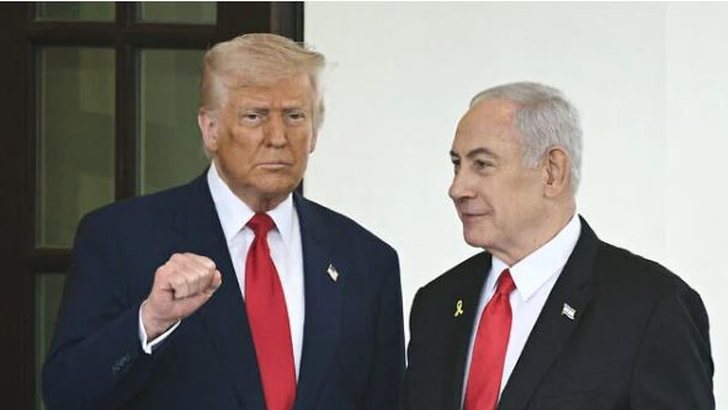
Në fushatën e fundit të Netanyahut në vitin 2019, Donald Trump shfaqej duke i dhënë dorën Netanyahut në posterat zgjedhorë. Këtë herë, imazhi i presidentit amerikan ka munguar në videot e fushatës së partisë Likud.
Megjithatë, lideri izraelit me shërbimin më të gjatë – i zgjedhur për herë të parë kryeministër në vitin 1996 – nuk ka hequr dorë nga taktikat e fushatës që e kanë mbajtur në pushtet pothuajse pa ndërprerje që nga viti 2009.
Një burim pranë Netanyahut tha se kryeministri i qaset çdo palë zgjedhjesh sikur do t'i humbasë ato – dhe se kjo ishte një nga arsyet pse ai shpesh ka fituar, edhe kur gjasat ishin kundër tij.
Një burim tjetër i informuar mbi fushatën e tij tha se ekipi i Netanyahut duket i fokusuar dhe nuk shfaq asnjë shenjë paniku apo çorganizimi, pavarësisht rezultateve të sondazheve.
Fjalimi i Netanyahut në OKB, në të cilin ai mbrojti me forcë veprimet e Izraelit në rajon dhe kritikoi ashpër kundërshtarët, u pasqyrua gjerësisht në kanalin e tij në Telegram, një platformë që përdoret kryesisht për mesazhe politike.
Ai publikoi gjashtë materiale paraprake para fjalimit: një video ku shprehej se ishte "krenar që ju përfaqësoj para botës, gati për të hipur (në podium) për të luftuar për Izraelin kundër OKB-së", si dhe pesë fragmente të tjera nga fjalimi i tij.
Linku për fjalimin e plotë shoqërohej me mbishkrimin në hebraisht: "Netanyahu përballet me botën."
Another familiar theme in Netanyahu's campaign has been stirring fears among parties representing Israel's Arab minority, warning that if his political rivals win the election, they will form a government with Arab factions that will be too soft on the Palestinians and endanger security.
Netanyahu's main rival is Gadi Eisenkot, a hard-line former military chief whose son was killed while serving in Gaza and who leads a new centrist party, "Yashar" - a word that means "righteous" or "honest" in Hebrew.
However, using familiar tactics against Eisenkot may not yield the desired result, according to Amotz Asa-El, a political analyst at the Shalom Hartman Institute, considering Eisenkot's experience in the security field and his center-right party's candidates.
Although election polls have often proven inaccurate, Netanyahu knows he is unlikely to secure a parliamentary majority that would enable him to form Israel's next government.