Protests, violence, curfews: From France to Albania, why Europe'...
/ 2026-10-20 23:47:20Focus


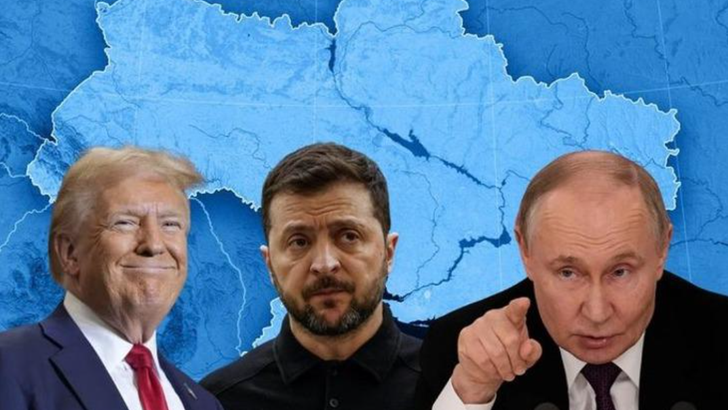
Dmitry Suslov, deputy director of the Center for European and International Studies at the Moscow Higher School of Economics and an influential adviser to the Kremlin on Russian foreign policy issues, gave an interview to Corriere della Sera ahead of the summit between US President Donald Trump and his Russian counterpart Vladimir Putin in Alaska.
In the interview, he spoke about Putin's conditions for reaching an agreement between Russia and the US. When asked what he expects from the summit between Trump and Putin in Alaska, which is scheduled for Friday, Suslov said that "there are two options."
The first, according to him, is for the presidents to approve a bilateral Russian-American plan to achieve a ceasefire in Ukraine.
"This is of key importance for the Kremlin: the agreement between us and America, without Ukraine and Europe. This plan should include the withdrawal of Ukrainian forces from the parts of Donbas where they are still present and the withdrawal of Russia from the Sumy, Dnipropetrovsk and Kharkiv regions (Ukraine), with the front line unchanged in the other areas. I remind you that a year ago, Moscow demanded a complete withdrawal of Ukrainians from all four annexed areas, while now it demands this only from Donbas. A key part of the agreement is that Ukraine does not work towards NATO membership," Suslov said.
He added that it is definitely not an ordinary territory swap, as Donald Trump announced last Friday.
"Ukraine's efforts not to join NATO are an inevitable prerequisite of any ceasefire. After that, the final agreement, of course, will have to include the demilitarization of Ukraine and constitutional reform in terms of federal regulation," the Kremlin's foreign policy adviser said.
Asked by the Italian journalist whether all of these Russian positions are known in advance and what the real news is, Suslov replied that "mainly it is Russia's willingness to discuss a ceasefire, not just a final agreement."
"The second thing is that Putin is asking for a little less in return for that ceasefire than he did a year ago. Another possibility is that Ukrainian President Volodymyr Zelensky, with the support of the Europeans, will reject this solution, which would make Trump cut off all military aid to Kiev and even stop selling weapons to the Europeans, because they are giving them to Ukraine. But this would accelerate its defeat and complete collapse," Suslov added.
He also has answers to the question of why Trump would act only against Kiev in that case, without taking any punitive measures against Russia, as he promised.
“If Trump is so strongly and almost enthusiastically supporting the possibility of reaching a deal, the reason for this is that he put himself in a difficult position by asking China, India and Brazil to stop importing Russian oil, threatening them with secondary sanctions. China will obviously say “no” to this, and China Delhi and Brazil would never do it, and their refusal is a problem for America: this is the point at which Trump either gives in, weakening, or gets involved in a difficult political and trade conflict with China and the two central BRICS countries, with an outcome that cannot be predicted. If, on the other hand, the summit in Alaska is successful, together with the adoption of a joint plan for a ceasefire in Ukraine, the fuse that was carelessly lit against China, India and Brazil would be extinguished and the American president could even claim historical merit. That is why we expect Trump to accept Putin’s proposal. For Trump, this represents a real way out of "the situation," Suslov said.
He assessed that Alaska, as the meeting site between Trump and Putin, represents an "important choice on a historical and political level."
“First of all, the bilateral nature of that summit is emphasized in Alaska. There is no place in the world that is more Russian-American than Alaska: it is far from Europe and Ukraine, extremely close to Russia. This emphasizes the fact that Putin and Trump are finding a solution to the war in Ukraine on their own. In addition, this will be the first real summit between Russia and the US on American soil in the last 15 years, as the last one was in 2010 when former Russian President Dmitry Medvedev visited former US President Barack Obama in Washington,” the Kremlin adviser said.
Suslov stated that "this shows a strong mutual desire to turn a new page when it comes to this conflict in Ukraine and improving relations between Russia and the US."
“The summit agenda predetermined the choice of the venue: in addition to Ukraine, the Arctic, a key point of bilateral relations, will be discussed. There is growing competition in that region and it could potentially be the scene of an armed conflict. The military activities of both Russia and the US are intensifying. But, with the melting of the ice and the increasing possibility of access to the Arctic, it is becoming an increasingly promising area for the development of new economic cooperation relations between the two countries. Joint research, exploitation and use of raw materials, as well as trade ,” Suslov concluded his analysis.