"We are drowning..." - From Lisbon, Milan to Tirana, "The Guardi...
/ 2026-10-18 23:13:32Focus


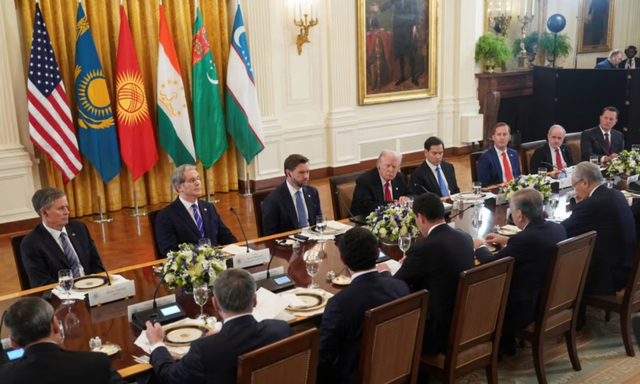
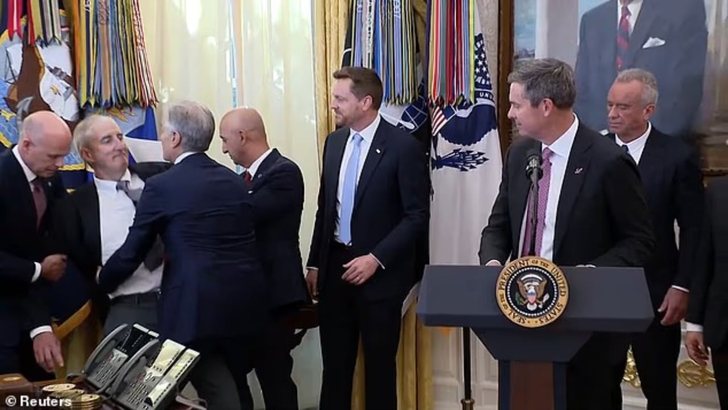
US President Donald Trump unveiled a series of trade, diplomatic and mining deals as he welcomed Central Asian leaders to a summit and dinner aimed at strengthening Washington's influence in the region.
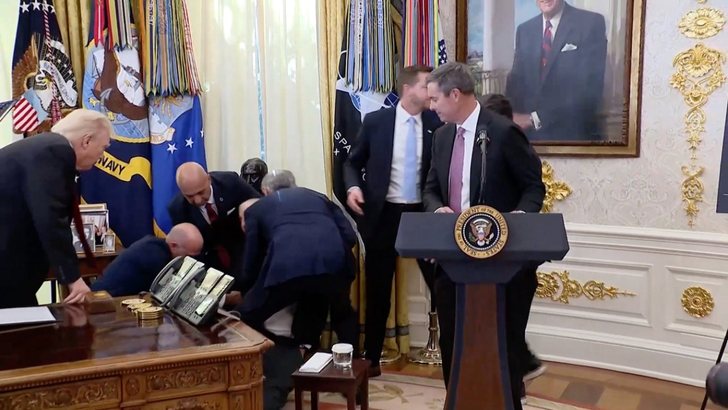
Accompanied by US Secretary of State, Marco Rubio, and Vice President JD Vance, at a long table at the White House, Trump said he was committed to making the US relationship with Central Asia "stronger than ever before," while the presidents of Kazakhstan, Kyrgyzstan, Tajikistan, Turkmenistan and Uzbekistan said this is a new era of cooperation.
Before the working dinner, Kazakhstan announced a major mining deal through a new joint partnership with the US to develop one of the world's largest untapped tungsten reserves, located on Kazakh territory.
Under the agreement, the US company Cove Kaz Capital Group will have a 70 percent stake in this joint project with the Kazakh state mining company, and the total cost of the project is estimated at $1.1 billion. Meanwhile, the US Export-Import Bank will issue a letter of interest to finance the project with $900 million.
Among the agreements reached during the summit was a deal, the details of which are still unknown, to sell up to 37 Boeing aircraft to the national airlines of Kazakhstan, Tajikistan and Uzbekistan. On the diplomatic front, Kazakhstan said it expects to join the Abraham Accords, the US-led framework for cooperation between Israel and Arab and Muslim states.
US officials said the summit was intended to signal a new US commitment to engaging more sustainably with Central Asia.
"We often spend a lot of time focused on crises and problems, and they deserve attention, but sometimes we don't devote enough time to new opportunities," Rubio said during a working breakfast with the five Central Asian leaders on November 6.
"And that's exactly what exists now: a new opportunity in which the national interests of our countries align."
Central Asia is trying to balance its trade and security relations, which continue to be dominated by China and Russia, by deepening ties with the United States.
The Washington summit follows other efforts by major powers this year to strengthen ties with the region. Russian President Vladimir Putin attended a summit in Tajikistan in September with other Central Asian leaders, while Chinese leader Xi Jinping was in Kazakhstan in June for a meeting with regional presidents.
The European Union also held a summit with regional leaders in April in Uzbekistan to discuss infrastructure investments and access to Central Asia's critical minerals.
The region's mineral wealth was once again in focus in Washington, as the region has vast reserves of rare earth minerals - 17 elements used in everything from wind turbines to smartphones and engines for fighter jets - as well as large deposits of uranium, copper, gold and other strategic minerals that are essential to global efforts to transition to greener forms of energy.
Pini Althaus, CEO of Cove Kaz Capital Group, which signed the tungsten deal in Kazakhstan, called the deal “a major victory for the United States and its critical mineral needs” and told Reuters that President Trump and US Commerce Secretary Howard Lutnick helped negotiate the deal to prevent Chinese companies from developing this strategic reserve.
The agreements follow a truce in the trade war between Beijing and Washington, as well as an increasingly fierce competition between the US and China over the export of rare earth minerals, a key point of disagreement between the parties during their trade negotiations.
This led to a year-long pause in some of China's restrictions on the export of these metals after a meeting held in late October between Trump and Xi.
Now Washington is looking for new ways to sidestep Beijing in the metals trade, as China extracts about 70 percent of the world's rare earth minerals and controls about 90 percent of their processing.
While Central Asia may be a long-term resource, the region hopes that new investments will help it develop these resources.