How Belinda Balluku is fabricating the rumor about Top Channel's...
/ 2026-10-19 16:19:00Focus


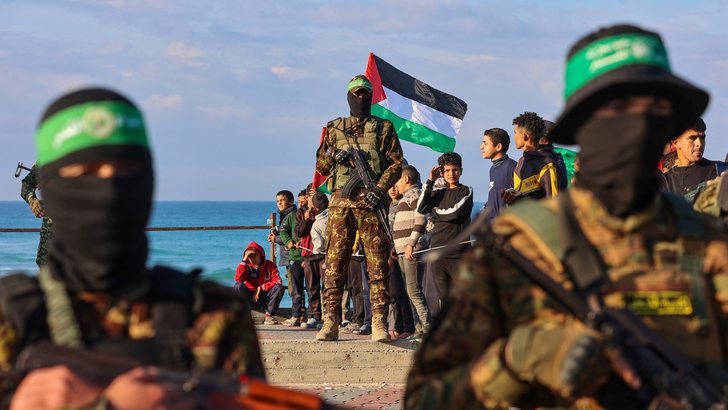
Supported by Qatar and Turkey, the Hama leadership is studying a change to avoid handing over control of the Gaza Strip to the Palestinian Authority.
Changing everything to change nothing. There are few areas of the world where the saying made famous by Tommaso di Lampedusa in "Gattopardo" applies as accurately as in the Middle East.
This is how it is in the region and this is how it risks being in Gaza in the coming months.
Plans for the future are still all in the discussion stage. But the evidence we have gathered from various sources inside the Strip confirms one point: the Israeli, and to some extent the American, claim to see Hamas disintegrate at this point is unrealistic.
The militants control the country, from which the IDF has withdrawn. And they are preparing to stay there, with the help of two key actors, Qatar and Turkey.
The Doha and Ankara plan, according to what emerges from Israeli newspapers and confirmed by diplomatic sources to "Repubblica", is moving towards a renaming of Hamas, rather than the dissolution envisaged by Trump's plan.
This implies a formal change, which would leave Hamas' power structures, both its civilian and military parts, and above all its ideology, intact.
"Together with Qatar, Turkey is working behind the scenes to 'relaunch' Hamas, creating a new party with a new name and a new logo, but which in substance would be the same thing. Erdogan and the emir of Qatar have already hinted to the leadership that it is necessary to replace the label, but not the ideology. The Israelis perceive this as a danger, a disguised Hamas will be the same Hamas, but more difficult to fight if it wears a new mask," wrote columnist Anna Barsky in "Ma'ariv" yesterday.
What remains of the group's leadership, a reduced number of individuals, estimated at several dozen, would be offered refuge abroad; while a portion of the militants would be reintegrated into the security forces, called upon to oversee the territory.
An ambiguity confirmed by what Khalil al-Hayya, Hamas's chief negotiator, said yesterday in an interview, not coincidentally, with the Qatari television Al Jazeera. "The future of Hamas' weapons is still under discussion with the other armed factions and the mediators."
These words explain the hostility with which Israel views the role of Qatar and Turkey. If relations with the Emirates have been very tense for years, with Ankara the tension is more than ever, on a rapid rise.
As evidenced by the "no" to the entry into the Gaza Strip of Turkish teams specializing in searching for bodies under rubble.
The Turks and the people of Qatar are not the only ones who claim to decide the future of the Strip and Hamas.
Israel will also have to take into account the wishes of Saudi Arabia's Mohammed bin Salman, who is expected in Washington by Trump in a few days.
Mohammed bin Salman is ready to invest billions of dollars in the reconstruction of Gaza, but on the condition that an embryo of a Palestinian state emerges from the process and that the Palestinian National Authority has a leading role in Gaza, as well as in the West Bank.
The conditions are unacceptable to Netanyahu.
And then? The process is still open, with all the risks that come with it. “The attempt to create a ‘modest’ Palestinian government in Gaza risks producing as the end result a Hamas regime in another civilian guise,” concludes Barsky.
Israel knows full well what is happening and it is not clear how much it can do to prevent it. /La Repubblica