"We are drowning..." - From Lisbon, Milan to Tirana, "The Guardi...
/ 2026-10-18 23:13:32Focus


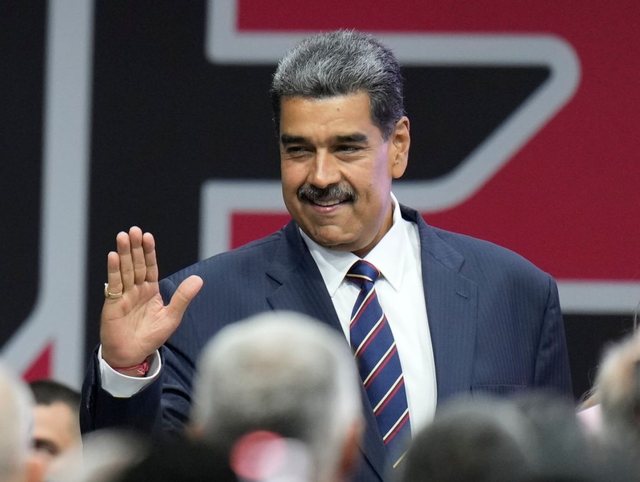
After the Washington Post reported on Friday that Venezuela's authoritarian President Nicolas Maduro, due to growing pressure from the US and the threat of a military coup, sent a letter to Vladimir Putin, Xi Jinping and the regime in Tehran with a request for assistance in armaments, Alexei Zhuravlyov, first deputy chairman of the Defense Committee of the Russian State Duma, confirmed on Tuesday that Moscow is supplying weapons to Venezuela and proposed that it could also supply Caracas with its new Oreshnik missile system, which is capable of carrying nuclear warheads.
"I see no obstacles to supplying a friendly country with new developments like Oreshnik," Zhuravlev told Gazeta Rossiya, as reported by the Kyiv Post. He also stressed that Russia remains a key military-technical partner of Venezuela, supplying "a whole range of weapons, from light weapons to aviation." Details of the arms deliveries are classified, he added, warning that "the Americans may be surprised."
Russian state media reported last year that the Oreshnik missile is allegedly capable of hitting any target on the European continent in less than an hour and destroying it with up to six independently maneuvering warheads, each of which could be nuclear.
Zhuravlev said that Russia's Su-30MK2 fighter jets form the core of Venezuela's air force, making it "one of the most powerful air powers in the region." He also cited previous deliveries of the S-300VM (Antey-2500) system and recent deliveries of Pantsir-S1 and Buk-M2E air defense systems carried by Ilyushin Il-76 aircraft. According to him, the Kremlin's international obligations do not limit the delivery of advanced weapons to Caracas, including Kalibr cruise missile systems, which can also carry nuclear warheads.
The Washington Post reported that Venezuela has asked Moscow for 14 surface-to-air missile systems, overhauls of Su-30MK2 fighter jets and engines, radar repairs and logistical support. The sources said Caracas has also approached China and Iran to deepen cooperation on surveillance, GPS jamming and long-range drone technologies.
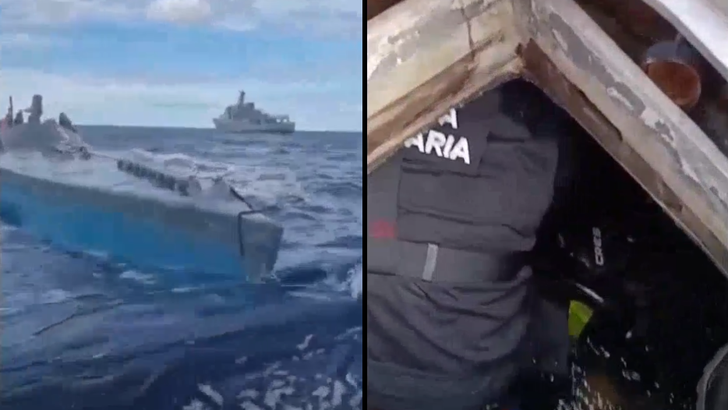
US military activity in the Caribbean intensified in August, when the Trump administration deployed a naval and air force of about 16,000 personnel for what Washington calls an operation against drug traffickers. The force includes eight surface ships, a nuclear submarine, a B-52 bomber, F-35 fighter jets and the aircraft carrier Gerald R. Ford with five escort ships.