Details of the storm in the administration, here's who will resi...
/ 2026-10-22 22:25:00Focus


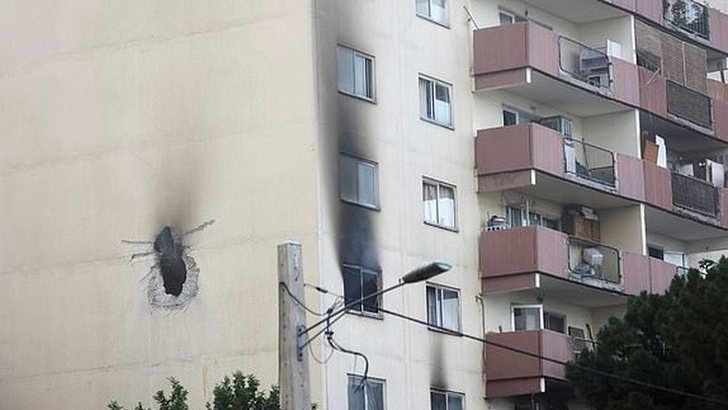
Israel declared that it had attacked Iran "at the heart of its nuclear enrichment program."
A surge of recklessness preceded the offensive. Psychological warfare and military maneuvers, drumbeats from the sides while they were still playing diplomatic cards with a meeting scheduled for Sunday in Oman.
For months, scenarios for Israeli action had been emerging. Detailed plans even appeared in the pages of the New York Times: attacks to “open” a path, neutralizing anti-aircraft batteries, a barrage of bombs on the installations, a possible commando incursion from the ground to “finish the job.”
Flights from the US to the Jewish state with war materials have been observed. Israel has simulated attacks and carried out real long-range operations against the Houthis in Yemen: first with fighters, then with the Navy.
According to some observers, the approach routes have been studied, a massive repetition of the attacks carried out months ago in the first duel with the Islamic Republic. The IDF has a large number of weapons that can be fired from a safe distance and the air force – with the F 15 and F 35 – has a high level of experience.
Equally important is the electronic component, with aircraft capable of "jamming" communications and radar.
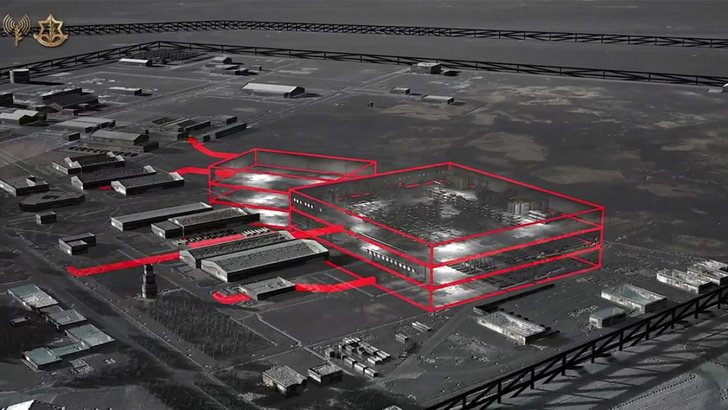
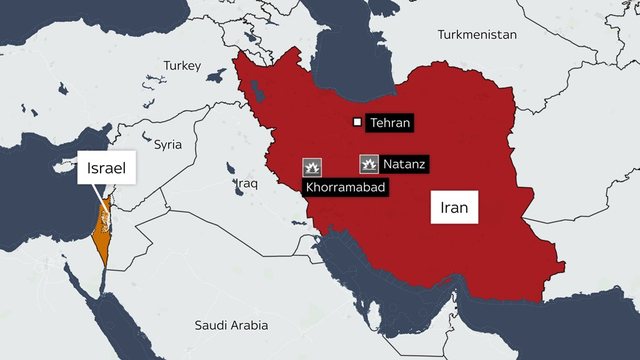
Sabotage by a “fifth column” that has already demonstrated its ability to operate inside Iran by hitting key sites and figures cannot be ruled out. The list of targets is well known. Natanz and Fordow, a uranium mine, research centers, support facilities, the Isfahan complex. Some of the sites, however, are well protected, inside the mountains, “covered” by layers of reinforced concrete. This is the case of Kolang Gaz La where measures have recently been added to prevent any possible action.
The IRGC has set up checkpoints, outposts, “defensive boats,” while the shield has been increased as much as possible. According to some estimates, the Israelis, thanks to previous raids, have eliminated a large part of the Russian-designed S-300 systems, and this has forced the Iranians to use domestically produced means that are considered insufficient to stop the enemy. Precisely for this reason, Israel is exploiting the alleged weakness of the “guards.”
As in any crisis, there are still unknowns about the outcome of this attack. The first concerns the ability to penetrate the missile's surrounding areas: Israel has anti-bunker equipment, but it does not have the GBU 57, the most powerful weapon currently used only by the United States. Will its equipment be enough? The second question concerns the potential damage to the nuclear program: some hypothesize a delay of 6 to 18 months and others extend it to three years. But, as Pezeshkian says, knowledge cannot be hidden.
Washington has a large presence in the region. Airstrips in the Persian Gulf (Qatar, Bahrain, Saudi Arabia, the Emirates, Jordan), the island of Diego Garcia with B-52 strategic bombers and support aircraft, a naval formation led by the aircraft carrier Carl Vinson (accompanied by escort units) and dozens of fighter jets.
The surveillance network entrusted to reconnaissance aircraft, drones, spy satellites and radars is important. Guards that complement the anti-missile network made up of the more sophisticated Patriot and Thaad batteries, to which anti-drones have recently been added.
These are devices that must face the retaliation warned by Tehran, a response believed to be a significant number of surface-to-surface missiles and Shahed-type drones./ Corriere della Sera