Is this police force professional and capable of handling violen...
/ 2026-10-16 18:54:07Focus


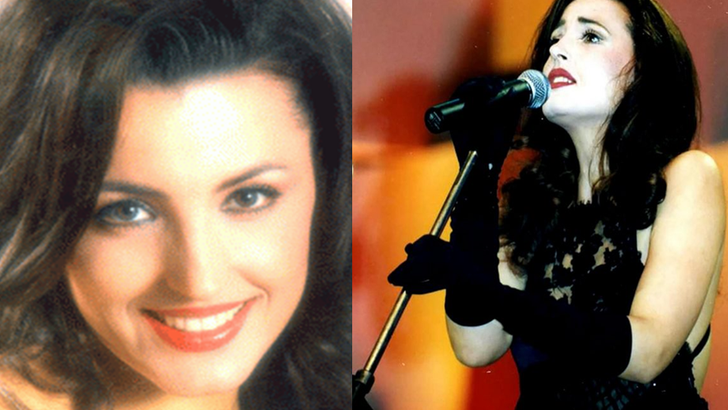
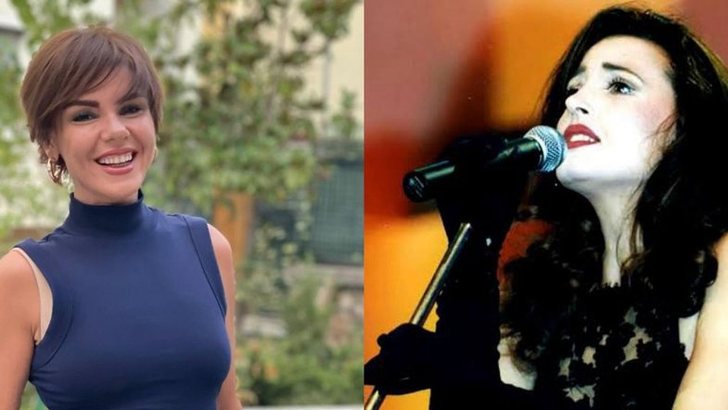
The weekend news was a video showing a woman at a social center in the US. Someone said that the woman was Parashqevi Simaku, and this was enough for the video to go viral and spark numerous reactions, which poured out across the media space, starting from Facebook and Instagram, continuing with portals and ending with well-known newspapers and television stations.
You could say that for the first few hours, all this flurry of reactions was based on conjecture, since no one could say for sure that the woman in the video was the famous singer. Consequently, more than lectures about Parashqevi, we had to deal with rumors about her. Somewhere towards the end of the first day, a lady posted a video where it became clear that the rumored woman was our famous singer herself.
If you manage to leave aside the ethical side (how can you gossip about someone, even for a few hours, without being sure that you are dealing with them), the second question that arises is: how is this massive, almost national media uproar explained? Moreover, you find in it almost the entire spectrum of feelings, starting from love, sympathy, appreciation for the former singer, continuing with regret, mercy, nostalgia and empathy for today's woman who lives on benefits and ending with malice, slander, resentment and revenge.
It was said that the singer divorced her husband two decades ago, who had won custody of their young child, now a young man in his twenties. It was said that later, to her misfortune, she suffered a stroke that has not gone without consequences for her mental health. Such tragedies arouse pity and compassion even when they happen to ordinary and unknown people, not when they strike a classy artist that you have followed and liked. In the case of the singer, nostalgia also acts as a feeling strongly linked to the music you once heard. But along with nostalgia, empathy is also activated because we all, some more and some less, have hardships, sufferings and failures, so we tend to project ourselves onto the unfortunate person, to get into his shoes. When the unfortunate person is a once prominent person, the tendency to project ourselves onto him is more compelling and comforting.
If you follow the reactions on the network, however cursorily, it is easy to see that the accidental return of Parashqevië to public discourse was in many cases also driven by negative motives such as malice, resentment and revenge. Many cannot forgive the fact that the singer severed all ties with her homeland, and even did not use Albanian even when she had the opportunity to talk to Albanians. The abandonment of the Albanian language and identity, which is also your identity, by many and especially by vulnerable people, is conceived as short-sightedness, even as a betrayal that deserves punishment and public slander.
The negative approaches in the case of the singer seem to stem only from principled things: the attitude towards the mother tongue and towards the Albanian identity, but they are deeply connected to personal experiences. Parashqevi Simaku aimed for success, fame and American well-being, but ended up in complete failure. There are not a few people who somewhere deep inside themselves, on the borders between consciousness and unconsciousness, experience feelings of insecurity, fear and personal failure, and one of the means to combat these feelings is to slander the failure of the famous person, because this way they feel a kind of calm.
Seen on a somewhat formal level, the sudden reappearance of The Little Mermaid in public discourse also came to life because we are dealing with a narrative structured on a timeless model. It is the subject of Cinderella or Cinderella, turned upside down: transformation from maid to princess, but this time in the opposite direction, from princess to maid. Both of these directions have existed as universal narrative models and have been and remain very popular, it is enough to remember that there are works where both exist and are developed together, such as in Mark Twain's 'The Prince and the Pauper'. It is perhaps no coincidence that this children's novel by Twain, although not counted among his masterpieces, has been and remains highly coveted for adaptation and re-adaptation in various versions for the stage, the big and small screen, picture books, musicals and even video games.
This weekend's public uproar over the fate of Parashqevi Simaku, however cacophonous, noisy and driven by a multitude of often contradictory motives, proved one important thing: tired and bored by the vanity fair that appears to us every day, overflowing with corrupt politicians, criminals and screen charlatans, we remain thirsty for personalities and values that, even with their misfortune, encourage us to feel part of a community.