Protests, violence, curfews: From France to Albania, why Europe'...
/ 2026-10-20 23:47:20Focus


By Nello Trocchia, DOMANI
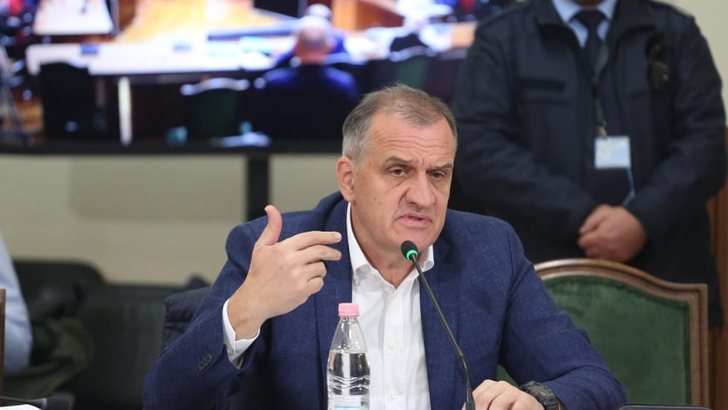
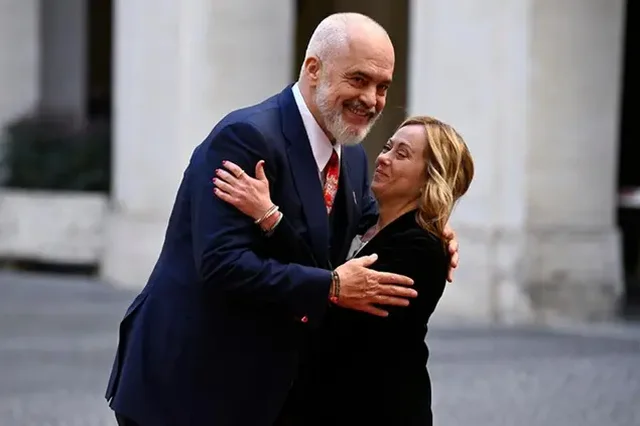
Following the agreement signed between Italy and Albania, worth almost one billion euros, for the management of immigrants, Albanian Prime Minister Edi Rama returns to Rome to meet with Giorgia Meloni.
The Prime Minister had promised, in a firm tone, that centers for immigrants, built on Albanian soil, "will work," but that model has failed.
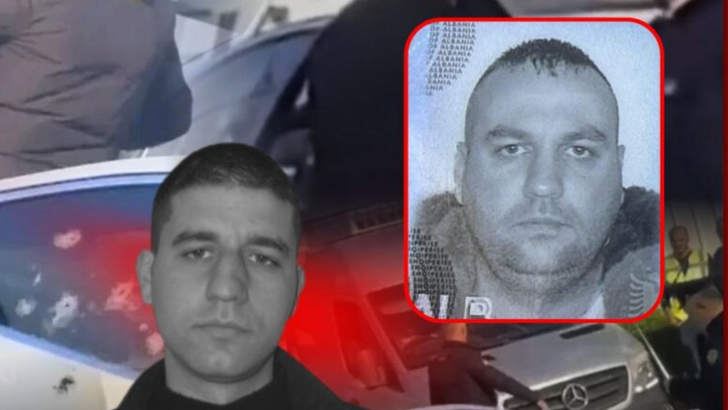
It is not only the issue of effectiveness, for which 'Domani' can reveal new anomalies between repatriated agents and inadequate shelters, but also a largely silent topic, that related to organized crime in that country.
A question is silently being asked: to whom did we give 100 million euros of public money (intended for external supervision)? With which country did we sign an agreement worth almost a billion euros (a minimum expenditure of 650 million euros is envisaged), for five years?
Opponents of the 'Rama' government, international observers, and part of the Italian right, have in the recent past called Albania a narco-state.
Is this definition an exaggeration?
"No, on the contrary. Albanian groups began trafficking marijuana to then move on to heroin, thanks to relations with the Turkish mafia, and finally to cocaine, for which they became international intermediaries. The income from these activities gave Albanian groups more economic and political power, which have many similarities with the 'Ndrangheta, from familism to strict codes of conduct, based on trust, a sense of honor and the word given, from the ability to infiltrate the economic-financial fabric to influence in the political-administrative sector."
This is what the Naples Attorney General, Nicola Gratteri, says, interviewed by the author of this article to show the international hegemony of the Albanian mafia.
Silence
Words spoken by an expert magistrate, on the front lines against crime, that raise questions about the need to sign a protocol with a country outside the EU, which does not have an adequate legal framework to combat organized crime and, even more so, does not have legislation capable of cracking down on the illegal accumulation of economic and financial assets.
An even more serious issue, if we consider what 'Domani' has discovered regarding a meeting confirmed by the DIA between a criminal cartel and unspecified representatives of the Rama government. It was 2019. An event, about which Rama has chosen silence, which caused a political and media storm in Albania, but was obscured in Italy.
The Italian Prime Minister speaks out in big words against the mafia, then chooses international interlocutors whose policies in dealing with money laundering, corruption and infiltration are deemed "not advanced," Gratteri says again.
The meeting between Rama and Meloni will take place at Villa Pamphili; the signing of a global strategic agreement is expected to include sectors such as energy, health, environment, defense, education, innovation, migration and economic development.
Official photos, mutual words of praise — also to hide Albania's failed campaign. A year ago, the centers for immigrants opened, almost always empty, weakened by international law and transformed into huge monuments of abuse.
In fact, in one case, the Albanian bureaucratic machine has functioned very well. It is the case of the repatriated agent.
The only repatriation? Agent
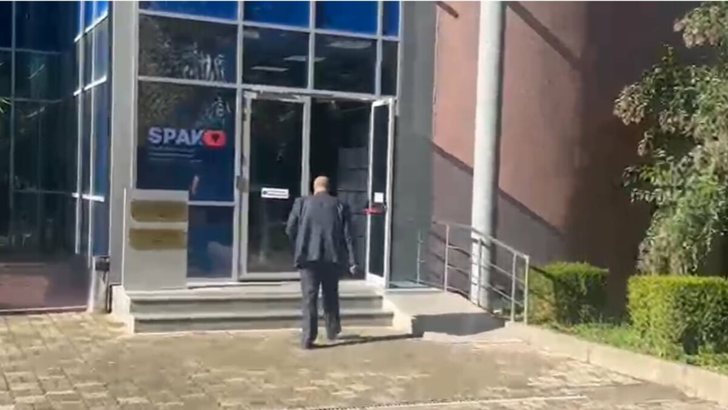
In the failed project set up by the Italian government on the other side of the Adriatic, a prison with 20 places was also foreseen. A structure located within the larger complex, which includes the asylum seekers detention center and the repatriation center. Intended for those, among the immigrants, who would have committed crimes in the area considered under Italian jurisdiction.
It is currently guarded by 15 prison police agents, a third of the initial contingent that was deployed in Albania. But what is the fault of the repatriated agent?
He was suspected of photographing stray dogs gathering, fed by police officers, near the empty prison.
Thus, after a disciplinary procedure that ended with the case being dismissed, the agent was sent home again.
So, repatriation works for those suspected of interacting with unions.
But there is something else.
Responding to a request that had reached the prison police department from the UIL union, a structural deficiency was discovered: the agents' rooms must be for a single person, otherwise they are not in line with the provisions of the national framework agreement. And what actually happens?
"The rooms dedicated to staff, with an area of 30 square meters, currently accommodate a maximum of two people; each room, equipped with an air conditioning system and a corresponding bathroom, is complete with the furniture provided for in Annex A of the Framework Agreement; it is reasonable to note that no complaints from staff have been registered," writes Rita Russo, currently director of personnel, and previously provider in Piedmont, where the undersecretary of Justice is Andrea Delmastro Delle Vedove.
Russo was dealing with that region when this newspaper raised the issue of Delmastro's bodyguard, in particular the reasons for his selection and selection, despite his advanced age. "I absolutely do not want to talk," she replied.
Silence even when we asked him about the failed internal inspection.
After that experience she moved to Rome to head up the personnel in the department that Delmastro manages with every appointment.
And now he responds to the inadequate accommodations by reassuring everyone: "Nobody is complaining."
Because if they complain, they get repatriated.