"Condemned" protesters?! Who trapped Rama inside the Prime Minis...
/ 2026-10-23 16:02:00Focus


Money made by London drug dealers is distorting the Albanian economy and sending property prices in the Balkan country into a spiral, according to a leading local economist.
Chartered accountant Armand Mala told the Daily Express that the country's housing boom was being exploited by criminals due to a lack of regulation.
“The construction sector has been a good way to invest [for criminals] because] you prove the source of a small amount of money [when] you buy a property,” he explained. “The rest can be paid in cash without giving a reason as to where [the individual] got it.
"So this has been a good solution for those who invest [legally] earned money abroad. The market also helps with money laundering because, after a certain period, they can resell the property at a higher price and make a profit.”
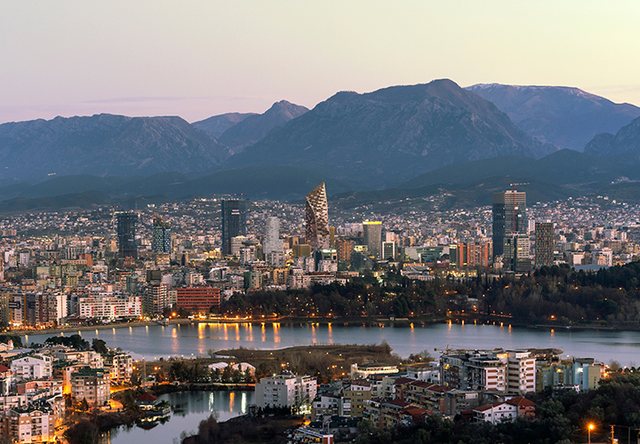
During a reporting trip to Albania, the Daily Express saw how the former communist country is being transformed by new developments. Numerous resorts are being built all over the Albanian Riviera and glittering new tower blocks are rapidly being added to Tirana's central skyline.
"We also heard many stories from locals about how young people who had traveled to London to work on cannabis farms had invested hundreds of thousands of their earnings in property."
However, Mala said that because of the many ways that money can move online these days, it was difficult to assess the exact extent of the role of this money in driving this boom. He believes foreign money is a factor as evidenced by the many empty homes in new developments. One aspect that is felt by average Albanians is the increase in housing prices. Last year, the cost of property in Albania increased by a remarkable 39%.
Surprisingly in a country where the average salary is just £300 a month, the dream of owning a home is out of reach for many. "The prices are too high compared to our standard of living," Mala continued. "To do such a thing is impossible or at least very, very difficult for someone who receives a salary."
"Since our economy is small, we have always been affected by the remittances of migrants abroad," he explained. "Initially it was markets like Greece and Italy and then, in recent years, the map has expanded, especially with Great Britain.
Mala said he believes the dramatic increase in illegal immigration in 2022 by Albanians to the UK, when 2% of the male population made the crossing through the Channel, was partly fueled by social media. “It was promoted on social media, people thought going [to Britain] would solve [their issues]. But now we have many other cases where people came back from the UK who realized it was not a wonderland," said Mala.
This was one of the factors that led the economist to believe that migration from Albania would decrease in the coming years. He said: " Especially given the massive immigration in the last three years, I think it's peaking. So maybe after that it will stop and in the long run, it won't make such a big difference. Anyone who wanted to leave us has already left. "