


"Condemned" protesters?! Who trapped Rama inside the Prime Minis...
/ 2026-10-23 16:02:00Focus


AKU officially notifies the owner of the cargo to destroy it, but this is a very complicated procedure in itself. The liquidation must be carried out by a commission of four members: consisting of a representative from the NFA, a representative from the Ministry of Environment, a representative from taxes and one from private business.
"Legally, it must be disposed of, but today we do not have information on where the quantities of products that are returned to the customs points go. Albanian exporters find it much easier to return those products to their country of origin than to dispose of them in EU countries because they have very high costs in the EU. No one knows how many were destroyed", said Granit Sokolaj, food safety expert.
"On the other hand, the risk is that those products have appeared on our market. It may have led to the majority market in Lushnje at a cheaper price, from where most markets in Albania are supplied", said Granit Sokolaj.
In the pyramid of problems that crop protection products have, apparently abuses by farmers are the last.
After a pesticide is imported, they are in most cases repackaged and packaged in our country. But this procedure has raised doubts that often the active ingredients do not match the contents of the label. This suspicion has also been confirmed by AKU in the past. In a concrete inspection, AKU analyzed 31 samples of pesticides used by Albanian farmers. Referring to ISUV's laboratory analyses, 5 types of pesticides were found to have active substances outside the norms defined in the accompanying quality certificates.
Order to analyze 200 products, why the answers were kept hidden
Although Albanian products are in high demand due to their quality, the lack of functioning in the control chain leaves a free hand to abusers to spoil the image of "made in Albania" production.
This is the order no. 365, according to which former minister Frida Krifca ordered the dependency institutions to analyze 200 different agricultural products for the presence of pesticides. The products, such as peppers, tomatoes, cucumber, etc., obtained from farms across the country would create a panorama of food security in the country.
The products were analyzed as part of a European Commission project. However, the obtained results have forced the Ministry of Agriculture to consider it "top secret".
"Inside Story" learns that some of the samples have resulted in prohibited pesticides, as well as pesticides above the norm. What is more alarming is the fact that there have also been completely unknown pollutions that do not know where they come from.
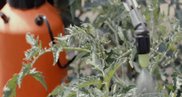
"Besides the fact that there were some banned PMB, there were also 10 chemicals for which there is no origin, and they resulted in plants and in the soil, which means that the soil is polluted", said Granit Sokolaj.
Although the project was closed in October, the ministry, embarrassed by these results, has not yet sent it to the EC office. Neither the Ministry of Agriculture nor the National Veterinary and Plant Protection Agency, which collected samples in the field, refused to make this document available to us.
"I think the reason that is related is the finding of these chemicals that we do not know what they are and where they came from in the plant. They are not plant protection products used during the development of these plants, but they are early, from 20 or 30 years ago", said Granit Sokolaj.
Dangerous imported products make the name, no notification to consumers
The situation is alarming even for imported products. Officially, AKU must notify the consumer whenever it is notified of dangerous products, but this almost never happens.
During the first month of January, the alert system of the European Commission announced that sugar turkeys, so popular with children, had arrived in Albania with pieces of metal or nails inside. The cargo was manufactured in China.
A few days after this case, the alarm was raised again for 45 kg of dried apricots containing sulfur dioxide. Even in this case, AKU has been silent and there has been no risk notification or communication with the public.
The former Minister of Agriculture does not consider cases of forgery to be commonplace.
"Because you can introduce substances with a high toxicity, which can have a very big impact on public health with extraordinary consequences," said Edmond Panariti, former Minister of the Environment.
What is the solution in this situation?
"If they plant Albania from North to South with small business, we have planted it with people", said Panariti.





