Is this police force professional and capable of handling violen...
/ 2026-10-16 18:54:07Focus


Migration continues to be one of the main pillars shaping the Albanian economy and society. According to the 2024 Household Migration Survey, conducted by INSTAT in collaboration with the World Bank, around 37% of households in Albania have at least one member currently living abroad or having migrated and returned, confirming the massive and long-term dimensions of Albanian emigration. The survey estimates that around 1.6 million Albanians live abroad, while over 108 thousand people have returned to Albania over the last 12 years, making migration a continuous cycle and not a temporary phenomenon.
According to the survey, about 22 percent of families have members currently outside Albania, while 20 percent have at least one returned migrant.
Data show that emigration is largely a phenomenon of young people of working age, especially men. Nearly three-quarters of current emigrants are men and the majority belong to the 25–44 age group, precisely the most productive core of the labor market.
In terms of education, immigrants are better educated than the population that remains in the country: over two-thirds have completed secondary education and around 18% have higher education, with significant differences depending on the host country. The US and Germany attract the most educated immigrants, while Greece remains the main destination for immigrants with lower education.
Before leaving, most emigrants are employed in Albania, but mainly in low- or medium-skilled occupations and with lower-than-average salaries.
At the same time, expectations for life abroad are inflated, with immigrants expecting to earn an average of around $3,900 per month, but real income is around $2,200, while real savings are almost three times lower than predicted.
Although emigration significantly increases incomes, with emigrants earning on average 2.5 times more than in Albania, the benefits come with considerable insecurity. One in three emigrants work without a written contract and over a quarter do not benefit from social security or paid holidays, making employment more insecure compared to the native population in host countries.
Another prominent problem is the underutilization of human capital, as about a third of current emigrants and nearly 80% of return emigrants with higher education work in professions that require qualifications lower than their education.
Remittances remain one of the most direct benefits of emigration for the Albanian economy. About half of emigrant households have received remittances in the last year, and for these households, remittances from abroad constitute on average 41% of total income.
However, the survey shows that remittances are mainly used for basic consumption, such as food, daily expenses and healthcare, while productive investments in business or agriculture are almost negligible. Another problem is that only about 30% of remittances are sent through formal channels, while the majority circulates through informal networks, limiting their impact on financial development and the formalization of the economy.
The survey also sheds light on the return of emigrants, a process that has accelerated in recent years. Around 45% of returnees have returned since 2020, often for economic reasons or due to insecurity in the host countries. Initially, returnees face difficulties in employment, but over time they achieve higher employment rates than the non-emigrant population. Self-employment appears as an important path to reintegration, especially for women and those who have spent long periods abroad, showing potential for the creation of new jobs.
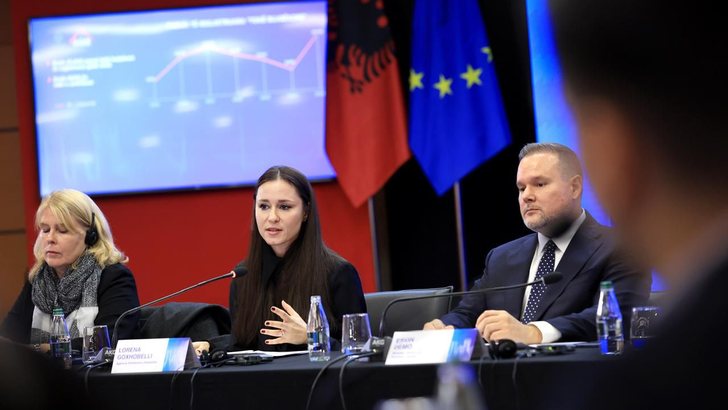
Elsa Dhuli, Director General of INSTAT, stated: “Migration is a structural reality for Albanian society and this is clearly reflected in the survey figures. The main message is clear: migration brings both benefits and costs, and the balance between them depends on the policies that are undertaken. The official statistics produced by INSTAT are not simply a reflection of reality, but a concrete tool for decision-makers. They should serve to identify problems, to orient public interventions and to evaluate the effect of policies, in order for migration to contribute more to the social well-being and economic development of the country.
” Ingrid Macdonald, UN Resident Coordinator in Albania, said: “Understanding why people move, where they move and how they contribute is essential, especially for a country like Albania, where migration has long shaped society. Reliable data is a must that enables policymakers to understand changes in real time, anticipate future needs and design comprehensive, people-centred and effective responses.”
Evis Sulko, Deputy Country Director of the World Bank Group for Albania, said: “The Household Migration Survey represents an important step in strengthening the migration data ecosystem in Albania. Improving how migration is measured and understood supports better policy decision-making and helps ensure that migration contributes positively to Albania’s long-term development.”
Sonja Kurz, Director of GIZ Albania, said: “Migration has long shaped Albania’s social and economic development and, while offering great opportunities, it also poses complex challenges. That is why strong institutions, coordinated policies and reliable data are essential. For us as an implementing partner, solid data is essential to design effective programmes and achieve real impact.” • Alma Jani, Head of the IOM Office in Albania, said: “For the first time, Albania benefits from a combined quantitative and qualitative analysis of migration. This approach allows us to understand migration routes more comprehensively, linking data with the perspectives of institutions, communities and the diaspora, and supporting future-oriented policies.”/ Monitor