Protests, violence, curfews: From France to Albania, why Europe'...
/ 2026-10-20 23:47:20Focus


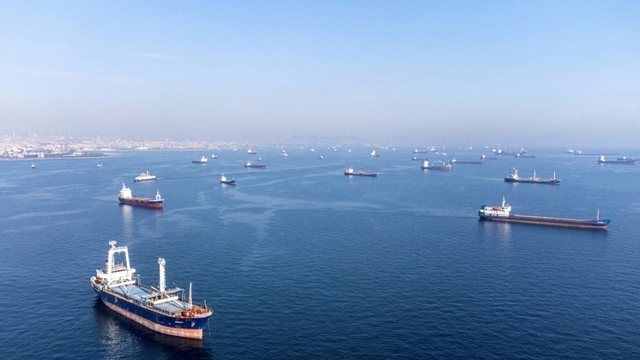
Trade in the Red Sea, which once accounted for 10% of all global maritime trade, has seen a historic decline as tensions rise in the Middle East caused by Israel's relentless attacks on Gaza, which has reached its one-year anniversary seen.
Israel's attacks on Gaza, launched on October 7, 2023, prompted retaliation by the Iran-backed Houthi Political Organization, which began targeting merchant ships in the Red Sea and the Bab-el-Mandeb Strait. These attacks intensified in December last year.
The vast majority of merchant ships that used to use the Red Sea and Bab-el-Mandeb strait have changed course and since then sail around the Cape of Good Hope, the southernmost point of Africa.
Total vessel transits in the Red Sea fell 56% year-on-year in September, according to data from vessel tracker and marine analytics MarineTraffic. Container traffic took the biggest hit with a 73% drop over the same period, while LNG ship traffic fell 87%.
Around the Cape of Good Hope, vessel traffic increased by 76% in one year and container ship transit increased by 420%. During the same period, LNG ship traffic increased by 400%.
Due to longer travel distances around the Cape of Good Hope, approximately 10 to 12 days longer, freight rates began to increase rapidly in December 2023.
The attacks on ships in the Red Sea revealed the critical importance of maritime trade, which accounts for 80% of global volume. Experts point out that the Suez Canal is a vital artery of trade, as an oil tanker going from the port of Ras Tanura in Saudi Arabia to Rotterdam now has to travel 74% longer than normal, while a container sent from Singapore in the same Dutch port requires a 42% longer journey.
Also, commodities such as oil and wheat travel longer distances due to tensions in the Red Sea following the war in Ukraine and reduced capacity in the Panama Canal, leading to higher prices.